
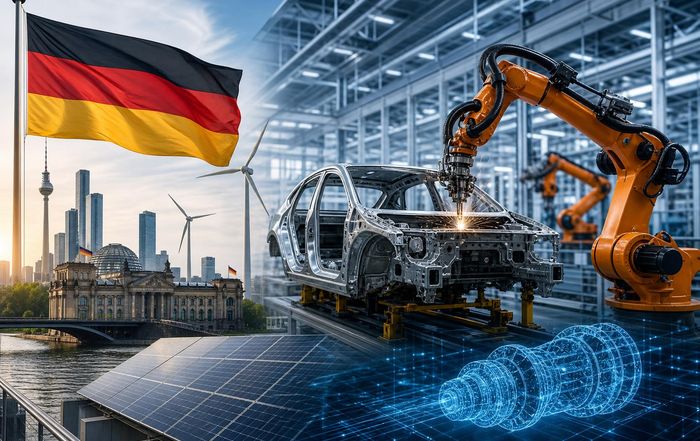
Germany's Business Outlook for Advanced Manufacturing!
Germany at a Strategic Turning Point
Wow, so Germany stands at a decisive moment in the evolution of its industrial base, as the country's advanced manufacturing sector confronts a convergence of pressures and opportunities that will define its competitiveness for the next decade. Long regarded as the manufacturing powerhouse of Europe, Germany now faces rising energy costs, intensifying global competition, demographic headwinds, disruptive technologies, and the imperative of climate neutrality, even as it seeks to preserve its reputation for engineering excellence and export strength. For the visiting readers, who follow events across business, finance, economics, employment, founders, investment, markets, world trade, and technology, Germany's trajectory in advanced manufacturing offers a critical lens through which to assess the future of global industrial leadership.
Advanced manufacturing in Germany increasingly encompasses integrated cyber-physical systems, automation, artificial intelligence, additive manufacturing, green production processes, and highly networked supply chains. Since the launch of Industrie 4.0, Germany has been positioned at the forefront of industrial digitalization, yet the pace of transformation has accelerated sharply in the aftermath of the pandemic and the energy crisis following the war in Ukraine. Businesses now recognize that the traditional strengths of precision engineering and high-quality machinery must be fused with data-driven services, resilient supply networks, and low-carbon operations if they are to maintain margins and market share. Readers can explore how these themes interact with broader business dynamics in Germany and beyond through the dedicated business coverage here.
Macroeconomic Context and Industrial Foundations
Germany's advanced manufacturing outlook cannot be understood without reference to its broader economic environment. As of 2026, the country is emerging from a period of subdued growth and industrial contraction that exposed structural vulnerabilities in energy dependence, digital infrastructure, and innovation diffusion. According to macroeconomic assessments available from institutions such as the International Monetary Fund, Germany's growth prospects remain modest but stable, supported by a strong fiscal position, a diversified export base, and deep integration into the European single market. Those seeking a wider macro perspective can review current economic analysis that situates Germany within global trends.
Manufacturing still accounts for a larger share of GDP in Germany than in most other advanced economies, with particular concentration in automotive, machinery, chemicals, electrical equipment, and medical technology. The German Federal Statistical Office and the European Commission have consistently highlighted how the Mittelstand-Germany's network of small and medium-sized, often family-owned industrial firms-anchors regional employment and innovation. These firms are frequently world leaders in narrow niches, supplying critical components to global value chains spanning the United States, China, and the wider European Union. For readers interested in how such industrial structures influence global markets, the reporting on DailyBusinesss Markets provides additional context.
However, the macroeconomic environment is increasingly shaped by structural challenges: an aging population that constrains the labor force; persistent skills shortages in engineering, software, and technical trades; and a strong regulatory focus on climate and digital standards. Organizations such as the OECD and World Bank have underscored that Germany's ability to maintain its industrial edge will depend on its success in upgrading its capital stock, accelerating digital adoption, and mobilizing private investment into next-generation manufacturing technologies.
The Evolution of Industrie 4.0 into a Data-Driven Paradigm
The concept of Industrie 4.0, first articulated more than a decade ago, has evolved from a visionary blueprint into an operational reality across many German factories. Smart sensors, connected machines, real-time data analytics, and integrated production planning systems now define state-of-the-art facilities in sectors ranging from automotive to pharmaceuticals. Yet, in 2026, the frontier has shifted toward a more fully data-driven paradigm, where value creation is increasingly tied to software, platforms, and services rather than solely to physical products.
German manufacturers are progressively building digital twins of their production lines, deploying predictive maintenance solutions, and integrating supply chain data from suppliers and customers into unified platforms. Institutions such as Fraunhofer-Gesellschaft have played a central role in applied research, supporting firms in implementing advanced robotics, edge computing, and 5G-enabled machine communication. Businesses seeking to understand how such technologies translate into operational advantage can learn more about industrial AI and automation and how they reshape competitive dynamics.
Despite these advances, adoption remains uneven. While large corporations such as Siemens, Bosch, and Volkswagen have invested heavily in digital factories, many small and mid-sized firms still struggle with legacy IT systems, fragmented data architectures, and limited digital skills. Reports from McKinsey & Company and Boston Consulting Group have emphasized that the productivity gap between digital leaders and laggards in German manufacturing continues to widen, creating a two-speed industrial landscape. Closing this gap will be critical if Germany is to sustain broad-based productivity growth and prevent a concentration of competitiveness in only a few flagship companies.
AI, Automation, and the Future of Industrial Work
Artificial intelligence and advanced automation now sit at the center of Germany's manufacturing strategy. From computer vision systems that perform quality inspection in milliseconds to AI-driven demand forecasting that optimizes production schedules, the integration of machine learning into the factory floor is changing how work is organized and what skills are required. Global technology leaders such as Microsoft, Google, and IBM have expanded their industrial AI partnerships with German firms, while domestic champions like SAP are embedding AI into enterprise resource planning and manufacturing execution systems. For readers tracking broader technology developments, the technology section of DailyBusinesss Tech offers additional insight into these trends.
The World Economic Forum and the International Labour Organization have both noted that while AI and robotics may displace certain repetitive or low-skill tasks, they are also creating demand for new roles in systems integration, data engineering, human-machine interface design, and advanced maintenance. In Germany, the demographic challenge of an aging workforce has prompted policymakers and industry leaders to view automation not primarily as a threat to employment, but as a tool to sustain production capacity and competitiveness in the face of labor shortages. Nevertheless, the transition is not frictionless. Trade unions such as IG Metall continue to negotiate frameworks that ensure worker participation, fair retraining opportunities, and safeguards against precarious employment in increasingly flexible production systems.
The German approach to AI in manufacturing is shaped by a strong emphasis on human-centric design and ethical standards, consistent with broader European regulatory initiatives such as the EU AI Act. This orientation seeks to build trust among employees, customers, and regulators, reinforcing the country's reputation for reliability and quality. Businesses interested in the employment implications of these shifts can explore related coverage on DailyBusinesss Employment, where the interplay between technology, labor markets, and policy is examined in greater depth.
Energy Transition and Sustainable Manufacturing Competitiveness
One of the most decisive factors shaping Germany's advanced manufacturing outlook is the country's energy transition, or Energiewende, and the broader commitment to climate neutrality by 2045. The combination of high electricity prices, the accelerated phase-out of nuclear power, and the reduction of Russian gas imports has placed significant cost pressure on energy-intensive industries such as chemicals, metals, and glass. Organizations like the International Energy Agency and Agora Energiewende have highlighted that Germany must simultaneously secure affordable, reliable energy and decarbonize its industrial base if it is to preserve its manufacturing competitiveness.
Advanced manufacturing firms are increasingly investing in energy-efficient technologies, waste-heat recovery, electrified process heating, and on-site renewable generation. In parallel, there is growing interest in green hydrogen as a feedstock and fuel for sectors that are difficult to electrify, such as steel and certain chemical processes. The emergence of large-scale projects backed by companies like thyssenkrupp and BASF reflects a strategic bet that low-carbon production will become a decisive factor in global market access, particularly as the EU's Carbon Border Adjustment Mechanism reshapes trade patterns. Readers seeking to learn more about sustainable business practices can find detailed discussions on how decarbonization intersects with corporate strategy and financial performance.
Sustainability is no longer a peripheral concern but a core element of supply chain requirements, investor expectations, and regulatory compliance. International frameworks such as the Science Based Targets initiative and the Task Force on Climate-related Financial Disclosures are influencing how German manufacturers set emissions targets and report climate risks. Meanwhile, the European Investment Bank and private asset managers are channeling increasing volumes of capital into green industrial projects, recognizing that sustainable manufacturing can be both a risk mitigant and a growth opportunity. For those following investment flows and corporate finance, DailyBusinesss Investment provides coverage of how capital is being allocated to advanced manufacturing and clean technology in Germany and across global markets.
Supply Chain Resilience, Geopolitics, and Trade Realignment
The global disruptions of recent years have compelled German manufacturers to reassess their supply chain strategies, particularly their dependence on single-country sources for critical inputs. The pandemic, semiconductor shortages, and geopolitical tensions between major powers have underscored the vulnerabilities inherent in highly optimized, just-in-time networks. Institutions such as the World Trade Organization and UNCTAD have documented a shift toward diversification, regionalization, and strategic stockpiling in global trade patterns, trends that are strongly felt in Germany's export-oriented industrial ecosystem.
Advanced manufacturing firms are increasingly adopting multi-sourcing strategies, nearshoring certain production steps to Central and Eastern Europe, and investing in digital supply chain visibility platforms that provide real-time insight into inventory, logistics, and risk exposure. At the same time, Germany remains deeply integrated into global value chains, especially in relation to China, the United States, and intra-European trade. The challenge is to reconcile resilience with efficiency, ensuring that supply chain restructuring does not erode the cost and scale advantages that underpin export success. Those interested in the changing landscape of trade and global business flows can explore related analysis on DailyBusinesss Trade and DailyBusinesss World, which examine the broader world trade environment and its implications for advanced manufacturing leaders.
Geopolitical developments have also influenced Germany's strategic orientation. With heightened scrutiny of technology transfers, export controls on sensitive equipment, and debates over economic security, advanced manufacturing firms must navigate a more complex regulatory environment. Government initiatives in Berlin and Brussels increasingly focus on securing domestic capacities in semiconductors, batteries, and critical raw materials, often in coordination with partners such as the United States and other EU member states. This policy landscape affects investment decisions, partnership structures, and the geographic distribution of production capacity.
Financial Conditions, Investment, and Capital Market Pressures
The financial environment facing German advanced manufacturers in 2026 is characterized by tighter monetary policy than in the ultra-low interest rate era, combined with heightened investor scrutiny of profitability, innovation pipelines, and sustainability performance. The European Central Bank has gradually normalized interest rates, raising the cost of capital for large capital expenditure projects, even as banks and capital markets remain broadly supportive of viable industrial investments. For readers monitoring these shifts, DailyBusinesss Finance offers ongoing coverage of how financial conditions influence corporate strategy and sector performance.
Equity and debt investors are increasingly differentiating between firms that can demonstrate credible digital transformation roadmaps, robust ESG strategies, and resilient supply chains, and those that rely excessively on legacy business models. Major asset managers such as BlackRock, Allianz Global Investors, and DWS have incorporated advanced manufacturing and green industrial themes into their portfolios, often emphasizing companies that combine innovation with disciplined capital allocation. At the same time, private equity and infrastructure funds are targeting opportunities in factory modernization, industrial automation platforms, and energy transition infrastructure linked to manufacturing sites.
The German capital market ecosystem is also being reshaped by the rise of specialized technology and industrial start-ups, many of which are backed by venture capital and corporate venture arms. Clusters in regions such as Bavaria, Baden-Württemberg, and North Rhine-Westphalia are seeing increased activity in industrial software, robotics, and clean-tech ventures. For readers following founder stories and entrepreneurial developments, DailyBusinesss Founders highlights how new companies are emerging at the intersection of engineering, software, and sustainability, often in close collaboration with established industrial players.
Labor Markets, Skills, and the Human Capital Challenge
Germany's advanced manufacturing outlook is profoundly influenced by its labor market dynamics and the availability of skilled workers. The country faces a pronounced demographic challenge, with a shrinking working-age population and strong demand for engineers, technicians, and digital specialists. Organizations such as the Bundesagentur für Arbeit and Eurofound have documented persistent skills shortages in key industrial regions, which risk constraining production and slowing the adoption of advanced technologies if not addressed systematically.
In response, companies, vocational schools, and universities are intensifying collaboration through dual education programs, apprenticeships, and upskilling initiatives that combine traditional mechanical skills with digital competencies. Leading technical universities, including Technische Universität München and RWTH Aachen University, are expanding interdisciplinary programs in mechatronics, data science, and industrial engineering, often in partnership with local manufacturers. International benchmarking from bodies like the World Bank suggests that Germany's vocational training system remains a competitive advantage, but it must evolve rapidly to incorporate AI, software, and sustainability content.
For advanced manufacturing firms, the competition for talent extends beyond national borders, prompting greater efforts to attract international specialists and to leverage remote and hybrid work models for certain engineering and design functions. However, immigration policy, language barriers, and integration challenges can limit the speed at which international recruitment can fill gaps. Readers seeking to understand how these labor market dynamics intersect with broader employment trends can explore coverage on DailyBusinesss Employment, where workforce strategies and policy responses are analyzed in depth.
Regional and Global Competitive Positioning
Germany's advanced manufacturing sector does not operate in isolation; it competes and collaborates with industrial ecosystems in the United States, China, Japan, South Korea, and across Europe and Asia. Comparative studies from institutions such as Brookings Institution, Kiel Institute for the World Economy, and Bruegel have highlighted that while Germany retains clear strengths in engineering, quality, and export networks, it faces intense competition in areas such as semiconductor fabrication, consumer electronics, and certain segments of battery and renewable technology manufacturing.
The United States, supported by industrial policy frameworks such as the CHIPS and Science Act and the Inflation Reduction Act, is seeking to re-shore and expand advanced manufacturing capacity, particularly in semiconductors, electric vehicles, and clean energy equipment. China, through initiatives like Made in China 2025, continues to upgrade its industrial capabilities, often combining scale advantages with rapid innovation cycles and strong state support. In this context, Germany's strategy is increasingly anchored in deepening its leadership in high-precision machinery, specialized automotive components, industrial software, and sustainable manufacturing processes, while leveraging the European Union's collective market power and regulatory influence.
For fans who track world and regional changes, Germany's outlook in advanced manufacturing serves as a bellwether for Europe's broader industrial future. The interplay between domestic reforms, EU-level industrial policy, and global competitive pressures will shape not only Germany's economic trajectory but also the balance of industrial capabilities across North America, Asia, and other regions. Those interested in the global dimension can follow related analysis on DailyBusinesss World, where cross-regional comparisons and trade developments are regularly examined.
Strategic Outlook for 2030 and Beyond
Looking ahead to 2030, Germany's advanced manufacturing sector faces a complex but navigable path. The country's success will depend on its ability to accelerate digital and AI adoption across the full breadth of its industrial base, complete a competitive and secure energy transition, and address structural labor and skills challenges, all while remaining agile in a volatile geopolitical and trade environment. The institutional fabric that underpins German manufacturing-encompassing research organizations like Fraunhofer-Gesellschaft, industry associations such as BDI, trade unions, universities, and regional development agencies-remains a formidable asset, capable of orchestrating coordinated responses to emerging challenges.
However, the pace of change in global technology and markets leaves little room for complacency. Firms that delay modernization or underestimate the strategic importance of data, software, and sustainability risk gradual erosion of their competitive positions, even if short-term order books appear healthy. Conversely, those that invest decisively in advanced manufacturing capabilities, forge strong partnerships across the value chain, and align their strategies with evolving regulatory and societal expectations are likely to capture disproportionate gains in productivity, market share, and valuation.
For the business audience here Germany's journey in advanced manufacturing offers a rich case study in how a mature industrial economy can reinvent itself amid disruptive forces. It illustrates the importance of integrating financial discipline, technological innovation, human capital development, and sustainability into a coherent strategic framework. As global markets continue to evolve, the editorial focus across DailyBusinesss Business, DailyBusinesss Finance, DailyBusinesss Economics, DailyBusinesss Tech, and DailyBusinesss Investment will remain closely aligned with these themes, providing ongoing analysis of how Germany and other leading economies shape the next era of advanced manufacturing.
