
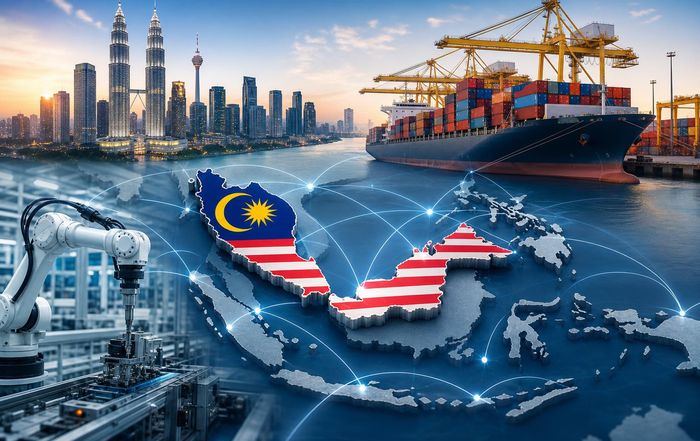
Malaysia's Strategic Rise in Regional Manufacturing and Trade
Malaysia at the Crossroads of a Reordering Global Economy
Well now Malaysia has it seems emerged as one of the most strategically positioned economies in Asia's manufacturing and trade landscape, standing at the intersection of global supply chain realignment, regional integration, and technological transformation. For the new and old readership here, which closely follows developments in business, finance, economics, employment, founders, investment, markets, world trade, and technology, Malaysia's trajectory offers a clear case study in how a mid-sized, open economy can leverage geography, policy discipline, and industrial upgrading to secure a durable role in a volatile global environment. Anchored between the major economies of China, India, and the broader ASEAN bloc, and straddling the vital Strait of Malacca, Malaysia has translated its geographic advantage into a sophisticated manufacturing base and an increasingly influential trade profile that matters not just for Southeast Asia but for supply chains spanning North America, Europe, and the wider Asia-Pacific.
In an era defined by global trade fragmentation and reconfiguration, multinational companies and investors are reassessing where to locate production, how to manage risk, and which jurisdictions offer the right mix of cost competitiveness, political stability, and infrastructure. Malaysia's response-rooted in macroeconomic prudence, export-oriented industrialization, and a deliberate move up the value chain-has positioned the country as a key node in sectors ranging from electronics and automotive components to medical devices, petrochemicals, and emerging green technologies. This evolving role is central to understanding the future of manufacturing and trade in Asia and is highly relevant to the strategic analysis featured across DailyBusinesss daily edited sections such as business, markets, world, and trade.
From Low-Cost Assembly to High-Value Manufacturing Hub
Malaysia's manufacturing story began with low-cost assembly operations in the 1970s and 1980s, but by 2026 it has evolved into a diversified industrial ecosystem anchored in higher value-added segments. According to the World Bank, manufacturing has consistently contributed a significant share of Malaysia's GDP, while exports of goods and services remain central to growth, employment, and foreign exchange earnings, reflecting a deep integration into global value chains. The shift from labor-intensive assembly to capital- and technology-intensive production has been driven by deliberate industrial policies, including incentives for foreign direct investment, the development of specialized industrial parks, and the cultivation of domestic supplier networks that support multinational manufacturers.
Electronics and electrical (E&E) products are at the heart of this transformation, with Malaysia now recognized as a critical link in the global semiconductor and electronics supply chain. Regions such as Penang and Selangor host dense clusters of multinational firms and local champions producing chips, sensors, printed circuit boards, and advanced components that feed into consumer electronics, automotive systems, and industrial machinery worldwide. As companies seek to diversify away from single-country dependencies and adopt "China+1" or "China+Many" strategies, Malaysia has become a preferred destination for incremental capacity, benefiting from a combination of political stability, a relatively skilled workforce, and an established base of supporting industries. For active readers tracking technology and AI-driven industrial change, this shift underscores how manufacturing competitiveness now depends as much on digital capabilities and process sophistication as on factor costs alone.
Strategic Geography and the Power of Connectivity
Malaysia's geographic location remains one of its most enduring strategic assets. Situated along the Strait of Malacca, one of the world's busiest shipping lanes connecting the Indian and Pacific Oceans, the country serves as a natural gateway between East Asia, South Asia, the Middle East, and Europe. Major ports such as Port Klang and Port of Tanjung Pelepas handle substantial container volumes, facilitating transshipment and direct trade links with key markets in the United States, European Union, China, Japan, and beyond. These ports, supported by robust logistics infrastructure and free trade zones, enable efficient movement of intermediate and finished goods, reinforcing Malaysia's role as a regional distribution and manufacturing hub.
The government's sustained investment in infrastructure-spanning highways, rail networks, airports, and digital connectivity-has further enhanced Malaysia's competitiveness in regional trade. Initiatives aligned with ASEAN connectivity plans and participation in agreements such as the Regional Comprehensive Economic Partnership (RCEP) have deepened integration with neighboring economies, simplifying rules of origin, reducing tariffs, and encouraging cross-border production networks. Businesses seeking to understand evolving global trade dynamics can see in Malaysia a practical example of how transport infrastructure and trade agreements, when aligned, can transform geography into durable economic advantage.
Integration into Regional and Global Trade Architectures
Malaysia's trade policy has long been characterized by openness and active engagement with regional and global institutions. As a member of ASEAN, the country benefits from preferential access to a market of over 650 million people, while also leveraging ASEAN's collective trade agreements with partners such as China, Japan, South Korea, Australia, and New Zealand. Malaysia's participation in RCEP, which entered into force in the mid-2020s, has reinforced its role in region-wide supply chains by harmonizing rules across 15 economies that collectively account for a significant share of global GDP and trade.
Beyond regional frameworks, Malaysia maintains strong trade relationships with the United States, European Union, and United Kingdom, exporting a diverse mix of electronics, palm oil products, machinery, chemicals, and manufactured goods. For global investors and corporates, the country's network of free trade agreements provides a platform for serving multiple markets from a single production base, particularly as companies recalibrate their sourcing strategies in response to geopolitical tensions and shifting tariffs. Loyal member readers of dailybusinesss.com newsletters and online visitors focused on investment and finance can see how these agreements influence capital allocation decisions, as firms evaluate where to establish regional headquarters, factories, and distribution centers to optimize market access and mitigate risk.
The Electronics and Semiconductor Engine
The electronics and semiconductor sector is arguably the most critical pillar of Malaysia's manufacturing and trade profile. The country is a leading global player in outsourced semiconductor assembly and test (OSAT) services and has steadily moved into more sophisticated activities such as packaging, design support, and advanced manufacturing processes. Penang, often referred to as the "Silicon Valley of the East," hosts a dense ecosystem of multinational corporations, including major chipmakers and electronics manufacturers, as well as a growing cadre of domestic firms that supply components, equipment, and engineering services.
As global demand for chips continues to surge, driven by artificial intelligence, cloud computing, electric vehicles, and the Internet of Things, Malaysia's position within the semiconductor value chain has taken on heightened significance. Governments in the United States, Europe, Japan, and South Korea have launched ambitious industrial policies to bolster domestic semiconductor capacity, but they remain deeply reliant on complex, cross-border networks of suppliers. Malaysia's contribution-particularly in midstream and downstream processes-helps ensure the resilience of these networks, even as new fabrication plants are built elsewhere. For those tracking latest AI and advanced technologies, Malaysia's semiconductor capabilities illustrate how hardware and digital innovation are intertwined, with manufacturing excellence underpinning breakthroughs in software and data-driven industries.
Diversification into Automotive, Medical Devices, and Green Industries
While electronics dominate headlines, Malaysia's manufacturing base is increasingly diversified into sectors that reflect global shifts in technology, demographics, and sustainability. The automotive industry, for example, has moved beyond traditional assembly into the production of components for internal combustion, hybrid, and electric vehicles. Multinational carmakers and Tier 1 suppliers use Malaysia as a base for regional production, leveraging the country's skilled workforce, quality standards, and logistics connectivity to serve markets across ASEAN, Australia, and beyond. As the global automotive sector accelerates its transition to electrification, Malaysia is positioning itself as a supplier of battery components, power electronics, and other critical parts that feed into this rapidly expanding value chain.
The medical devices sector has also grown in prominence, with Malaysia emerging as a leading exporter of gloves, single-use medical products, and increasingly sophisticated devices and equipment. Demographic trends in Europe, North America, and Asia, including aging populations and rising healthcare expenditures, underpin steady demand for these products. Regulatory alignment with standards set by authorities such as the U.S. Food and Drug Administration and the European Medicines Agency has enabled Malaysian manufacturers to access high-value markets, reinforcing the country's reputation for quality and compliance. Readers interested in global healthcare-related trade trends can observe how Malaysia's medical devices ecosystem benefits from close collaboration between manufacturers, regulators, and research institutions.
In parallel, the global push for decarbonization and sustainable business practices is driving investment into green industries in Malaysia. The country's traditional strengths in energy-intensive sectors such as petrochemicals and palm oil are being re-evaluated through the lens of climate commitments, with companies and policymakers exploring opportunities in renewable energy, bio-based materials, and circular economy solutions. For the sustainability-focused segment of dailybusinesss.com readers, Malaysia's efforts to align industrial policy with climate goals-while maintaining competitiveness and employment-offer an instructive example of transition management in an export-oriented economy.
Policy, Governance, and the Investment Climate
Malaysia's ability to attract and retain investment in manufacturing and trade-related sectors is closely tied to its policy and governance framework. Macroeconomic stability, prudent fiscal management, and a generally predictable regulatory environment have long been cited by investors as key strengths, particularly when compared with some regional peers. Institutions such as Bank Negara Malaysia and the Ministry of Finance have maintained a focus on inflation control, currency stability, and financial sector resilience, while industrial policy has been guided by multi-year plans that set clear priorities for sectoral development, human capital, and infrastructure.
The country's performance in global ease-of-doing-business and competitiveness rankings has been shaped by reforms aimed at streamlining business registration, improving contract enforcement, and enhancing investor protections. However, challenges remain in areas such as bureaucratic complexity, regulatory consistency across federal and state levels, and the need for continued improvements in governance and transparency. For investors and entrepreneurs following founders and business ecosystems, Malaysia's policy environment offers both opportunities and points of caution, particularly as the government balances incentives for foreign investors with the development of competitive domestic enterprises.
Employment, Skills, and the Future of Work in Manufacturing
The evolution of Malaysia's role in regional manufacturing and trade has profound implications for employment and the future of work. Manufacturing has historically been a major source of jobs, particularly for mid-skilled workers, and continues to support livelihoods across urban and semi-urban areas. However, the shift toward automation, robotics, and digitalization-accelerated by advances in AI and smart manufacturing-requires a corresponding upgrade in workforce skills. Employers increasingly demand capabilities in engineering, data analytics, process optimization, and digital systems integration, in addition to traditional technical and vocational skills.
Malaysia's education and training systems are under pressure to respond to these changing needs. Universities, technical colleges, and vocational institutions are expanding programs in engineering, computer science, and industrial technology, while public-private partnerships support apprenticeships, reskilling, and upskilling initiatives. Readers focused on employment and labor market trends will recognize that the country's long-term competitiveness hinges on its ability to align human capital development with the demands of advanced manufacturing and services. Addressing skills mismatches, ensuring inclusive access to training, and improving English and digital literacy are central to sustaining productivity growth and attracting higher value-added investments.
Financial, Market, and Currency Dimensions of Trade Competitiveness
Malaysia's manufacturing and trade performance is closely intertwined with its financial markets, currency dynamics, and broader economic management. The ringgit plays a pivotal role in export competitiveness, with its value influenced by global commodity prices, capital flows, and monetary policy decisions in major economies such as the United States and Eurozone. Exporters benefit from a competitive exchange rate, but volatility can complicate planning and hedging strategies, particularly for firms operating on thin margins or managing long production cycles. For readers monitoring currency and market developments, Malaysia offers a textbook case of how an open, trade-dependent economy navigates external shocks while seeking to maintain macroeconomic stability.
The domestic financial system, anchored by a well-capitalized banking sector and increasingly sophisticated capital markets, provides critical support for manufacturing and trade activities. Access to credit, trade finance, and investment capital enables firms to expand capacity, upgrade technology, and weather cyclical downturns. The growth of Islamic finance, in which Malaysia is a recognized global leader, adds a distinctive dimension to its financial ecosystem, offering alternative instruments for funding infrastructure, industrial projects, and cross-border ventures. Investors and corporates assessing investment opportunities in Malaysia must therefore consider not only sectoral prospects but also the interplay of monetary policy, fiscal stance, and regulatory frameworks in shaping returns and risk profiles.
Digital Trade, E-Commerce, and the Data-Driven Economy
Manufacturing and physical trade are increasingly complemented by digital trade and data-driven services, and Malaysia has moved to position itself as a regional hub in these emerging domains. The expansion of high-speed broadband, data centers, and cloud infrastructure, supported by both public initiatives and investments by global technology firms, underpins a growing ecosystem of e-commerce, fintech, and digital logistics platforms. These developments are reshaping how goods are marketed, financed, and delivered, with small and medium-sized enterprises (SMEs) gaining new channels to access regional and global customers.
Malaysia's participation in digital trade discussions within ASEAN and other forums reflects recognition that rules governing data flows, cybersecurity, privacy, and digital taxation will have a direct impact on its competitiveness. As global debates on data localization, cross-border e-payments, and digital services taxation intensify, Malaysia must balance the need to protect national interests with the imperative to remain open and attractive to digital economy investors. For the community growing around dailybusinesss.com tracking technology and digital transformation, the interplay between manufacturing and digital trade in Malaysia highlights how value creation in the 2020s increasingly spans both physical and virtual domains.
Sustainability, ESG, and the Future of Responsible Trade
Sustainability and environmental, social, and governance (ESG) considerations are now central to how global investors, regulators, and consumers evaluate manufacturing and trade. Malaysia faces particular scrutiny in sectors such as palm oil, where concerns about deforestation and labor practices have triggered regulatory responses in markets like the European Union, and in energy-intensive industries where carbon footprints are under increasing examination. At the same time, the country has committed to climate goals and is exploring pathways to reduce emissions, improve energy efficiency, and expand the share of renewables in its energy mix.
Corporate Malaysia is gradually integrating ESG frameworks into strategy and reporting, driven by investor expectations, stock exchange requirements, and the need to maintain access to global value chains where sustainability standards are tightening. For businesses and financiers interested in sustainable investment and trade, Malaysia's experience illustrates the dual challenge of upgrading environmental performance while safeguarding competitiveness and jobs. The development of green financing instruments, such as sustainability-linked loans and green bonds, alongside investments in low-carbon technologies, will be critical in determining how effectively Malaysia can align its manufacturing and trade model with the emerging global sustainability regime.
Geopolitics, Risk, and the Imperative of Strategic Agility
The global context in which Malaysia operates has become more complex and uncertain, characterized by intensifying strategic competition between major powers, evolving trade restrictions, and shifting alliances. As a trading nation with deep links to both China and Western economies, Malaysia must navigate this environment with care, maintaining a policy of non-alignment while safeguarding its economic interests. Supply chain disruptions, whether driven by pandemics, conflicts, or policy shocks, have underscored the importance of resilience and diversification, prompting both the public and private sectors to reassess dependencies and contingency plans.
For multinational corporations, Malaysia's perceived neutrality and commitment to open trade can be an asset, offering a relatively stable base from which to serve multiple markets without being caught at the center of geopolitical fault lines. However, the country must also contend with rising expectations from partners and investors regarding governance, transparency, and alignment with international norms. Readers online now who follow world news and geopolitical shifts will recognize that Malaysia's strategic agility-its ability to adapt policies, build new partnerships, and respond to shocks-will be a defining factor in its long-term role in regional manufacturing and trade.
Outlook to 2030: Opportunities, Constraints, and Strategic Choices
Looking ahead to 2030, Malaysia's role in regional manufacturing and trade will be shaped by a series of interlocking opportunities and constraints. On the opportunity side, the continued expansion of Asia's middle class, the acceleration of digitalization, and the restructuring of global supply chains all point to sustained demand for the kinds of products and services in which Malaysia has competitive strengths. The country's participation in regional trade agreements, its established industrial clusters, and its evolving digital and financial infrastructure provide a strong foundation for further growth and diversification.
Yet constraints are equally real. Demographic trends, including a slowing pace of labor force growth, place a premium on productivity gains and innovation. Competition from regional peers such as Vietnam, Thailand, and Indonesia is intensifying, particularly in attracting new manufacturing investments and upgrading into higher value-added segments. Domestic policy challenges-including the need for continued reforms in education, governance, and regulatory efficiency-must be addressed to avoid stagnation in the so-called "middle-income trap." For analysts and decision-makers who rely on dailybusinesss.com for inspiring insights into economics, business strategy, and global markets, Malaysia's trajectory offers a vivid illustration of how strategic choices made today will reverberate across industries and borders in the decade ahead.
In this evolving landscape, Malaysia's success will depend on its ability to deepen its expertise in advanced manufacturing, embed itself more firmly in high-value segments of global value chains, and align its trade and industrial strategies with the imperatives of digitalization and sustainability. Its experience will remain a focal point for businesses, investors, and policymakers worldwide who seek to understand not only where production will take place, but also how value will be created, shared, and governed in the next phase of global economic integration.
