
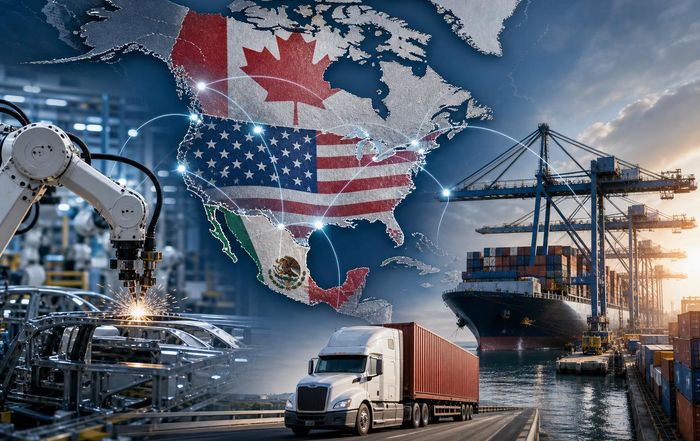
North America's Evolving Manufacturing and Trade Network
Introduction: A Region at an Industrial Inflection Point
In 2026, North America's manufacturing and trade network stands at a decisive inflection point, shaped by converging forces that include geopolitical realignment, rapid technological change, supply-chain resilience strategies, and an accelerating transition toward low-carbon production. For the active entrepreneurial community that turns to DailyBusinesss for daily updated business insight, the region's trajectory is not a purely regional story; it is a defining chapter in the restructuring of global value chains that touches production and investment decisions from New York to Singapore, from Berlin to São Paulo, and from Shanghai to Johannesburg.
As multinational enterprises, institutional investors, and founders across advanced and emerging markets reassess where and how goods are produced, North America's evolving role-anchored by the United States but increasingly shaped by Canada and Mexico's complementary strengths-has become central to boardroom deliberations on risk, cost, innovation, and long-term competitiveness. The interplay between industrial policy, cross-border trade agreements, technological adoption, labor market dynamics, and sustainability commitments is creating a new operating environment that business leaders must understand in detail rather than through outdated assumptions about low-cost offshore production or static trade patterns.
For readers of DailyBusinesss, who are already familiar with the platform's coverage of business strategy and corporate transformation, this article examines the contours of North America's manufacturing resurgence, the reconfiguration of its trade corridors, and the implications for finance, employment, and investment decisions over the remainder of the decade.
From Offshoring to Nearshoring: The Strategic Rebalancing of Production
The evolution of North America's manufacturing network cannot be understood without acknowledging the long arc that began with the offshoring wave of the late 20th and early 21st centuries, when companies in the United States and Canada aggressively shifted production to lower-cost locations in Asia, particularly China, to optimize labor costs and exploit expanding global trade under the World Trade Organization framework. Over the past decade, however, a series of shocks-ranging from trade tensions and tariff escalations to pandemic-induced disruptions and logistical bottlenecks-have exposed the fragility of extended supply chains and prompted a reassessment of what constitutes true cost efficiency and resilience in global operations.
This reassessment has accelerated a trend toward reshoring and nearshoring, with North America emerging as a pivotal beneficiary. The United States-Mexico-Canada Agreement (USMCA) has solidified a rules-based foundation for regional integration, giving manufacturers greater confidence to invest in cross-border production systems that leverage the complementary advantages of each country. Organizations monitoring trade flows can observe this shift in data from institutions such as the World Bank and OECD, which show a gradual reorientation of some supply chains toward shorter, regionally concentrated networks.
For executives and investors following trade and global commerce trends, the strategic rationale extends beyond cost arbitrage. Shorter supply chains reduce exposure to geopolitical risk, enable faster response times to demand shifts, and facilitate closer collaboration between R&D centers, production facilities, and final markets. This is especially relevant in sectors such as automotive, electronics, medical devices, and advanced machinery, where product lifecycles are shortening and customization demands are rising.
The United States: Industrial Policy, Innovation, and Strategic Autonomy
The United States remains the anchor of North America's manufacturing ecosystem, but its role is being recast through a more assertive industrial policy framework that aims to rebuild domestic capacity in strategic sectors while maintaining global competitiveness. Legislative initiatives such as the CHIPS and Science Act and clean-energy and infrastructure measures have signaled a clear policy intent to encourage private capital to flow into semiconductor fabrication, battery manufacturing, electric vehicles, and grid modernization. Business leaders tracking these developments through sources like the U.S. Department of Commerce and White House economic briefings recognize that the policy environment is now a central variable in investment planning.
At the same time, the United States continues to lead in high-value innovation, supported by a robust ecosystem of research universities, venture capital, and technology companies. The rapid commercialization of artificial intelligence, advanced robotics, and industrial software is reshaping factory operations, supply-chain planning, and product design. For readers of DailyBusinesss who follow AI and technology strategy, it is clear that digital capabilities are no longer optional enhancements but core enablers of productivity, quality, and flexibility in U.S. manufacturing.
However, the U.S. manufacturing renaissance is not without constraints. Labor shortages in skilled trades, regional disparities in infrastructure quality, and complex regulatory environments can slow project execution and raise operational costs. Organizations such as the National Association of Manufacturers and Brookings Institution have highlighted the need for workforce development, streamlined permitting, and coordinated infrastructure investment to unlock the full potential of this industrial revival. For global companies evaluating U.S. production, the calculus increasingly involves weighing these structural challenges against the strategic benefits of proximity to the world's largest consumer market and its deep capital pools.
Canada: Critical Minerals, Clean Energy, and Advanced Manufacturing
Canada's role in North America's manufacturing and trade network is being reshaped by its strategic assets in critical minerals, clean energy resources, and advanced manufacturing capabilities. As the global economy transitions toward electrification and low-carbon technologies, secure access to minerals such as lithium, nickel, cobalt, and rare earth elements has become a priority for governments and corporations alike. Canada's resource base, coupled with its reputation for regulatory stability and environmental standards, positions the country as a key partner in building resilient supply chains for batteries, electric vehicles, and renewable energy infrastructure.
For businesses monitoring energy transitions through platforms such as the International Energy Agency, Canada's ability to supply low-carbon electricity and develop green hydrogen projects adds another dimension to its competitiveness. Manufacturing operations that rely on clean power can reduce their lifecycle emissions and appeal to increasingly sustainability-conscious customers and investors. Readers interested in how these trends intersect with sustainable business practices will recognize that Canada's energy profile is not merely a cost factor but a strategic differentiator in an era of tightening climate disclosure and carbon-border adjustment mechanisms.
At the same time, Canada's manufacturing sector, particularly in aerospace, automotive parts, and specialized machinery, benefits from deep integration with U.S. and Mexican supply chains. Cross-border trade in intermediate goods is facilitated by harmonized standards and long-standing corporate relationships. Organizations such as Bombardier, Magna International, and Linamar illustrate how Canadian firms operate within a regional ecosystem rather than a purely national framework. Policy initiatives from the Government of Canada and provincial authorities aim to attract further investment into advanced manufacturing clusters, particularly in Ontario, Quebec, and the western provinces, while addressing challenges related to productivity, infrastructure, and innovation diffusion.
Mexico: The Nearshoring Engine of North American Manufacturing
Mexico has emerged as a central beneficiary of nearshoring strategies, with its manufacturing base expanding in sectors such as automotive, electronics, appliances, and medical devices. The country's cost competitiveness, geographic proximity to the United States, and integration under USMCA have made it an attractive location for companies seeking to diversify away from single-country dependence in Asia while maintaining access to North American markets. Data from bodies such as Banco de México and the International Monetary Fund indicate a steady increase in foreign direct investment targeting industrial parks and manufacturing corridors in states such as Nuevo León, Guanajuato, and Baja California.
For executives tracking employment and labor market trends, Mexico offers a relatively young workforce and a growing pool of skilled technicians and engineers, particularly in regions that have hosted automotive and electronics clusters for decades. However, the success of nearshoring strategies also depends on the country's ability to address infrastructure bottlenecks, energy reliability, and security concerns that can affect logistics and operational continuity. Organizations such as the World Bank and Inter-American Development Bank have emphasized the importance of investment in ports, rail, roads, and digital infrastructure to fully capitalize on this nearshoring momentum.
Mexico's role is not limited to low-cost assembly. Increasingly, global manufacturers are locating engineering, design, and R&D functions near their production facilities to shorten feedback loops and enable faster product iteration. This shift reflects a broader trend in which manufacturing and knowledge work converge, reinforcing Mexico's importance in the regional innovation landscape and underscoring why investors following North American markets and sectoral shifts are paying close attention to the country's policy environment and institutional stability.
The New Trade Corridors: Redrawing Global and Regional Flows
North America's evolving manufacturing base is reshaping trade flows not only within the region but also with Europe, Asia, and other parts of the world. The United States, Canada, and Mexico are recalibrating their external trade relationships in response to shifting geopolitical dynamics, supply-chain security concerns, and the rise of new regional blocs. Businesses that follow global trade developments through organizations such as the World Trade Organization and UNCTAD can observe a pattern of selective decoupling, friend-shoring, and diversification that contrasts sharply with the more linear globalization narrative of previous decades.
For European companies in Germany, France, Italy, Spain, and the Netherlands, North America offers both a market and a production base that can mitigate exposure to geopolitical tensions and logistical vulnerabilities along Asia-Europe routes. Similarly, firms in Japan, South Korea, and Singapore are exploring North American investments as part of broader risk-management strategies. Readers of DailyBusinesss who monitor world and geopolitical business trends will note that these shifts are not purely defensive; they also reflect the pull of North America's innovation ecosystems, consumer markets, and policy incentives for green and digital industries.
At the same time, trade tensions and evolving export-control regimes between the United States and China continue to influence corporate decisions, particularly in high-tech sectors such as semiconductors, telecommunications equipment, and advanced materials. Businesses tracking these developments through sources like the Peterson Institute for International Economics understand that compliance, risk assessment, and scenario planning have become integral to cross-border manufacturing strategies. North America's role as both a manufacturing hub and a regulatory actor means that decisions taken in Washington, Ottawa, and Mexico City reverberate across supply chains that extend into Asia, Europe, and beyond.
Technology, Automation, and the AI-Enabled Factory
The digital transformation of manufacturing is one of the most consequential developments in North America's industrial evolution. Automation, robotics, industrial Internet of Things (IIoT), and AI-driven analytics are converging to create smarter, more flexible, and more efficient production systems. For readers who follow technology and AI insights on DailyBusinesss, the concept of the "AI-enabled factory" is no longer theoretical; it is becoming an operational reality in automotive plants, electronics facilities, and logistics hubs across the United States, Canada, and Mexico.
Organizations such as Siemens, Rockwell Automation, ABB, and NVIDIA are working with manufacturers to deploy digital twins, predictive maintenance algorithms, and autonomous material-handling systems that reduce downtime, improve quality, and optimize energy use. Industry analysis from bodies like McKinsey & Company and the World Economic Forum has highlighted that companies adopting advanced manufacturing technologies can achieve significant productivity gains and cost reductions, while also enhancing resilience by enabling rapid reconfiguration of production lines in response to demand shocks or supply disruptions.
However, the adoption of these technologies raises strategic questions about workforce skills, organizational change, and capital allocation. Business leaders must decide how to balance investments in automation with commitments to employee development and community engagement, especially in regions where manufacturing remains a cornerstone of local employment. As covered in DailyBusinesss features on finance and investment decision-making, the challenge lies in structuring technology investments that deliver near-term returns while building long-term capabilities and preserving social license to operate.
Labor Markets, Skills, and the Future of Work in Manufacturing
The evolution of North America's manufacturing network is inseparable from the dynamics of its labor markets. While automation and AI are reshaping job profiles, they have not eliminated the need for human talent; rather, they have shifted demand toward higher-skill roles in engineering, programming, maintenance, quality assurance, and data analysis. For readers focused on employment and workforce transformation, the critical issue is not a lack of jobs but a mismatch between the skills required by advanced manufacturing and the capabilities available in the labor force.
Organizations such as the OECD and World Economic Forum have underscored the urgency of reskilling and upskilling initiatives, especially in regions undergoing industrial renewal. In North America, partnerships between manufacturers, community colleges, technical institutes, and local governments are emerging as practical mechanisms for building talent pipelines. Programs that combine classroom instruction with on-the-job training are proving particularly effective in fields such as mechatronics, robotics maintenance, and industrial data analytics.
At the same time, demographic trends-such as aging workforces in parts of the United States and Canada, and urbanization patterns in Mexico-are influencing where and how companies site their facilities. Flexible work models, enhanced safety standards, and inclusive hiring practices are becoming competitive differentiators in attracting and retaining talent. For global investors following long-term employment and social stability trends, the ability of North American economies to align education systems with industrial needs will be a key determinant of sustained manufacturing competitiveness.
Investment, Capital Flows, and Financial Market Perspectives
From a financial perspective, North America's manufacturing and trade reconfiguration is generating significant capital flows into industrial real estate, infrastructure, equipment, and enabling technologies. Private equity firms, sovereign wealth funds, pension funds, and corporate investors are all seeking exposure to themes such as nearshoring, automation, clean energy, and critical minerals. Readers of DailyBusinesss who track investment opportunities and capital markets recognize that these themes are increasingly reflected in sector allocations, thematic funds, and infrastructure vehicles.
Financial institutions and analysts rely on data from bodies like the Bank for International Settlements and Federal Reserve to assess how interest-rate trajectories, credit conditions, and currency movements affect the economics of large-scale industrial projects. Higher borrowing costs, even if moderating from previous peaks, can influence the sequencing and scale of capital-intensive investments, particularly in sectors such as semiconductors, battery gigafactories, and hydrogen infrastructure. At the same time, public-sector incentives and loan guarantees can mitigate some of these pressures, provided that projects meet criteria related to domestic content, environmental performance, and strategic relevance.
Equity markets are responding unevenly, rewarding companies that can articulate credible strategies around supply-chain resilience, technology adoption, and sustainability, while penalizing those perceived as slow to adapt. For founders and executives featured in DailyBusinesss coverage of entrepreneurship and corporate leadership, the ability to communicate a coherent narrative about how their organizations fit within North America's evolving manufacturing landscape is becoming a core element of investor relations and capital-raising efforts.
Sustainability, Regulation, and the Low-Carbon Imperative
Sustainability considerations are no longer peripheral in North American manufacturing; they are embedded in regulatory frameworks, customer requirements, and investor expectations. Governments at federal, state, and provincial levels are tightening emissions standards, introducing carbon-pricing mechanisms, and mandating climate-related financial disclosures that affect how manufacturers design products, select suppliers, and operate facilities. Business leaders who follow global climate policy through sources such as the UNFCCC and IPCC understand that alignment with net-zero pathways is becoming a strategic necessity rather than a branding exercise.
For North American manufacturers, this translates into a multifaceted agenda that includes energy efficiency, renewable power procurement, circular-economy practices, and low-carbon logistics. The rise of electric vehicles, advanced battery technologies, and green building materials is both a regulatory response and a commercial opportunity. Readers of DailyBusinesss exploring sustainable business models and ESG strategy will recognize that companies able to integrate sustainability into their core operations are better positioned to access green finance, win long-term contracts, and maintain license to operate in environmentally sensitive communities.
Regulatory convergence and divergence across jurisdictions-such as differing approaches to carbon pricing in Canada and the United States, or environmental permitting standards in Mexico-add complexity for firms operating regionally. Organizations like the Environmental Protection Agency and Environment and Climate Change Canada provide guidance and rulemaking that directly influence capital planning and operational decisions. Navigating this regulatory mosaic requires robust compliance capabilities and proactive engagement with policymakers, industry associations, and local stakeholders.
The Role of Emerging Technologies: AI, Crypto, and Digital Trade
Beyond the factory floor, the broader digitalization of trade and finance is influencing how North America's manufacturing network operates. The increasing use of AI in demand forecasting, inventory optimization, and supplier risk monitoring is enabling more agile and data-driven decision-making across the supply chain. For readers who follow AI, fintech, and digital innovation, the integration of advanced analytics into trade finance, customs processing, and cross-border payments is reducing friction and improving transparency in regional commerce.
At the same time, distributed-ledger technologies and digital assets continue to evolve, even as regulatory scrutiny intensifies. While speculative crypto trading has faced headwinds, enterprise-grade blockchain solutions are being explored for applications such as traceability of critical minerals, verification of ESG claims, and smart-contract-based logistics. Business leaders interested in this intersection can explore more on crypto and digital finance to understand how these tools may complement traditional trade infrastructure and risk-management frameworks.
Digital trade agreements, data-localization rules, and cybersecurity requirements are also becoming integral to trade negotiations and corporate strategy. Organizations such as the World Bank and OECD have highlighted the growing importance of digital trade in global value chains, and North America is no exception. As manufacturers increasingly rely on cloud-based platforms, remote monitoring, and cross-border data flows, the resilience of digital infrastructure and clarity of regulatory regimes will be as critical as physical ports and highways.
Strategic Implications for Global Business and Investors
For the global audience of DailyBusinesss, spanning the United States, United Kingdom, Germany, Canada, Australia, France, Italy, Spain, the Netherlands, Switzerland, China, Sweden, Norway, Singapore, Denmark, South Korea, Japan, Thailand, Finland, South Africa, Brazil, Malaysia, New Zealand, and beyond, the evolution of North America's manufacturing and trade network carries several strategic implications.
First, supply-chain configuration is now a board-level strategic issue rather than a purely operational concern. Decisions about where to locate production, how to structure supplier relationships, and which technologies to deploy must account for geopolitical risk, regulatory shifts, and sustainability commitments, not just labor and material costs. Second, regionalization does not imply isolation; North America's manufacturing resurgence is deeply intertwined with trade and investment flows from Europe, Asia, and other regions, requiring nuanced strategies that balance regional depth with global reach. Third, the convergence of digitalization, automation, and sustainability is redefining what it means to be competitive, pushing companies to invest in capabilities that span technology, workforce development, and stakeholder engagement.
For investors and executives who regularly consult DailyBusinesss for impartial news and forward-looking analysis, the message is clear: North America's manufacturing and trade transformation is not a short-term cycle but a structural shift that will shape global business over the coming decade. Those who understand its contours, anticipate its regulatory and technological trajectories, and align their capital and talent strategies accordingly will be better positioned to capture emerging opportunities and mitigate evolving risks.
Conclusion: North America as a Strategic Platform for the Next Industrial Era
North America is emerging as a strategic platform for the next industrial era, defined by resilient supply chains, AI-enabled production, and an accelerating transition toward low-carbon economies. The region's manufacturing and trade network is being rebuilt on foundations that prioritize security, innovation, and sustainability, while remaining deeply integrated into global markets across Europe, Asia, Africa, and the Americas.
For the business leaders, founders, investors, and policymakers who rely on DailyBusinesss and 100% original content to navigate this changing landscape, the imperative is to move beyond legacy assumptions and engage with North America's transformation in a granular, data-driven, and forward-looking manner. Whether the focus is on business strategy, economic outlook, capital allocation, or technological disruption, the evolving manufacturing and trade network of North America will remain a central reference point in global decision-making for years to come.
