
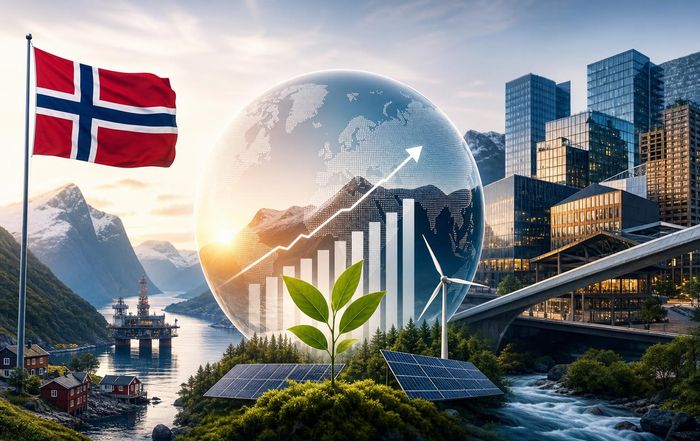
Norway's Investment Strength Beyond Traditional Energy!
A New Phase in Norway's Economic Story
Norway's reputation as a global energy powerhouse is firmly established, yet its investment narrative has evolved far beyond the oil and gas story that defined much of the late twentieth century. While the country's offshore petroleum resources and the management of its sovereign wealth fund remain central pillars of national prosperity, the real strategic transformation is taking place in the way Norway reallocates capital, talent, and technology into a diversified, innovation-led economy. For fans here, this evolution offers a rich case study in how a resource-rich nation can use financial strength, institutional credibility, and long-term policymaking to position itself at the forefront of global business, finance, and technology.
Norway's experience is particularly relevant to investors and executives in the United States, United Kingdom, Germany, Canada, Australia, and across Europe and Asia who are seeking models of resilient growth in an era marked by energy transition, digital disruption, and geopolitical uncertainty. As global markets reprice risk around climate policy, demographic change, and technological acceleration, Norway's strategic pivot beyond traditional energy has turned the country into a laboratory for future-ready investment strategies, many of which align closely with the daily themes covered on dailybusinesss.com, from finance and investment to AI, sustainable business, and the broader world economy.
From Oil Wealth to Strategic Capital
Norway's modern investment strength begins with its management of petroleum revenues. The Government Pension Fund Global (GPFG), administered by Norges Bank Investment Management, is one of the world's largest sovereign wealth funds, with assets well above one trillion US dollars. Established to ensure that oil and gas income would benefit both current and future generations, the fund has become a benchmark for long-term, rules-based investing. Its governance model, transparency standards, and ethical guidelines are studied by policymakers and institutional investors worldwide who seek to understand how to translate natural resource wealth into diversified financial capital. Those interested in the broader macroeconomic implications can examine how such funds shape global capital flows and fiscal stability by reviewing analyses from institutions like the International Monetary Fund.
Over the past decade, the GPFG has systematically reduced its exposure to pure fossil-fuel activities and increased allocations to sectors aligned with a low-carbon, technology-driven global economy. This shift has not been abrupt or ideological; rather, it reflects a disciplined assessment of long-term risk and opportunity, consistent with the fund's mandate and Norway's fiscal framework. The fund's ethical guidelines, which consider environmental, social, and governance factors, are regularly updated and publicly discussed, reinforcing Norway's reputation for institutional trustworthiness. For business leaders monitoring global markets, the Norwegian approach illustrates how large pools of capital can influence corporate behavior and strategic direction without sacrificing financial performance.
Building a Diversified, Innovation-Focused Economy
Beyond the sovereign wealth fund, Norway's domestic economy has undergone a quiet but significant transformation. While petroleum-related activities still contribute meaningfully to exports and government revenue, the non-oil mainland economy has become the primary driver of employment and innovation. Sectors such as advanced manufacturing, maritime technology, aquaculture, information technology, and professional services have expanded, creating a more balanced economic structure that is less vulnerable to energy price cycles. For a deeper understanding of this structural change, business readers can explore data and reports provided by Statistics Norway, which document the shifting composition of output and employment.
This diversification has been supported by a policy environment that emphasizes education, research, and entrepreneurship. Norway consistently ranks highly in global competitiveness and innovation indices, reflecting strong human capital, digital infrastructure, and institutional quality. The country's universities and research institutes collaborate closely with industry, particularly in areas such as marine science, renewable energy, and digital technologies. Executives following global business trends will recognize that Norway's trajectory mirrors a broader shift among advanced economies towards knowledge-intensive sectors that rely on skilled labor and continuous innovation.
Renewable Energy and the Green Industrial Transition
Although Norway remains a major exporter of oil and gas, its domestic energy system is dominated by hydropower, making it one of the world's lowest-carbon electricity producers. This unique starting point has allowed the country to move rapidly into new segments of the green economy. Hydropower assets provide flexible, relatively low-cost electricity that supports the electrification of industry and transport, as well as the integration of intermittent renewable sources such as wind. To understand the global context of this transition, readers can refer to the work of the International Energy Agency, which frequently highlights Norway's role in the broader European energy system.
In recent years, Norwegian companies and policymakers have invested heavily in offshore wind, carbon capture and storage, and green maritime solutions. The expertise developed in the offshore oil and gas sector has been repurposed to support the design, installation, and maintenance of offshore wind farms in the North Sea and beyond. Similarly, engineering capabilities in subsea operations have been applied to emerging carbon capture and storage projects, which aim to provide decarbonization solutions for heavy industry in Europe and other regions. Those interested in the regulatory and market frameworks that enable these developments can explore resources from the European Commission, which outlines Europe's Green Deal and associated industrial policies.
Norway's ports and shipyards are also at the forefront of low- and zero-emission shipping. Electric ferries, hybrid vessels, and alternative fuel solutions are being deployed along the Norwegian coast and exported to global markets, leveraging a combination of public procurement, innovation funding, and private-sector entrepreneurship. For business leaders tracking the intersection of climate policy and industrial strategy, Norway's maritime cluster offers a concrete example of how targeted investments and coordinated regulation can create new export industries aligned with global decarbonization trends. Readers on dailybusinesss.com seeking to deepen their understanding of these dynamics can explore related coverage on sustainable business and climate strategy.
Technology, AI, and the Digital Economy
Norway's investment strength beyond traditional energy is increasingly visible in its technology and digital sectors. While it does not yet match the scale of the United States or China, Norway has built a robust digital infrastructure, high broadband penetration, and widespread adoption of cloud services, which collectively provide a fertile environment for software, fintech, and artificial intelligence ventures. The government's digitalization strategies, combined with a population that is highly literate and comfortable with new technologies, have accelerated the adoption of digital public services and e-government platforms. Comparative perspectives on digital government and innovation can be found through organizations such as the OECD.
Artificial intelligence has become a priority area, both in terms of research and commercial application. Norwegian companies are deploying AI in sectors as diverse as energy optimization, maritime navigation, aquaculture monitoring, and healthcare diagnostics. These applications often build on the country's strengths in sensor technology, data-rich industrial processes, and strong public-sector data repositories. For investors and entrepreneurs following AI developments globally, Norway represents a niche but sophisticated ecosystem where AI is integrated into real-world industrial and public-sector challenges rather than being confined to pure software plays. Readers can learn more about AI, automation, and their impact on business models through related analyses on dailybusinesss.com.
Fintech is another area of growth, supported by a highly digital banking system, widespread use of electronic payments, and a regulatory environment that encourages innovation while maintaining strong consumer protection. Norwegian financial institutions have been early adopters of open banking and digital identity solutions, and they collaborate with technology firms to deliver new services. Those interested in broader fintech trends and regulatory frameworks may find additional context through resources from the Bank for International Settlements, which examines innovation in global financial systems.
Startups, Founders, and the Entrepreneurial Ecosystem
For a long time, Norway's economic narrative was dominated by large, established companies in energy, shipping, and manufacturing. Over the past decade, however, a vibrant startup ecosystem has emerged, supported by accelerators, venture funds, and co-working environments in cities such as Oslo, Bergen, Trondheim, and Stavanger. While the ecosystem is smaller than those in the United States or the United Kingdom, it benefits from high levels of education, social trust, and access to capital. The presence of the GPFG and a sophisticated financial sector provides a backdrop of financial expertise, while public innovation agencies and research councils offer grants and support programs aligned with national priorities. Readers interested in founder stories and entrepreneurial strategies can explore related coverage on founders and startup ecosystems.
Norwegian founders are increasingly building companies with global ambitions from day one, targeting niches in software-as-a-service, clean technology, ocean industries, and healthtech. The domestic market is relatively small, which encourages early internationalization and cross-border partnerships, particularly with neighboring Nordic countries, Germany, the United Kingdom, and the United States. To understand how Norway fits into the broader European startup landscape, business readers can refer to analyses by organizations such as Startup Genome, which benchmark innovation hubs around the world.
The Norwegian ecosystem also benefits from a strong emphasis on responsible business practices and sustainability. Many startups integrate environmental and social objectives into their business models from the outset, not only to align with national values but also to meet the expectations of international investors and partners. This orientation is increasingly valued in global capital markets, where environmental, social, and governance criteria are becoming integral to investment decision-making. Those seeking to learn more about sustainable business practices will find Norway's startup scene an instructive example of how purpose and profit can be combined in commercially viable ventures.
Financial Markets, Investment Flows, and Global Integration
Norway's investment strength beyond traditional energy is also reflected in its financial markets and cross-border capital flows. The country's stock exchange, Euronext Oslo, hosts a range of companies in sectors including energy, shipping, seafood, technology, and finance, and it has become a central venue for maritime and ocean-related listings. The presence of specialized investors, research coverage, and industry expertise supports the valuation and financing of companies that operate at the intersection of traditional maritime industries and new technologies. Investors tracking global markets and sector rotations can observe how Norwegian equities respond to shifts in commodity prices, regulatory changes, and technological innovation.
Norwegian institutional investors, including insurance companies, pension funds, and asset managers, are increasingly active in global capital markets, allocating capital across asset classes and regions. Their investment strategies reflect a balance between domestic commitments and international diversification, with a growing interest in infrastructure, renewable energy, and private markets. For a broader view of how such institutional investors influence global financial stability and market dynamics, readers can consult the World Bank and similar organizations that monitor cross-border capital flows and financial sector development.
At the same time, Norway continues to attract foreign direct investment, particularly in sectors such as technology, renewable energy, and advanced manufacturing. Its political stability, rule of law, and predictable regulatory environment are strong draws for multinational corporations and private equity firms seeking a base in Northern Europe. Business leaders who follow global investment trends and cross-border deals will note that Norway's combination of natural resources, human capital, and institutional quality makes it an appealing destination in a world where geopolitical risk and regulatory uncertainty are rising in many other jurisdictions.
Employment, Skills, and the Future of Work
Norway's labor market provides another lens through which to view its investment strength beyond traditional energy. Employment levels are high by international standards, and the country has invested heavily in education, vocational training, and lifelong learning to ensure that its workforce can adapt to structural change. As industries evolve and new sectors emerge, reskilling and upskilling programs are essential to maintain social cohesion and economic competitiveness. Readers focused on employment and workforce transformation will find Norway's approach to be a pragmatic blend of public policy, social partnership, and corporate responsibility.
The country's social model, characterized by relatively high wages, collective bargaining, and a comprehensive welfare state, has sometimes been perceived as a potential constraint on competitiveness. However, many Norwegian companies have demonstrated that high labor costs can be offset by productivity, innovation, and quality, particularly in sectors that compete on technology and specialization rather than low-cost production. For comparative perspectives on labor markets, productivity, and social policy, business readers can consult research from institutions such as the International Labour Organization.
The rise of remote work, digital platforms, and automation has also influenced Norway's employment landscape. While some traditional roles in manufacturing and administrative services are being automated, new roles are emerging in software development, data analysis, green engineering, and advanced services. The challenge, as in many advanced economies, is to ensure that transitions are managed in a way that supports workers, maintains social trust, and preserves the country's high levels of equality and inclusion. For executives and policymakers, Norway's experience underscores the importance of aligning education systems, labor regulations, and industrial strategies with the realities of a digital, low-carbon economy.
Crypto, Digital Assets, and Financial Innovation
Norway's financial ecosystem has not been immune to the global rise of cryptocurrencies and digital assets. While the country does not position itself as an offshore crypto hub in the way some smaller jurisdictions have, it has seen the emergence of crypto mining operations, digital asset service providers, and blockchain-based startups. The availability of relatively low-cost, renewable electricity and a cool climate has attracted some data centers and mining facilities, though environmental and regulatory concerns have led to careful scrutiny of such activities. Readers interested in the intersection of energy, digital assets, and regulation can explore broader coverage on crypto and digital finance.
Norwegian regulators and financial institutions have approached digital assets with caution, seeking to balance innovation with consumer protection, financial stability, and anti-money laundering requirements. This measured approach is consistent with Norway's broader financial regulatory philosophy, which emphasizes transparency, prudence, and long-term stability. For a global overview of crypto regulation and its implications for financial systems, business leaders may refer to analyses from the Financial Stability Board, which monitors and makes recommendations about the global financial system.
Blockchain and distributed ledger technologies are also being explored for applications beyond cryptocurrencies, including supply chain traceability, trade finance, and digital identity. These initiatives often intersect with Norway's strengths in maritime logistics, fisheries, and energy, where transparent and secure data sharing can generate efficiency gains and support regulatory compliance. For investors and executives, these developments highlight the potential for digital infrastructure and trust technologies to create new business models in sectors that have traditionally relied on paper-based processes and fragmented information systems.
Global Positioning, Trade, and Geopolitical Resilience
Norway's investment strength beyond traditional energy must also be understood in the context of its geopolitical position and trade relationships. As a member of the European Economic Area (EEA), Norway participates in the European single market while maintaining its own currency and certain policy prerogatives. This arrangement provides access to one of the world's largest economic blocs while allowing for national control over key sectors, including energy and fisheries. Business readers tracking world trade and geopolitical risk will recognize that Norway's model offers an alternative path between full European Union membership and complete autonomy.
The country's trade relationships are diversified across Europe, North America, and Asia, with significant exports of seafood, maritime services, technology, and renewable energy solutions in addition to oil and gas. Norway's shipping and offshore service companies operate globally, connecting it to trade flows in the North Atlantic, the Mediterranean, the Middle East, and Asia-Pacific. For a broader understanding of how trade patterns are evolving and how countries like Norway navigate shifting alliances, readers can consult resources from the World Trade Organization.
In an era of heightened geopolitical tension and supply chain disruption, Norway's combination of strong institutions, reliable energy supplies, and diversified export sectors enhances its resilience. The country has invested in critical infrastructure, cyber security, and emergency preparedness to manage risks ranging from energy shocks to digital attacks. For business leaders and investors, Norway's experience underscores the importance of integrating risk management and resilience planning into investment strategies, particularly in sectors that are exposed to global supply chains and regulatory complexity. Those following global news and macroeconomic developments will note that Norway's approach is increasingly relevant as companies and governments reassess their exposure to geopolitical and systemic risks.
Travel, Quality of Life, and Talent Attraction
Norway's high quality of life, natural environment, and cultural openness have long made it an attractive destination for tourists, but they also play a strategic role in attracting international talent and investment. Cities such as Oslo, Bergen, and Trondheim offer a combination of modern infrastructure, cultural offerings, and proximity to nature that appeals to highly skilled professionals in technology, finance, and creative industries. For readers interested in the intersection of business, mobility, and lifestyle, coverage on travel and global mobility provides additional context on how quality of life influences corporate location decisions and talent strategies.
The country's emphasis on work-life balance, gender equality, and family-friendly policies contributes to a labor market in which participation rates are high and burnout levels relatively low compared with many other advanced economies. These factors are increasingly important in a global competition for talent, particularly in knowledge-intensive sectors where human capital is the primary source of competitive advantage. For comparative assessments of living standards and human development, business leaders can consult the United Nations Development Programme, which consistently ranks Norway near the top of global indices.
Tourism itself, while not the largest sector, has become more integrated into broader strategies for regional development, sustainability, and innovation. Initiatives to manage visitor flows, protect natural environments, and promote low-carbon travel options align with Norway's broader climate commitments and brand as a responsible, future-oriented country. For investors and businesses operating in hospitality, transportation, and regional development, Norway's tourism strategies offer insights into how to balance economic opportunity with environmental stewardship and social acceptance.
What Norway's Experience Means for Global Business
For the business audience, Norway's investment strength beyond traditional energy offers several lessons that are highly relevant to strategic decision-making in 2026. First, it demonstrates that resource wealth, when managed through transparent institutions and long-term frameworks, can be transformed into diversified financial capital that supports innovation and resilience rather than creating dependency and volatility. Second, it shows how a country can leverage existing industrial capabilities-in this case, offshore engineering, maritime services, and hydropower-to build competitive positions in emerging sectors such as offshore wind, carbon capture, and green shipping. Third, it highlights the importance of aligning education, labor market policies, and social models with the demands of a digital, low-carbon economy, thereby ensuring that economic transformation is inclusive and politically sustainable.
Norway's experience also underscores the value of trust-trust in institutions, in regulatory frameworks, and in the stability of long-term commitments. In a world where geopolitical tensions, regulatory shifts, and technological disruptions can quickly change the business environment, such trust becomes a strategic asset that attracts capital, talent, and partnerships. For executives and investors seeking to position their organizations for the next decade, studying Norway's approach to governance, sustainability, and innovation can provide practical insights into how to navigate uncertainty while pursuing growth.
As we track changes across business, finance, economics, employment, investment, and technology, Norway will remain an important reference point. Its ongoing transition beyond traditional energy is not yet complete, and challenges remain, from managing the pace of decarbonization to ensuring competitiveness in global technology markets. However, the direction of travel is clear: Norway is using its energy legacy not as an endpoint, but as a platform for a broader, more diversified, and more sustainable economic future. For business leaders, policymakers, and investors worldwide, that journey offers both inspiration and a set of concrete strategies that can be adapted to different national and corporate contexts.
