
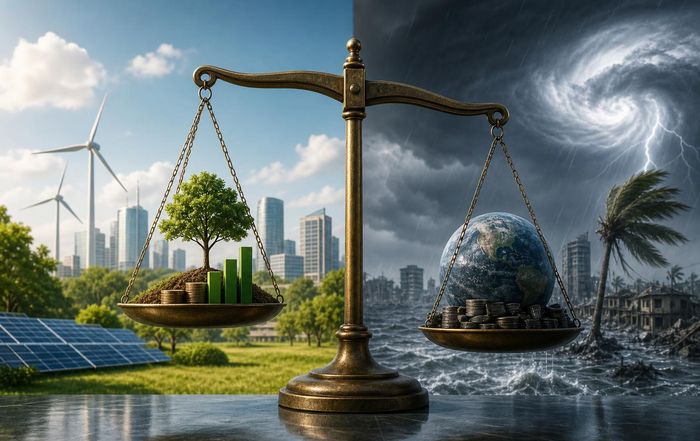
Why Climate Risk Is Becoming a Core Financial Consideration
Climate Risk Has Moved From the Footnotes to the Front Page
Climate risk is no longer a niche concern for sustainability teams or a line item buried in corporate social responsibility reports; it has become a central lens through which boards, investors, regulators, and lenders evaluate business models, capital allocation, and long-term value creation. Across the United States, Europe, Asia, and increasingly Africa and South America, climate exposure is being quantified, priced, regulated, insured, and litigated in ways that are reshaping how capital flows through the global economy. For the growing business news community of DailyBusinesss-executives, founders, investors, and policymakers spread from New York and London to Singapore, Sydney, and São Paulo-understanding climate risk has become an essential component of strategic and financial decision-making rather than a reputational or philanthropic issue.
The reframing of climate change from an environmental externality to a core financial variable has been propelled by a convergence of hard data on physical impacts, rapid policy and regulatory evolution, shifting consumer and employee preferences, and the accelerating economics of clean technologies. As institutions from the International Monetary Fund to the Bank for International Settlements have emphasized, climate risk now intersects with macroeconomic stability, financial system resilience, and sovereign creditworthiness in ways that no globally integrated business or investor can afford to ignore. Learn more about how climate change is reshaping economic outlooks through the latest analysis from the IMF.
For DailyBusinesss, which has consistently covered the intersection of business, finance, technology, and sustainability, climate risk is no longer a separate beat; it is a cross-cutting theme that touches corporate strategy, markets, investment, employment, and even world affairs. The companies and leaders who grasp this systemic shift early, and translate it into disciplined financial and operational responses, are increasingly the ones setting the competitive pace.
From Environmental Issue to Financial Risk: The New Materiality of Climate
The transformation of climate change into a core financial consideration has been driven by a growing recognition that both the physical impacts of a warming world and the policy and market responses to it translate directly into cash flows, asset values, and cost of capital. Physical risks-such as more frequent extreme weather events, chronic heat, sea-level rise, and water stress-are damaging infrastructure, disrupting supply chains, and altering productivity patterns across regions from North America and Europe to Asia and Africa. Transition risks-arising from policy changes, technological disruption, and shifts in consumer and investor sentiment-are revaluing carbon-intensive assets, stranding fossil fuel reserves, and forcing rapid business model adaptation in sectors from energy and transport to real estate and agriculture.
Regulators and standard-setters have played a pivotal role in translating these climate dynamics into financial language and disclosure requirements. The recommendations of the Task Force on Climate-related Financial Disclosures (TCFD), now embedded into regulations in jurisdictions such as the United Kingdom, the European Union, Japan, and increasingly Canada and Australia, have made it standard practice for listed companies and large financial institutions to assess and report on climate-related governance, strategy, risk management, and metrics. Learn more about evolving climate disclosure expectations from the TCFD framework.
In parallel, the International Sustainability Standards Board (ISSB) has introduced global baseline standards for climate-related reporting, which are being adopted or referenced by regulators from Singapore to Brazil and by securities regulators in major markets. This convergence is steadily closing the gap between voluntary sustainability reporting and mandatory financial disclosure, making climate risk a mainstream component of financial statements and investor communications. For readers of DailyBusinesss, this shift in materiality means that climate considerations are now embedded in the same analytical frameworks used to evaluate credit risk, operational risk, and strategic risk, rather than treated as an optional overlay.
Physical Climate Risk and the Changing Geography of Business
The physical manifestations of climate change are reconfiguring the geography of economic activity, investment, and labor in ways that are increasingly visible in corporate earnings, insurance claims, and sovereign risk assessments. Heatwaves in Southern Europe and parts of the United States, flooding in Germany and China, wildfires in Canada and Australia, and droughts in regions of Africa and South America have demonstrated that climate-related disruptions can no longer be treated as low-probability tail events. Instead, they are being integrated into baseline assumptions about operating conditions, asset durability, and supply chain continuity.
Insurers and reinsurers, including global leaders such as Munich Re and Swiss Re, have reported escalating climate-related losses, leading to rising premiums, reduced coverage, or complete withdrawal from high-risk areas in the United States, Canada, Australia, and parts of Europe. These developments directly affect corporate cost structures, project feasibility, and real estate valuations, particularly in coastal zones, wildfire-prone regions, and floodplains. Explore how climate risk is influencing insurance markets and financial stability through insights from the Bank for International Settlements.
For multinational corporations and global supply chains, physical climate risk is prompting a reassessment of sourcing strategies, manufacturing footprints, and logistics networks. Companies in sectors such as automotive, electronics, pharmaceuticals, and food processing are mapping climate exposures across their suppliers in Asia, Africa, and Latin America, and are increasingly diversifying or regionalizing sourcing to reduce vulnerability to climate-induced disruptions. This trend intersects directly with broader debates on deglobalization, reshoring, and strategic autonomy that DailyBusinesss has explored in its coverage of trade and global business.
Investors and lenders are also scrutinizing the physical climate resilience of assets more closely. Real estate investment trusts, infrastructure funds, and banks are integrating granular climate analytics-often using satellite data and geospatial modeling-into their underwriting processes to evaluate flood, heat, and storm exposure. Learn more about the science and projections behind physical climate risks through resources from the Intergovernmental Panel on Climate Change. For business leaders, this means that location decisions, capital expenditures, and long-term contracts must be evaluated not only through traditional financial metrics but also through a forward-looking lens on physical climate vulnerability.
Transition Risk, Policy Shifts, and the Repricing of Carbon
While physical risk reshapes where and how companies operate, transition risk is redefining which business models, technologies, and assets remain viable in a decarbonizing global economy. Governments across Europe, North America, and Asia have strengthened climate policies, setting net-zero targets, tightening emissions standards, and deploying large-scale incentives for clean technologies. The European Union's Green Deal, the United States' Inflation Reduction Act, and ambitious climate commitments from countries such as the United Kingdom, Japan, South Korea, and Canada are accelerating the shift toward low-carbon energy, transport, and industrial systems. Learn more about evolving climate and energy policies in advanced economies through the International Energy Agency.
Carbon pricing mechanisms, whether in the form of emissions trading systems or carbon taxes, are expanding in coverage and ambition, affecting sectors from power generation and manufacturing to aviation and shipping. The EU Emissions Trading System has already driven significant decarbonization in European power and industry, and the planned Carbon Border Adjustment Mechanism is beginning to influence global trade flows and competitiveness, particularly for exporters from regions with less stringent climate policies. Businesses across Germany, Italy, Spain, and the Netherlands are now factoring carbon costs into investment decisions and supply chain configurations.
Transition risk is not limited to regulated emissions; it also encompasses technological disruption and changing customer expectations. The rapid decline in the cost of renewable energy, battery storage, and electric vehicles has undercut the economics of fossil fuel-based systems in many markets. Utilities, automakers, and oil and gas companies from the United States to Norway and the Middle East are reassessing long-term demand scenarios and capital allocation strategies. Investors are increasingly wary of stranded asset risk in coal, oil, and gas projects that may not be economically viable under plausible climate policy trajectories. For in-depth analysis of how transition risk is affecting financial markets and corporate valuations, readers can explore the work of the Network for Greening the Financial System.
For the DailyBusinesss audience, transition risk translates into strategic questions: which technologies and business lines will attract capital and talent in a net-zero world; which assets risk obsolescence; and how quickly must organizations pivot to remain competitive in Europe, North America, and Asia-Pacific markets that are moving at different speeds but in the same decarbonization direction.
How Investors Are Pricing Climate Risk Into Capital Markets
Institutional investors, from large pension funds and sovereign wealth funds to asset managers and insurers, have become central actors in the integration of climate risk into financial decision-making. Over the past decade, climate-aware investing has evolved from niche "green" or "ethical" funds into mainstream portfolio risk management, with climate scenarios now incorporated into strategic asset allocation, stock selection, and credit analysis. Asset owners in the United Kingdom, the Netherlands, the Nordic countries, Canada, and Australia have been particularly active in setting net-zero portfolio targets and engaging with portfolio companies on decarbonization pathways.
Climate-themed indices and benchmarks, as well as portfolio analytics tools that quantify financed emissions and temperature alignment, have enabled investors to compare climate profiles across funds, sectors, and regions. Major index providers and data firms, including MSCI, S&P Global, and Bloomberg, now offer detailed climate metrics and scenario analysis, allowing investors to assess how portfolios might perform under different climate policy and physical risk pathways. Learn more about climate-aligned investing and the evolution of sustainable finance through insights from the UN-convened Principles for Responsible Investment.
Shareholder engagement and stewardship have become powerful levers for climate risk management. Large asset managers and pension funds are increasingly voting against boards and executives at companies perceived as laggards on climate strategy or disclosure, particularly in carbon-intensive sectors. Climate-related shareholder resolutions have become more sophisticated, focusing on credible transition plans, capital expenditure alignment, and lobbying transparency rather than purely symbolic commitments. This shift is evident across markets from the United States and United Kingdom to France, Germany, and Japan.
At the same time, climate-aligned financing instruments such as green bonds, sustainability-linked loans, and transition bonds are creating new channels for capital to flow toward low-carbon projects and corporate transformations. The global green bond market has expanded rapidly, with issuers from Europe, Asia, North America, and emerging markets tapping investor demand for climate-related investments. For a deeper understanding of how green finance is shaping capital flows, readers can consult resources from the Climate Bonds Initiative.
For the community that turns to DailyBusinesss for finance and investment insights, the message is clear: climate risk is increasingly inseparable from mainstream portfolio risk and opportunity assessment, and those who fail to integrate it systematically may face underperformance, reputational damage, and heightened regulatory scrutiny.
Central Banks, Regulators, and the Architecture of Climate-Aware Finance
Central banks and financial regulators have moved climate risk from the margins of prudential supervision to the center of their mandates to safeguard financial stability. Institutions such as the European Central Bank, the Bank of England, the Monetary Authority of Singapore, and the Bank of Japan have conducted climate stress tests, examining how banks and insurers would fare under different climate policy and physical risk scenarios. These exercises have revealed significant exposures to carbon-intensive sectors and climate-vulnerable regions, raising concerns about potential systemic risks if climate transitions are abrupt or poorly managed. Learn more about climate stress testing and regulatory approaches via the European Central Bank.
Supervisory guidance in many jurisdictions now expects banks and insurers to identify, measure, and manage climate-related financial risks as part of their core risk management frameworks. This includes integrating climate considerations into credit risk assessments, collateral valuations, and underwriting standards. In the United Kingdom, the Prudential Regulation Authority has set explicit expectations for climate risk governance, while regulators in the European Union, Canada, Australia, and increasingly in Asia and Latin America are adopting similar approaches.
Securities regulators and stock exchanges are also tightening climate-related disclosure and listing requirements. The U.S. Securities and Exchange Commission has advanced climate disclosure rules that will require many public companies to provide more detailed information on climate risks and greenhouse gas emissions, aligning with global trends. In Europe, the Corporate Sustainability Reporting Directive significantly expands the scope and depth of climate-related reporting. For a global overview of regulatory developments in sustainable finance, readers can access resources from the OECD.
For businesses and financial institutions that engage with DailyBusinesss for business strategy and economics insights, the implication is that climate risk management is no longer simply an internal best practice; it is a regulatory expectation that will increasingly influence capital requirements, disclosure obligations, and market access across North America, Europe, and Asia-Pacific.
Corporate Strategy, Governance, and the Climate-Competent Board
As climate risk becomes financially material, corporate boards and executive teams are being compelled to integrate climate considerations into strategy, capital allocation, and risk oversight. Climate-competent boards are emerging as a differentiator in markets from the United States and United Kingdom to Germany, Japan, and Singapore, where investors and regulators expect directors to understand and oversee climate-related risks and opportunities. Many leading companies have established dedicated board-level sustainability or climate committees, linking climate performance to executive remuneration and embedding climate metrics into enterprise risk management.
Strategically, companies are increasingly using scenario analysis to explore how different climate policy, technology, and physical risk trajectories could affect demand, costs, and asset values over five-, ten-, and twenty-year horizons. This forward-looking approach is particularly important in capital-intensive sectors such as energy, utilities, transport, chemicals, and real estate, where assets have long lifetimes and are exposed to both physical and transition risks. Learn more about how scenario analysis is being used in corporate climate strategy through case studies and guidance from the World Business Council for Sustainable Development.
Operationally, firms are investing in energy efficiency, renewable energy procurement, low-carbon product innovation, and supply chain decarbonization. In sectors ranging from automotive manufacturing in Germany and South Korea to consumer goods production in France, Italy, and the United States, climate-aligned innovation has become a source of competitive advantage and brand differentiation. Companies that can demonstrate credible, science-based decarbonization pathways are finding it easier to attract capital, secure favorable financing terms, and win contracts with climate-conscious customers and governments.
For the DailyBusinesss readership, which includes founders and executives building the next generation of growth companies, climate-aware governance and strategy are increasingly prerequisites for scaling in global markets. The platform's coverage of founders and leadership has highlighted that climate competence is becoming as essential to boardroom deliberations as digital fluency and financial acumen.
Climate Risk, Labor Markets, and the Future of Employment
Climate risk is also reshaping labor markets, workforce planning, and talent strategies across advanced and emerging economies. On the one hand, climate-related disruptions-such as heat stress, extreme weather events, and air pollution-are affecting worker health, productivity, and safety, particularly in sectors like construction, agriculture, logistics, and outdoor services across regions from Southern Europe and the Southern United States to South Asia and parts of Africa. On the other hand, the transition to a low-carbon economy is creating significant new employment opportunities in renewable energy, energy efficiency, sustainable finance, climate tech, and green infrastructure.
International organizations such as the International Labour Organization and the World Economic Forum have emphasized that the net employment impact of the climate transition is likely to be positive globally, but that the distribution of gains and losses will vary significantly across regions, sectors, and skill levels. Learn more about green jobs, reskilling, and the future of work in a climate-constrained world through the ILO's just transition initiatives. Countries such as Germany, Denmark, Sweden, Canada, and New Zealand have been particularly proactive in developing just transition strategies to support workers and communities affected by the decline of carbon-intensive industries.
For employers and HR leaders, climate risk management increasingly includes workforce resilience planning, from adapting workplace conditions to extreme heat and weather to developing flexible work arrangements and investing in mental health support following climate-related disasters. At the same time, competition for climate-literate talent-from engineers and data scientists to sustainability strategists and green finance professionals-is intensifying across global hubs such as London, New York, Berlin, Singapore, and Sydney.
The DailyBusinesss focus on employment and careers has consistently highlighted that climate competence is becoming a core skillset for professionals in finance, consulting, technology, and operations. Organizations that can articulate a credible climate strategy and demonstrate tangible progress are finding it easier to attract and retain top talent, particularly among younger workers in the United States, Europe, and Asia who prioritize purpose and sustainability in their career choices.
Technology, Data, and AI: The Infrastructure of Climate-Aware Finance
The integration of climate risk into financial decision-making depends heavily on advances in data, analytics, and digital infrastructure. Over the past few years, a vibrant ecosystem of climate tech and data providers has emerged, offering tools that combine climate science, geospatial analysis, artificial intelligence, and financial modeling. These tools enable companies, investors, and regulators to quantify climate exposures at the asset, portfolio, and system levels, and to evaluate the impact of different mitigation and adaptation strategies.
Artificial intelligence and machine learning are being used to model complex climate-related phenomena, from flood and wildfire risk to crop yields and energy demand under different climate scenarios. Financial institutions are increasingly partnering with climate analytics firms and academic institutions to develop proprietary models that integrate climate data with traditional risk metrics. Learn more about how AI is transforming climate and financial risk analysis through research and case studies from the World Resources Institute.
For technology leaders and innovators, particularly those engaged with DailyBusinesss through its coverage of technology and AI, climate risk analytics represents both a challenge and a growth opportunity. The challenge lies in the inherent uncertainties of long-term climate projections, data gaps in emerging markets, and the need for interoperability across different modeling approaches and standards. The opportunity lies in building platforms, tools, and services that help businesses and investors translate complex climate information into actionable financial and strategic decisions.
As climate-related data becomes more granular and widely available, it is likely to further accelerate the pricing of climate risk into asset values, insurance premiums, and credit spreads, reinforcing the centrality of climate considerations in financial markets worldwide.
Huge Needs for Business and Finance in a Climate-Constrained World
Now the question facing business and financial leaders is no longer whether climate risk is financially material, but how quickly and effectively they can integrate it into decision-making to protect value, capture opportunity, and maintain trust with stakeholders. For the educated and interactive subscriber members and public visiting people on DailyBusinesss, spanning boardrooms in the United States, the United Kingdom, Germany, Canada, Australia, France, Italy, Spain, the Netherlands, Switzerland, China, Singapore, South Korea, Japan, and beyond, several strategic imperatives stand out.
First, organizations must embed climate risk into core enterprise risk management and strategic planning, rather than treating it as a separate sustainability initiative. This requires clear board oversight, robust governance structures, and alignment of incentives so that climate considerations influence capital allocation, product development, and M&A decisions. Second, companies and financial institutions need to invest in the data, tools, and capabilities required to quantify and manage both physical and transition risks across their operations and portfolios, leveraging emerging best practices highlighted by bodies such as the Financial Stability Board.
Third, transparent, decision-useful climate disclosure is becoming a license to operate in global capital markets. Firms that can provide credible, comparable, and forward-looking information on their climate exposures and strategies are better positioned to access capital, satisfy regulators, and build trust with customers, employees, and communities. Finally, leaders must recognize that climate risk is not only a source of potential loss but also a driver of innovation, new markets, and competitive differentiation. From green infrastructure and low-carbon materials to climate-resilient agriculture and sustainable travel, the transition to a net-zero, climate-resilient global economy is creating new value pools across regions and sectors.
As DailyBusinesss continues to track amazing developments across business, markets, tech, and sustainable business models, one conclusion is increasingly clear: climate risk is now a core financial consideration, not a peripheral concern. Those who internalize this reality and act decisively-grounded in robust analysis, credible governance, and a long-term perspective-will be better equipped to navigate the uncertainties of the coming decade and to shape a more resilient and prosperous global economy.
