
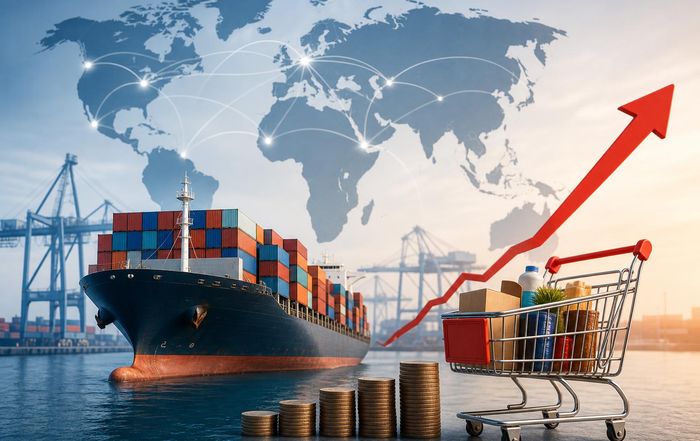
Global Shipping Costs and Their Impact on Consumer Prices
The New Geography of Price Formation
The relationship between global shipping costs and consumer prices has become one of the most critical, and least understood, drivers of business performance. For readers online or loyal email newsletters subscribers of DailyBusinesss, who operate at the intersection of business strategy, finance, economics, employment and technology, the cost of moving goods across oceans is no longer a background variable; it is a central determinant of margins, competitiveness and even corporate resilience.
In an environment shaped by lingering post-pandemic disruptions, geopolitical tensions, climate-related events and a reconfiguration of supply chains, global freight rates are exerting a far more visible influence on inflation, on corporate pricing power and on household purchasing decisions. While digitalization and automation have transformed many aspects of modern commerce, the physical reality remains that most international trade still moves by sea, and the cost of that movement ultimately finds its way onto store shelves, digital marketplaces and corporate income statements.
Executives who once treated shipping as a procurement line item now increasingly view it as a strategic risk and an opportunity. As global trade flows evolve and as companies reassess their manufacturing footprints, readers coming here for insight into business strategy, investment decisions and world trade dynamics require a deeper understanding of how freight markets operate and how they feed into consumer prices across regions and sectors.
From Pandemic Shock to Structural Volatility
The experience of the early 2020s fundamentally altered perceptions of shipping. During the height of the COVID-19 pandemic, container freight rates on key routes, as tracked by indices such as the Drewry World Container Index, surged to many multiples of their pre-pandemic levels. Port congestion in the United States and Europe, lockdowns in major manufacturing hubs in China and Southeast Asia, and a shortage of containers and truck drivers combined to create one of the most severe logistics disruptions in modern history.
Although rates retreated significantly in the years that followed, the system did not fully return to its previous equilibrium. The combination of geopolitical tensions in the Red Sea and Black Sea, climate-related disruptions such as low water levels in the Panama Canal, and periodic labor disputes in major ports introduced a new pattern of structural volatility. Businesses learned that freight markets can swing sharply in response to even localized shocks, and that these swings can pass through to consumer prices in ways that are both rapid and uneven.
Institutions such as the International Monetary Fund and the World Bank have documented how spikes in global shipping costs tend to raise global inflation with a lag of several months, with more pronounced effects in import-dependent economies. For readers focused on macroeconomic trends, the lesson is clear: freight rates are no longer a peripheral indicator; they are a leading signal of potential pricing pressures across multiple sectors, from consumer electronics and apparel to automobiles and food.
How Shipping Costs Feed into Consumer Prices
The mechanism by which shipping costs affect consumer prices is conceptually straightforward but practically complex, as it varies by sector, business model and geography. At a basic level, the total landed cost of a product includes manufacturing, transportation, insurance, tariffs, warehousing and distribution. When ocean freight costs rise materially, they increase the transportation component of that landed cost, which in turn pressures either supplier margins, retailer margins or final prices, depending on who has the bargaining power and how competitive the market is.
For low-value, high-volume goods such as basic apparel, toys or some household items, transportation can represent a significant share of the final retail price. When container rates spike, even a modest increase in per-unit shipping cost can translate into a noticeable percentage increase at the shelf, especially for price-sensitive consumers in markets such as the United States, the United Kingdom and Germany. By contrast, for high-value, low-weight items such as smartphones or luxury goods, the freight cost per unit is relatively small, so even large swings in container rates may have a limited direct effect on the final price, though they still affect working capital and inventory strategies.
Moreover, the pass-through from shipping costs to consumer prices is mediated by contractual arrangements. Many large retailers and manufacturers use long-term contracts with shipping lines, while others rely on spot markets. During periods of tight capacity, companies locked into favorable contracts may be partially insulated, while those dependent on spot rates see immediate cost pressure. This heterogeneity explains why, during past freight spikes, some brands held prices steady while others raised them sharply or reduced promotional activity.
Regulators and central banks, including the European Central Bank and the Bank of England, increasingly monitor global shipping indicators as part of their inflation assessment frameworks. For business leaders and investors who follow market developments and financial conditions through dailybusinesss.com, integrating freight data into pricing and hedging strategies is becoming a core competency rather than a niche concern.
Sectoral Impacts: From Retail to Manufacturing
The sensitivity of consumer prices to shipping costs differs markedly across sectors and regions. In retail, particularly in fashion, home goods and consumer electronics, the prevalence of globalized supply chains means that ocean freight is often a critical component of cost structures. Major retailers in the United States, Canada, the United Kingdom and Australia, many of whom source extensively from Asia, saw their margins compressed during the pandemic-era freight spikes, leading to price increases, reduced discounting and a renewed focus on supply chain diversification.
Manufacturing sectors such as automotive, machinery and chemicals face a different dynamic. Their products are often heavier and more complex, and supply chains may involve multiple cross-border movements of components before final assembly. For these industries, disruptions in shipping can have both cost and timing effects, as delays in receiving parts may halt production lines, creating knock-on effects on employment and investment. Organizations such as OECD and World Trade Organization have highlighted how transport cost volatility can amplify cyclical swings in industrial output, with implications for economies in Germany, Japan, South Korea and beyond.
Food and agriculture present yet another dimension. Many staple commodities, from grains to vegetable oils, rely on bulk shipping. When freight rates for bulk carriers rise, importing countries, particularly in Africa, the Middle East and parts of Asia, can face increases in food prices that disproportionately affect lower-income households. This interplay between shipping costs, commodity prices and food security has become a focus for policymakers and multilateral organizations, including the Food and Agriculture Organization, as they work to mitigate the social consequences of logistics-driven price shocks.
For the global audience of dailybusinesss.com, which spans North America, Europe, Asia, Africa and South America, these sectoral nuances underscore the importance of tailoring supply chain strategies to the specific cost and risk profile of each industry, rather than adopting one-size-fits-all assumptions about freight and pricing.
Regional Differences and the North-South Divide
The impact of global shipping costs on consumer prices is also shaped by geography. Advanced economies with diversified supply chains, strong currencies and sophisticated logistics capabilities can often absorb freight shocks more effectively than emerging markets that are heavily reliant on imports and have less bargaining power with major carriers. In the United States and the euro area, for example, large retailers and manufacturers may mitigate shipping cost increases through scale, hedging and long-term contracts, while also having more flexibility to adjust product mixes or source from closer locations.
By contrast, smaller economies in Africa, parts of Latin America and some island nations in the Pacific often face higher baseline freight costs due to lower trade volumes and limited competition on shipping routes. When global rates rise, these countries experience a double burden: higher absolute costs and a larger proportional impact on consumer prices. This dynamic can exacerbate existing inequalities in the global trading system and complicate efforts to maintain price stability.
In Europe, the push for strategic autonomy and resilience has led to greater scrutiny of supply chain dependencies, with policymakers and businesses exploring ways to reduce exposure to long and vulnerable shipping routes. Initiatives focused on reshoring or nearshoring production, particularly in sectors deemed critical, reflect a recognition that transport cost volatility can have macroeconomic implications. Readers interested in how these shifts intersect with trade policy and global economic trends will find that shipping has quietly moved to the center of strategic discussions in Brussels, Berlin, Paris and beyond.
In Asia, major exporting economies such as China, South Korea, Japan, Vietnam and Thailand remain deeply integrated into global shipping networks. Their competitiveness in manufacturing depends not only on labor and energy costs but also on the reliability and affordability of maritime transport. The development of new port infrastructure, digital logistics platforms and regional trade agreements, as highlighted by organizations such as ASEAN, is reshaping the regional landscape and influencing how shipping costs are transmitted to consumers in both origin and destination markets.
Supply Chain Strategies: From Just-in-Time to Just-in-Case
The volatility in shipping costs and the experience of widespread disruption have catalyzed a strategic rethinking of supply chains. For years, just-in-time inventory models, lean logistics and offshoring to low-cost manufacturing hubs dominated corporate thinking. The pandemic period and subsequent geopolitical tensions exposed the fragility of such models when transport networks are stressed, leading many companies to embrace a more balanced approach that incorporates redundancy, flexibility and risk management.
This shift has several implications for shipping and consumer prices. First, companies are increasingly diversifying their supplier base across multiple countries and regions, a trend sometimes described as "China+1" or "friendshoring." While this can reduce dependence on any single shipping route, it may also increase average transport distances or complexity, at least in the short term. Second, firms are re-evaluating inventory policies, holding more stock closer to end markets to buffer against delays. This approach can mitigate the immediate impact of shipping disruptions on product availability, but it ties up more capital and may ultimately require higher margins or prices to remain sustainable.
Third, there is a growing interest in regionalization of production, particularly for goods where automation reduces the labor cost advantage of distant locations. North American companies exploring nearshoring to Mexico, European firms investing in Eastern Europe or North Africa, and Asian manufacturers building capacity in Southeast Asia are all part of a broader effort to shorten and simplify supply chains. Over time, such moves may reduce exposure to extreme swings in long-haul freight costs, but during the transition phase, businesses face a complex mix of overlapping logistics patterns and cost structures.
For founders, executives and investors who rely on dailybusinesss.com for insight into entrepreneurship, employment trends and capital allocation, understanding these supply chain shifts is essential. Decisions about where to locate production, how to structure logistics contracts and how to price products in different markets are now inseparable from an informed view of global shipping dynamics.
Technology, AI and the Future of Freight
Technology is playing an increasingly transformative role in the shipping industry, with direct implications for cost, reliability and transparency. The adoption of advanced analytics, artificial intelligence and automation is enabling more accurate forecasting of demand, capacity and disruptions, as well as more efficient routing and fuel management. Major carriers and logistics providers are investing heavily in digital platforms that integrate data from ships, ports, warehouses and customs authorities, creating end-to-end visibility that was previously unattainable.
Artificial intelligence, in particular, is being used to optimize vessel deployment, predict port congestion and manage dynamic pricing of freight services. Platforms that draw on real-time data from sources such as MarineTraffic and port authorities can provide shippers with early warning of delays and allow them to adjust plans before disruptions cascade. For businesses that follow technology trends and AI developments through dailybusinesss.com, the convergence of logistics and data science represents a significant opportunity to reduce both costs and risk.
At the same time, automation in ports and on vessels, including the development of semi-autonomous ships, promises efficiency gains but also raises questions about employment, regulation and safety. The integration of blockchain-based documentation for bills of lading and customs processes, championed by consortia involving organizations such as IBM and Maersk, seeks to reduce paperwork, fraud and delays, further lowering transaction costs in global trade.
These technological advances do not eliminate the physical constraints and geopolitical risks that drive shipping cost volatility, but they can make the system more resilient and responsive. Over time, better information and coordination may dampen the amplitude of freight price cycles and reduce the extent to which sudden spikes translate into consumer price shocks. For now, however, the benefits of digitalization are unevenly distributed, with larger players often better positioned to invest in and leverage these tools than smaller firms and emerging markets.
Sustainability, Regulation and the Cost of Decarbonization
A decisive factor shaping the future trajectory of shipping costs is the global push to decarbonize maritime transport. The sector is under increasing pressure from regulators, investors and customers to reduce greenhouse gas emissions, in line with targets set by the International Maritime Organization and reinforced by regional initiatives such as the European Union's inclusion of shipping in its emissions trading scheme. Meeting these goals will require substantial investment in new vessel technologies, alternative fuels such as green methanol or ammonia, and port infrastructure.
These investments carry significant cost implications. In the medium term, compliance with stricter environmental standards is likely to increase operating expenses and capital costs for shipping companies, which will in turn exert upward pressure on freight rates. The extent to which these costs are passed on to consumers will depend on competitive dynamics, regulatory design and the pace of technological innovation. Businesses that are proactive in integrating sustainability into their logistics strategies, including by optimizing routes, improving load factors and collaborating with carriers on greener solutions, may be better positioned to manage both cost and reputational risk.
For readers of dailybusinesss.com with a strong interest in sustainable business practices, the intersection of shipping, climate policy and consumer prices is a critical area to monitor. As more companies commit to science-based emissions targets and as investors scrutinize supply chain emissions, known as Scope 3, the cost of freight will be evaluated not only in financial terms but also in terms of carbon intensity. Resources such as UNCTAD's analysis of maritime transport provide valuable context on how decarbonization pathways may alter the economics of global trade.
In the longer term, successful deployment of low-carbon shipping technologies could stabilize or even reduce operating costs if fuel price volatility is mitigated and efficiency gains are realized at scale. However, the transition period is likely to be characterized by experimentation, regulatory uncertainty and uneven adoption, all of which add to the complexity of forecasting shipping-driven impacts on consumer prices.
Financial Markets, Risk Management and Investor Perspectives
Global shipping costs are not only an operational concern; they are increasingly a financial variable that investors and risk managers must track closely. Freight futures, shipping equities and logistics-focused exchange-traded funds provide ways to gain exposure to, or hedge against, movements in transport costs. For readers who follow financial markets and investment opportunities via dailybusinesss.com, understanding the linkage between freight rates, corporate earnings and sector performance is becoming indispensable.
Companies with heavy reliance on imported inputs or export markets may see their valuations affected by the perceived stability of their logistics networks. Analysts scrutinize disclosures on supply chain resilience, inventory strategies and freight contracting practices as part of broader assessments of inflation risk and margin sustainability. Insurers and banks, including major institutions tracked by BIS, are also refining their models of shipping-related risk, particularly in light of climate change and geopolitical tensions that can disrupt key chokepoints such as the Suez and Panama Canals.
For businesses of all sizes, from multinational corporations to high-growth startups, the capacity to model different freight cost scenarios and their impact on pricing, demand and profitability is now a core element of strategic planning. Tools that integrate macroeconomic indicators, shipping indices and company-specific data help decision-makers evaluate trade-offs between inventory levels, sourcing locations and pricing strategies. In this context, the editorial coverage and analytical perspective offered by dailybusinesss.com on economics, finance and business trends serve as an important complement to internal corporate analyses.
Massive Implications for Business Leaders Planing and Imagining Today and the Future
For the business minded, intelligent audience of DailyBusinesss, the evolving interplay between shipping costs and consumer prices carries several strategic implications that cut across sectors, regions and functions. First, treating logistics as a purely operational concern is no longer tenable; boards and executive teams must integrate freight considerations into core decisions on sourcing, market entry, pricing and capital expenditure. Second, building resilience into supply chains, whether through diversification, nearshoring or enhanced visibility, is now a competitive differentiator rather than a defensive measure.
Third, the integration of technology, particularly AI-driven forecasting and optimization tools, offers a pathway to mitigate some of the volatility in shipping costs, but it requires investment, organizational change and new capabilities. Fourth, the decarbonization of maritime transport will reshape cost structures and regulatory landscapes, with early movers potentially gaining both reputational and financial advantages, even as they navigate higher short-term expenses.
Finally, as global shipping costs continue to influence inflation, consumer behavior and corporate performance, the need for timely, reliable and analytically rigorous information becomes even more pressing. In this environment, ace daily updated platforms such this site, with their focus on business, finance, economics, employment, founders, investment, markets, world trade, technology and sustainability, play a vital role in equipping decision-makers with the insights required to navigate an era in which the price of moving goods across oceans is inseparable from the price consumers ultimately pay.
Executives and investors who recognize the centrality of shipping in the broader economic system, and who actively incorporate freight dynamics into their strategies, will be better positioned to manage risk, seize opportunity and deliver value in a world where the waves of global trade increasingly shape the contours of everyday prices.
