
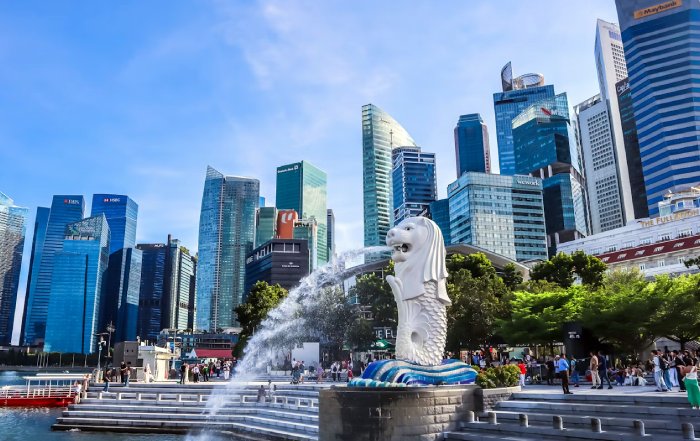
Singapore Cements Its Asian Financial Hub Status
Singapore's Strategic Position in the Global Financial System
By 2026, Singapore has decisively consolidated its position as one of the world's most important financial hubs, not only in Asia but in the broader global system that connects capital, talent, technology and trade. For the international business audience of DailyBusinesss.com, this evolution is not an abstract macroeconomic story; it is a practical reality that shapes capital allocation decisions, market entry strategies, hiring plans and risk management frameworks across sectors from traditional banking and asset management to digital assets, sustainable finance and advanced technology services. Singapore's ascent reflects a deliberate blend of long-term policy planning, disciplined regulation, aggressive investment in infrastructure and a consistent emphasis on transparency and rule of law, which together have attracted multinational institutions, high-growth founders and sophisticated investors from the United States, Europe and across Asia.
While financial centers such as New York, London, Hong Kong, Tokyo and Shanghai continue to play central roles, Singapore has carved out a distinctive niche as a neutral, innovation-friendly and politically stable gateway between East and West. The Monetary Authority of Singapore (MAS), acting both as central bank and integrated financial regulator, has been central to this trajectory, fostering a regulatory environment that is simultaneously stringent and agile, enabling the city-state to adapt quickly to shifts in global financial markets, regulatory expectations and technological trends. For executives and investors tracking developments through resources such as DailyBusinesss business coverage, Singapore's model offers a reference point for understanding how policy, technology and capital can be aligned to support long-term competitiveness.
Regulatory Strength, Stability and the Rule of Law
Singapore's reputation as a trusted financial hub has been built on decades of legal certainty, political stability and consistent regulatory standards. The city-state's legal framework, grounded in English common law, provides a predictable environment for contract enforcement, dispute resolution and cross-border transactions, which is particularly valued by multinational corporations and global financial institutions managing complex international portfolios. Independent assessments from organizations such as the World Bank and the World Economic Forum have repeatedly highlighted Singapore's strong governance, low corruption and robust regulatory quality, attributes that underpin its attractiveness to institutional investors, sovereign wealth funds and high-net-worth individuals.
The Monetary Authority of Singapore has developed a reputation among global regulators as a sophisticated and credible counterpart, participating actively in international standard-setting bodies such as the Bank for International Settlements, the Financial Stability Board and the International Organization of Securities Commissions, and aligning domestic regulation with evolving global norms on capital adequacy, anti-money-laundering standards and market conduct. For decision-makers following broader macroeconomic dynamics via DailyBusinesss economics insights, Singapore's regulatory approach illustrates how careful calibration of prudential rules can support both financial stability and innovation.
In parallel, Singapore's emphasis on legal predictability and efficient dispute resolution, including through institutions like the Singapore International Commercial Court and the Singapore International Arbitration Centre, has positioned the city as a preferred venue for resolving cross-border commercial disputes, particularly those involving parties from Asia, Europe and North America. This legal infrastructure, combined with the country's strong contract enforcement record, reduces the perceived risk premium for investors and lenders, encouraging the use of Singapore as a base for regional treasury centers, project finance structures and complex trade finance arrangements that span Asia and beyond.
Capital Markets, Banking and Asset Management Depth
Singapore's role as a financial hub is underpinned by the breadth and depth of its banking sector, capital markets and asset management industry. The city hosts a dense concentration of global banks, including JPMorgan Chase, Citigroup, HSBC, Standard Chartered, UBS, Credit Suisse (now part of UBS Group), Deutsche Bank and major regional institutions such as DBS Bank, OCBC Bank and UOB, all of which operate significant regional headquarters or booking centers in the city-state. The presence of these institutions, alongside a growing ecosystem of boutique investment firms, family offices and specialist asset managers, has transformed Singapore into a central node for managing wealth and corporate capital from across Asia, Europe, the Middle East and the Americas.
The Singapore Exchange (SGX) has continued to evolve as a multi-asset platform, offering equities, fixed income, derivatives and commodity products that connect investors to growth opportunities across Asia and beyond. While Singapore's equity market is smaller in market capitalization than those of the United States, China or Japan, its derivative markets, particularly in equity index futures and foreign exchange, have become critical tools for global investors hedging or expressing views on Asian risk. For readers of DailyBusinesss markets analysis, SGX's role in price discovery and risk transfer illustrates how regional exchanges can integrate into global trading strategies, especially when combined with reliable clearing and settlement infrastructure.
Asset management has been a central pillar of Singapore's financial strategy, with the city attracting both traditional and alternative managers seeking proximity to Asian clients and investment opportunities. Major global players such as BlackRock, Vanguard, Fidelity, PIMCO, KKR, Carlyle, Apollo and Bridgewater Associates have expanded their Singapore footprint, while the city has also become a favored base for hedge funds, private equity funds and real estate investment managers targeting markets from India and Southeast Asia to China and Australia. Studies from bodies such as the OECD and the IMF highlight how cross-border capital flows increasingly route through hubs like Singapore, reflecting both tax efficiency and operational advantages, and underscoring the city's importance in global asset allocation decisions.
Digital Finance, AI and the Future of Financial Services
From the perspective of DailyBusinesss.com readers focused on AI, fintech and the future of financial services, Singapore's deliberate positioning as a digital finance leader is particularly noteworthy. The Monetary Authority of Singapore has invested heavily in supporting innovation through initiatives such as the FinTech Regulatory Sandbox, digital bank licensing frameworks and public-private partnerships around payments, regtech and digital identity. These efforts have attracted a wave of technology-driven firms, including regional leaders like Grab, Sea Group and Gojek, as well as global technology companies such as Google, Meta, Amazon Web Services and Microsoft, which have established significant cloud and AI operations in the city.
Singapore's emergence as a hub for AI-driven finance has been underpinned by investments in data infrastructure, talent development and cybersecurity, as well as by collaboration between regulators, universities and industry. Institutions such as the National University of Singapore and Nanyang Technological University have developed strong research capabilities in machine learning, data science and financial engineering, feeding a pipeline of skilled professionals into banks, asset managers and fintech startups. For executives monitoring AI trends through DailyBusinesss AI coverage, Singapore provides a practical case study of how a compact, highly connected economy can integrate AI into mainstream financial operations, from automated credit scoring and algorithmic trading to fraud detection and personalized wealth management.
The city's digital payments landscape has advanced rapidly, with initiatives like PayNow, FAST and cross-border payment linkages with Thailand, Malaysia and India demonstrating how real-time, low-cost payment infrastructure can support trade, tourism and remittances across borders. International organizations such as the Bank for International Settlements have highlighted Singapore's role in experimental projects around central bank digital currencies and interoperable payment systems, which could reshape cross-border settlement in the coming decade. For technology-oriented readers who follow DailyBusinesss technology insights, these developments illustrate how payment innovation, AI and cloud computing are converging to redefine what it means to be a financial hub in the 2020s and beyond.
Crypto, Digital Assets and Tokenization
Digital assets and blockchain-based finance have been another area where Singapore has sought to balance innovation with regulatory prudence. While speculative excesses in global cryptocurrency markets have led many jurisdictions to tighten rules or adopt restrictive stances, Singapore has pursued a more nuanced approach, allowing carefully supervised experimentation while emphasizing investor protection and financial integrity. The Payment Services Act and subsequent regulatory updates have created a licensing regime for digital payment token service providers, requiring compliance with anti-money-laundering and counter-terrorism financing standards, as well as clear disclosures to retail investors.
Global exchanges and crypto-native firms such as Binance, Coinbase, Crypto.com and OKX have engaged with Singapore's regulatory framework in varying ways, and while not all have secured full licenses, the city remains a critical hub for institutional digital asset activity in Asia. Projects focused on tokenization of real-world assets, including tokenized bonds, funds and real estate, have attracted attention from banks and asset managers, with MAS-led initiatives such as Project Guardian exploring how distributed ledger technology can be applied to wholesale funding markets and asset management. For readers interested in digital assets who follow DailyBusinesss crypto coverage, Singapore's stance demonstrates that a jurisdiction can support blockchain innovation without compromising on regulatory standards or investor safeguards.
International standard setters, including the Financial Action Task Force and the International Monetary Fund, have increasingly emphasized the need for coherent regulatory frameworks for digital assets, and Singapore's experience is often cited as an example of how to integrate these new technologies into existing financial systems. As tokenization gains traction among institutional investors in the United States, Europe and Asia, Singapore's legal clarity, sophisticated banking sector and advanced digital infrastructure position it to play a central role in the emerging global architecture of digital capital markets.
Sustainable Finance and the ESG Imperative
Sustainable finance has become a defining theme in global capital markets, and Singapore has moved rapidly to establish itself as a regional hub for green, social and sustainability-linked finance. The government's Green Plan 2030 and related initiatives have created a national framework for decarbonization, while MAS has introduced grant schemes, disclosure guidelines and taxonomies aimed at supporting the issuance of green bonds, sustainability-linked loans and transition finance instruments. The city has attracted sustainability-focused teams from global banks, asset managers and rating agencies, positioning itself as a center for structuring, verifying and distributing ESG-related financial products across Asia.
Global bodies such as the International Sustainability Standards Board and the Task Force on Climate-related Financial Disclosures have driven convergence in sustainability reporting standards, and Singapore has been proactive in aligning domestic disclosure requirements with these evolving norms. This alignment is particularly important for multinational corporations and investors who must comply with regulatory expectations in the European Union, the United States and other major jurisdictions while operating in Asia. For readers tracking the intersection of finance and climate through DailyBusinesss sustainable business coverage, Singapore's role in building ESG market infrastructure highlights the importance of trusted hubs in accelerating the flow of capital toward low-carbon and socially responsible projects.
Regional demand for sustainable finance is growing rapidly as economies such as China, India, Indonesia, Vietnam and Thailand pursue energy transitions, infrastructure modernization and climate resilience projects. Singapore's ability to mobilize international capital, structure complex blended finance vehicles and provide specialized expertise in areas such as green taxonomy alignment, sustainability reporting and impact measurement gives it a competitive advantage as a gateway for ESG investments into Asia. International organizations like the United Nations Environment Programme Finance Initiative and the World Resources Institute have worked with Singapore-based institutions on sustainable finance initiatives, further reinforcing the city's reputation as a credible and forward-looking ESG hub.
Talent, Employment and the Founders' Ecosystem
A financial hub is ultimately built on people, and Singapore's deliberate cultivation of a deep, international talent pool has been central to its success. The city's immigration policies, education system and quality of life have attracted professionals from the United States, the United Kingdom, Germany, France, India, China, Australia and across Southeast Asia, creating a cosmopolitan workforce that is comfortable operating across borders and cultures. Employment opportunities span traditional finance, fintech, technology, legal services, consulting and corporate functions, making Singapore an increasingly attractive destination for mid-career professionals and senior executives seeking regional or global roles.
For readers following labor market dynamics through DailyBusinesss employment coverage, Singapore's approach to talent management offers insights into how small, open economies can compete in the global war for skills. Initiatives such as the Tech.Pass and various employment pass refinements have aimed to attract high-caliber technologists, founders and investors, while local upskilling programs and partnerships between universities and industry aim to ensure that Singaporean workers can participate fully in new growth sectors. The city's emphasis on continuous education, professional certification and cross-functional skills has supported the development of a workforce that is adaptable to rapid technological and regulatory change.
At the same time, Singapore has cultivated a vibrant startup and founders' ecosystem that complements its role as a financial hub. The presence of regional headquarters for venture capital firms, corporate venture arms and private equity funds has created a robust funding environment for startups in fintech, AI, enterprise software, logistics, healthtech and climate tech. Government-linked investors such as Temasek and GIC, along with accelerators and incubators, have played catalytic roles in supporting early-stage ventures. For entrepreneurs and investors tracking opportunities through DailyBusinesss founders section, Singapore's ecosystem demonstrates how access to capital, mentorship and regional markets can be combined to create a launchpad for companies seeking to scale across Asia-Pacific.
Trade, Connectivity and the Real Economy
Singapore's status as a financial hub cannot be separated from its role as a global trade and logistics center. Strategically located at the crossroads of major shipping lanes, the city is home to one of the world's busiest ports and a major air cargo hub, connecting manufacturers, suppliers and consumers across Asia, Europe, the Middle East, Africa and the Americas. This physical connectivity underpins its financial services, as trade finance, commodity trading, shipping finance and supply chain financing are all deeply integrated into the city's economic fabric. Organizations such as the World Trade Organization and the International Chamber of Commerce have highlighted Singapore's role in promoting open trade regimes, efficient customs procedures and digital trade facilitation, all of which support the flow of goods and capital.
For global businesses following DailyBusinesss trade and world coverage, Singapore's network of free trade agreements, including participation in the Comprehensive and Progressive Agreement for Trans-Pacific Partnership (CPTPP) and the Regional Comprehensive Economic Partnership (RCEP), provides a platform for accessing markets across Asia-Pacific and beyond. These agreements, combined with robust infrastructure and pro-business policies, have encouraged multinational corporations in sectors such as pharmaceuticals, electronics, consumer goods and logistics to base regional headquarters or treasury centers in Singapore, further reinforcing the city's financial ecosystem.
The interplay between trade, travel and finance is also evident in Singapore's tourism and aviation sectors, anchored by Changi Airport, consistently ranked among the world's leading airports. As global travel patterns recover and evolve, Singapore's role as a hub for business travel, conferences and high-level diplomatic engagements continues to support deal-making, investor roadshows and cross-border collaboration. For readers interested in how mobility shapes business strategy, DailyBusinesss travel insights provide context on how air connectivity and hospitality infrastructure underpin the city's broader economic and financial ambitions.
Geopolitics, Risk and the Search for Neutral Ground
In an era marked by geopolitical tension, regulatory fragmentation and shifting supply chains, Singapore's perceived neutrality and diplomatic agility have become increasingly valuable to global investors and corporations. The city-state maintains strong relationships with the United States, China, the European Union, India and key regional partners, positioning itself as a trusted interlocutor and stable base of operations in a turbulent environment. International think tanks such as the Carnegie Endowment for International Peace and the Brookings Institution have noted Singapore's careful balancing act, which seeks to preserve open trade and investment flows while navigating complex strategic rivalries.
For multinational corporations and financial institutions reassessing their Asia strategies in light of supply chain diversification, regulatory shifts and political risk, Singapore offers a relatively low-risk jurisdiction with robust legal protections, predictable policy-making and strong connectivity. This has led to a gradual reallocation of some regional headquarters, trading desks and risk management functions from other cities in the region to Singapore, a trend closely watched by readers of DailyBusinesss global business news. While Singapore does not seek to replace other major hubs, its ability to provide a stable base that is acceptable to stakeholders across different geopolitical blocs enhances its attractiveness as a financial center.
Looking Ahead: Singapore's Next Phase as a Financial Hub
As 2026 unfolds, Singapore's status as an Asian and global financial hub appears well entrenched, yet the city-state faces a series of strategic challenges and opportunities that will shape its next phase of development. Intensifying competition from other regional centers, evolving regulatory expectations, rapid technological change and the imperative to support sustainable and inclusive growth all require continuous adaptation. Policymakers, regulators and industry leaders in Singapore are acutely aware that past success does not guarantee future relevance, and that maintaining the city's competitive edge will depend on its ability to innovate, attract talent, manage risks and align with global standards.
For the international audience of DailyBusinesss.com, which spans investors, founders, executives and policymakers across North America, Europe, Asia, Africa and Latin America, Singapore's experience offers both a benchmark and a source of practical insight. By combining strong institutions, prudent regulation, open trade, advanced digital infrastructure and a relentless focus on talent and innovation, Singapore has demonstrated how a small state can punch far above its weight in the global financial system. As readers explore related themes across DailyBusinesss finance coverage, investment analysis and technology reporting, Singapore's trajectory will remain a critical reference point for understanding the evolving architecture of global finance, the future of work in financial services and the shifting balance of economic power in the twenty-first century.
