
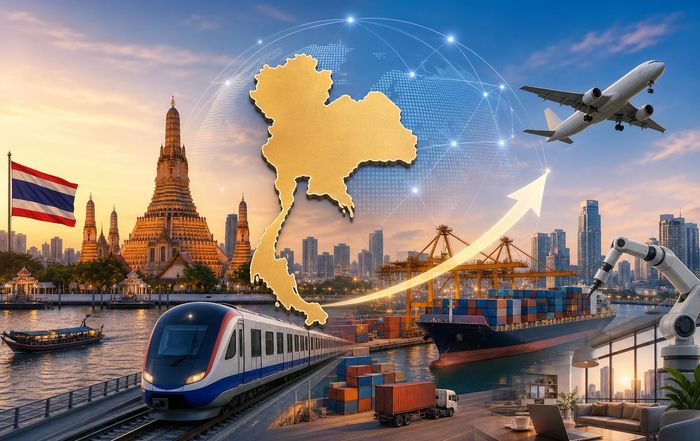
Thailand's Growth Opportunities in Trade and Services
A Strategic Moment for Thailand's Next Economic Chapter
As time unfolds, Thailand stands at a pivotal juncture in its economic development, with trade and services emerging as the principal engines of future growth and a central focus for the growing business fans and online readership or email newsletter members of DailyBusinesss.com. Long known as one of Southeast Asia's most dynamic middle-income economies, Thailand is now re-positioning itself to capture higher-value opportunities in regional trade, advanced services, and digital commerce, while navigating intensifying geopolitical competition, demographic pressures, and rapid technological change. For investors, corporate leaders, and policymakers across the United States, Europe, and Asia, understanding Thailand's evolving role in global value chains has become essential to evaluating supply-chain resilience, market entry strategies, and cross-border capital allocation.
Thailand's trajectory cannot be assessed in isolation; it is deeply intertwined with shifting trade patterns in the Association of Southeast Asian Nations (ASEAN), the reconfiguration of manufacturing networks between China and the rest of Asia, and the global shift toward services-led, digital, and low-carbon growth. According to the World Bank, Thailand's economy has steadily recovered from the pandemic shock, supported by a rebound in tourism, resilient exports, and a renewed push for structural reforms. At the same time, the country's long-standing strengths in manufacturing, logistics, and tourism are being re-examined through the lens of technology adoption, sustainability requirements, and evolving consumer preferences. Against this backdrop, DailyBusinesss is observing a decisive move by Thai policymakers and business leaders to transform trade and services from traditional pillars into sophisticated, innovation-driven platforms for long-term competitiveness.
Macroeconomic Context: Stability, Recovery, and Rebalancing
Thailand's growth prospects in trade and services rest on a foundation of relative macroeconomic stability and a deliberate strategy to rebalance the economy. Over the past decade, Thailand has maintained prudent fiscal and monetary policies, controlled inflation, and preserved a comparatively strong external position, with solid foreign exchange reserves and a diversified export base. International institutions such as the International Monetary Fund have repeatedly highlighted the country's external resilience and its capacity to absorb shocks, even as global uncertainty persists.
Yet, stability alone is not sufficient to unlock new growth. Thailand's potential output has been constrained by demographic aging, productivity challenges, and structural bottlenecks in education, innovation, and regulatory efficiency. Policymakers are therefore seeking to shift the growth model from one heavily dependent on low-cost manufacturing and mass tourism toward a more balanced structure that emphasizes advanced manufacturing, high-value services, and knowledge-intensive activities. This rebalancing is evident in Thailand's long-term development strategy, particularly under the Thailand 4.0 policy framework, which aims to foster digital transformation, upgrade industrial capabilities, and promote innovation-driven services.
For global investors tracking macro trends and sector rotations on platforms such as DailyBusinesss.com's dedicated and totally new economics and markets sections, Thailand's macro narrative is increasingly one of transition: from a middle-income manufacturing hub to a regional services and trade platform, integrated with both Western and Asian economies, and increasingly shaped by digital infrastructure and sustainability imperatives.
Thailand's Evolving Role in Global and Regional Trade
Trade remains the backbone of Thailand's economy, with exports of goods and services accounting for a substantial share of GDP and linking the country to major markets in North America, Europe, and East Asia. Historically, Thailand's comparative advantage has been anchored in automotive production, electronics, and agro-industrial products, with Japanese, South Korean, and European manufacturers using Thailand as a regional base. As global supply chains adjust to geopolitical tensions and calls for diversification away from single-country dependence, Thailand is positioning itself as a reliable alternative and complement within the broader "China+1" and "Asia+1" strategies pursued by multinational corporations.
The country's membership in ASEAN and participation in the Regional Comprehensive Economic Partnership (RCEP) give it preferential access to some of the world's most dynamic markets, including China, Japan, South Korea, and Australia. Businesses looking to understand regional integration and trade flows can consult resources such as the World Trade Organization and the ASEAN Secretariat to appreciate how tariff reductions, rules of origin, and trade facilitation measures are reshaping intra-Asian trade. Thailand's strategic location, with well-developed port infrastructure and logistics networks, further strengthens its position as a gateway between mainland Southeast Asia, the broader Asia-Pacific, and, increasingly, Europe via emerging overland and maritime corridors.
For the loyal corporate audience visiting here, the implications are clear: Thailand is evolving from a low-cost export platform into a multi-faceted trade hub that combines manufacturing, logistics, and services, with opportunities spanning automotive supply chains, electronics, food processing, and high-value agribusiness. At the same time, the government is investing in customs modernization, digital trade documentation, and cross-border e-commerce frameworks, aligning with international best practices promoted by organizations such as the World Customs Organization and UNCTAD. These reforms aim to reduce transaction costs, enhance transparency, and make Thailand more attractive for companies seeking efficient and predictable trade environments.
Services as the New Growth Engine
While manufacturing and goods trade remain central, the most significant growth opportunities for Thailand in 2026 lie in the expansion and upgrading of its services sector. Services already account for a majority of employment and a large share of GDP, but their productivity and value-added content vary widely across subsectors. The post-pandemic recovery has accelerated the shift toward digital services, knowledge-intensive professional services, and experience-driven tourism, prompting both policymakers and business leaders to re-evaluate how services can drive sustainable, inclusive growth.
One of the key areas is financial and business services. Bangkok has long been a regional hub for banking, insurance, and corporate services, hosting the regional offices of major global institutions such as HSBC, Standard Chartered, and Citigroup, as well as leading Thai banks like Bangkok Bank and Kasikornbank. As cross-border investment and trade flows deepen, demand is growing for sophisticated financial products, risk management solutions, and advisory services tailored to mid-market enterprises and high-net-worth individuals across Southeast Asia. International standards and regulatory frameworks promoted by the Bank for International Settlements and the Financial Stability Board are influencing reforms in Thailand's financial sector, encouraging stronger governance, digital innovation, and risk oversight.
For new or old readers exploring sector-specific insights on DailyBusinesss.com's finance and investment pages, Thailand's financial services landscape presents opportunities in digital payments, wealth management, sustainable finance, and cross-border financing of infrastructure and trade. The rapid growth of fintech, supported by regulatory sandboxes and open-banking initiatives, is enabling new business models and partnerships between incumbent banks, technology firms, and startups, while also raising questions about data privacy, cybersecurity, and financial inclusion.
Tourism, Hospitality, and Experience-Driven Services
Tourism has long been one of Thailand's signature strengths, with destinations such as Bangkok, Phuket, Chiang Mai, and Koh Samui attracting tens of millions of visitors annually from China, Europe, North America, and within Asia. The pandemic severely disrupted this sector, but the recovery has been robust, with international arrivals rebounding as travel restrictions eased and consumer confidence returned. The UN World Tourism Organization has highlighted Thailand's role as a bellwether for tourism recovery in Asia, given its diversified visitor base, strong brand recognition, and extensive hospitality infrastructure.
However, the future of Thai tourism is not simply a return to pre-pandemic volume; it is a transition toward higher-value, more sustainable, and experience-driven services. Authorities and industry leaders are emphasizing wellness tourism, medical tourism, cultural and culinary experiences, and eco-tourism that align with global trends toward responsible travel and personalized experiences. Businesses are increasingly integrating sustainability standards such as those promoted by the Global Sustainable Tourism Council, recognizing that environmental stewardship, community engagement, and authenticity are now core elements of competitiveness.
For corporate travel planners, investors in hospitality assets, and service providers tracking trends through DailyBusinesss.com's often enjoyed travel and world coverage, Thailand's tourism evolution offers opportunities in premium accommodation, boutique and lifestyle concepts, health and wellness facilities, and digital platforms that enhance the end-to-end visitor journey. At the same time, the sector's growth is prompting a broader conversation on labor standards, skills development, and the integration of local communities into tourism value chains, with implications for employment and regional development.
Digital Transformation, AI, and the Services Revolution
The digital transformation underway in Thailand is reshaping both trade and services, with artificial intelligence, data analytics, cloud computing, and platform business models driving new efficiencies and business opportunities. Under the Thailand 4.0 strategy and initiatives led by agencies such as the Digital Economy Promotion Agency (DEPA), the country is investing in broadband infrastructure, smart logistics, e-government, and digital skills, while encouraging private-sector innovation in areas ranging from e-commerce and fintech to healthtech and logistics tech.
Global benchmarks from organizations like the OECD and World Economic Forum underscore the importance of digital readiness and innovation ecosystems in determining a country's competitiveness in services trade. Thailand is making steady progress, with a vibrant startup scene in Bangkok and Chiang Mai, increasing venture capital interest from regional funds, and growing collaboration between universities, corporates, and accelerators. For technology executives and investors following developments through DailyBusinesss.com's ai and technology recent updated sections, Thailand presents a compelling case of an emerging digital services hub that is still early in its innovation curve, offering both upside potential and execution risks.
Artificial intelligence is particularly transformative in sectors such as logistics, retail, financial services, and healthcare. Thai logistics providers are deploying AI-driven route optimization and warehouse automation to enhance supply-chain efficiency, while retailers are using data analytics to personalize offerings and manage inventory. Banks and fintech firms are implementing AI for credit scoring, fraud detection, and customer service, building on global practices documented by institutions such as the Bank of Thailand and the IMF in their digital finance research. Healthcare providers and medical tourism operators are exploring AI-enabled diagnostics and telemedicine to serve both domestic and international patients more effectively.
For DailyBusinesss.com, which has built a strong editorial focus on the intersection of business and technology, these developments highlight how digital capabilities are no longer optional add-ons but central determinants of Thailand's competitiveness in trade and services. Companies considering market entry or expansion in Thailand must therefore evaluate local digital infrastructure, regulatory frameworks on data and privacy, and the availability of digital talent, as these factors will significantly influence operational performance and risk profiles.
Financial, Trade, and Investment Connectivity
Thailand's growth opportunities in trade and services are closely linked to its ability to attract and deploy capital efficiently, integrating more deeply into global financial and investment networks. The Board of Investment of Thailand (BOI) continues to offer incentives for high-value sectors, including advanced manufacturing, digital services, and green industries, while also refining policies to attract regional headquarters and service centers. International investors, including private equity and infrastructure funds from the United States, Europe, Japan, and Singapore, are increasingly examining Thailand as a base for regional operations and as a destination for long-term capital in logistics, renewable energy, and digital infrastructure.
As cross-border capital flows intensify, Thailand's regulatory environment is gradually aligning with global standards on transparency, anti-money laundering, and corporate governance, drawing on frameworks from bodies such as the OECD and the International Organization of Securities Commissions. These reforms are essential to strengthening investor confidence and ensuring that growth in services and trade is underpinned by robust institutions and rule of law. For the super investment-oriented readership checking us out, the interplay between regulatory modernisation, capital-market development, and sectoral opportunities in Thailand will remain a key theme, particularly as global investors seek diversification across Asia beyond the largest markets.
Internally, DailyBusinesss.com's business and trade verticals are tracking how Thai corporates are financing expansion into neighboring markets such as Vietnam, Cambodia, and Laos, often using Thailand as a financial and managerial hub. This outward investment complements inbound foreign direct investment, reinforcing Thailand's role as both a recipient and a source of capital within ASEAN. The integration of financial and trade connectivity, supported by digital solutions and regional agreements, is creating a more complex but also more opportunity-rich environment for multinational and regional enterprises.
Labor, Skills, and the Future of Employment
The expansion of trade and services in Thailand has profound implications for employment, skills, and social inclusion. While the services sector is labor-intensive and has the potential to absorb workers from traditional agriculture and low-value manufacturing, the shift toward higher-value services and digital business models requires new skill sets, from data literacy and digital marketing to specialized technical and professional expertise. Organizations such as the International Labour Organization have emphasized the need for targeted skills development, active labor-market policies, and social protection to ensure that the benefits of structural transformation are broadly shared.
Thailand faces demographic headwinds, including an aging population and slower labor-force growth, which could constrain long-term potential unless offset by productivity gains, higher female labor-force participation, and selective migration policies. At the same time, the country has a large cohort of young people and mid-career workers who can be upskilled or reskilled to meet the demands of modern services sectors. Partnerships between government agencies, educational institutions, and private employers are therefore critical, with growing emphasis on vocational training, digital skills boot camps, and lifelong learning platforms.
For HR leaders, policymakers, and corporate strategists engaging with DailyBusinesss.com's employment coverage, Thailand offers a nuanced case study of how an emerging economy can navigate the future of work in a services- and technology-driven context. The country's experience underscores the importance of aligning education systems with market needs, incentivizing firms to invest in human capital, and using digital tools to expand access to training and employment opportunities, including in rural and secondary cities.
Sustainability, Green Services, and Responsible Growth
No discussion of Thailand's growth opportunities in trade and services would be complete without addressing sustainability and the transition to a low-carbon, resource-efficient economy. Climate change, environmental degradation, and social inequality are increasingly recognized as material business risks, with regulators, investors, and consumers demanding higher standards of corporate responsibility and transparency. Thailand, with its exposure to climate risks such as flooding and rising sea levels, has strong incentives to integrate sustainability into its growth model, particularly in sectors such as tourism, agriculture, manufacturing, and logistics.
The Thai government has announced climate commitments and is progressively aligning with international frameworks such as the Paris Agreement and reporting standards promoted by the Task Force on Climate-related Financial Disclosures. These commitments are influencing investment decisions, trade policies, and corporate strategies, as firms seek to reduce emissions, improve energy efficiency, and adopt circular-economy practices. For service sectors, this translates into opportunities in green finance, sustainability consulting, renewable-energy project development, and ESG-focused investment products.
Readers interested in how these trends intersect with business strategy can explore DailyBusinesss.com's unaffiliated sustainable and crypto sections, where coverage increasingly examines the role of technologies such as blockchain in supply-chain transparency, carbon markets, and sustainable finance. Thailand's potential to become a regional hub for green services, including carbon accounting, climate risk analytics, and sustainable tourism certification, is growing as global companies seek local partners who understand both international standards and regional specificities.
Top Outlook: Positioning Thailand in a Fragmenting Global Economy
Going ahead, Thailand's growth opportunities in trade and services will be shaped by a complex interplay of global and domestic forces. Geopolitical tensions, particularly between major powers, are fragmenting the global trading system and prompting companies to rethink supply-chain configurations and market diversification strategies. At the same time, technological change is accelerating, sustainability requirements are tightening, and consumer preferences are becoming more sophisticated and values-driven. In this environment, Thailand's success will depend on its ability to maintain openness, deepen integration with regional and global partners, and sustain a reform momentum that enhances competitiveness, transparency, and innovation.
From a strategic standpoint, Thailand is well-positioned to serve as a bridge between developed markets in North America and Europe and emerging markets across Asia and Africa, leveraging its trade agreements, logistics infrastructure, digital capabilities, and services expertise. Its relationships with key partners such as the United States, China, Japan, and the European Union will remain central, both as sources of demand and as providers of capital, technology, and know-how. Organizations like the World Economic Forum and Chatham House continue to analyze how middle-income economies like Thailand can navigate this multipolar landscape, balancing economic opportunities with geopolitical risks.
For the global increasing business thinking community that turns to DailyBusinesss for timely original analysis across news, tech, and broader world developments, Thailand offers a compelling case of an economy at an inflection point. Its efforts to upgrade trade infrastructure, expand high-value services, embrace digital transformation, and embed sustainability into its growth model will determine not only its domestic prosperity but also its role in shaping the future architecture of regional and global commerce.
As 2026 progresses, the narrative around Thailand is shifting from recovery to reinvention. For executives considering regional headquarters, investors seeking diversified exposure to Asian growth, founders exploring new digital and service-based ventures, and policymakers designing trade and investment strategies, Thailand's evolving ecosystem in trade and services deserves close attention. In many ways, the country's journey encapsulates the broader story that DailyBusinesss.com is committed to telling: how economies, businesses, and societies can adapt to a fast-changing world by combining skills, good content and passion in pursuit of sustainable, inclusive, and forward-looking growth.
