
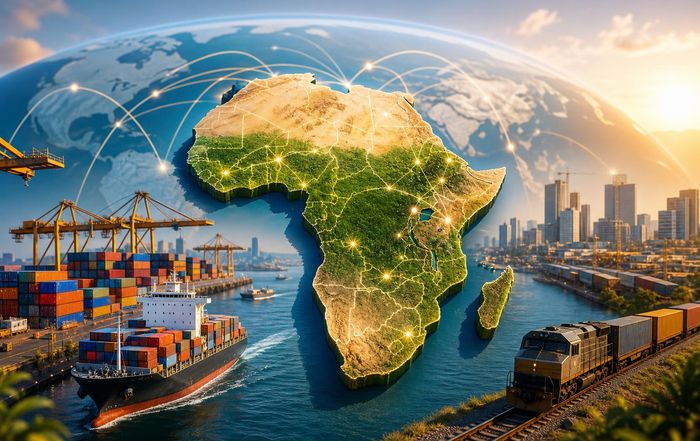
Africa's Growing Importance in the Future of Global Trade
A New Center of Gravity for Global Commerce
I think we're all starting to realise that there is a structural shift in the architecture of global trade that is becoming impossible to ignore: Africa is moving from the periphery of the world economy toward a more central, strategic position. For a business audience following daily professional news developments through DailyBusinesss, this is not a distant, speculative narrative but a practical, risk-relevant and opportunity-rich reality that is beginning to reshape decisions in corporate boardrooms, investment committees and policy circles in North America, Europe, Asia and beyond.
The continent's rising importance is anchored in a convergence of factors: rapid demographic expansion, accelerating urbanization, the digital leap enabled by mobile connectivity, the gradual implementation of the African Continental Free Trade Area (AfCFTA), and a recalibration of global supply chains that is pushing multinationals to diversify beyond traditional manufacturing hubs. When these trends are viewed through the lenses of business strategy, finance, economics, employment and investment, it becomes clear that Africa is no longer merely a resource supplier; it is evolving into a complex, multi-sectoral trade partner and, in many cases, a future consumer powerhouse.
Readers online or off-line newsletter subscribers who regularly follow the business and markets coverage on DailyBusinesss.com already recognize that the question is no longer whether Africa will matter to global trade, but how quickly companies and investors can build the capabilities, partnerships and risk frameworks needed to participate in this transformation in a disciplined and profitable way.
Demographics, Urbanization and the Shape of Future Demand
Africa's demographic trajectory is perhaps the single most powerful driver of its rising trade relevance. According to projections from the United Nations at un.org, the continent is expected to account for roughly a quarter of the world's population by 2050, with Nigeria, Ethiopia, Egypt, DR Congo, Tanzania and others contributing to a surge in working-age citizens. Unlike the aging populations in Japan, Germany or Italy, Africa's median age remains below 20 in many countries, underpinning a long-term expansion of labor supply and consumer demand.
This demographic momentum is amplified by intense urbanization. Data from UN-Habitat at unhabitat.org show that African cities are among the fastest-growing globally, with megacities such as Lagos, Cairo, Kinshasa and Nairobi expanding at a pace that is reshaping consumption patterns, infrastructure needs and service industries. As more people move into urban centers, demand rises for housing, transport, energy, digital services, healthcare, education and consumer goods, creating an ecosystem that is deeply intertwined with global trade flows in construction materials, machinery, technology, food products and professional services.
For executives tracking global consumer markets, the implication is clear: Africa is not only a supplier of commodities; it is a future demand engine. Companies that want to understand how this will affect sectoral growth and capital flows can follow related analyses in the always up-to-date economics section at dailybusinesss.com/economics.html, where demographic and macroeconomic trends are increasingly linked to trade and investment strategies.
The African Continental Free Trade Area: A Structural Game Changer
The formal launch and gradual implementation of the AfCFTA represent a historic attempt to integrate a fragmented trade landscape. Covering 54 countries and potentially 1.3 billion people, AfCFTA aims to reduce tariffs on up to 90 percent of goods, harmonize standards and simplify customs procedures, thereby lowering transaction costs for intra-African trade and improving the continent's attractiveness for global investors seeking scale.
Information from the African Union at au.int and the AfCFTA Secretariat at afcfta.au.int underscores that while implementation is uneven and often slowed by domestic politics, the direction of travel is unmistakable. Over time, a more integrated African market could enable regional value chains in automotive, pharmaceuticals, textiles, agribusiness and digital services, allowing producers to achieve economies of scale and integrate more deeply into global supply networks.
For multinational companies contemplating manufacturing or assembly operations in South Africa, Morocco, Egypt, Kenya or Ghana, the potential of AfCFTA to reduce border frictions and standardize regulations is a critical strategic consideration. It also has implications for trade finance, cross-border logistics and regional infrastructure, themes that are closely followed in the 100% original trade and business coverage on DailyBusinesss.com at dailybusinesss.com/trade.html and dailybusinesss.com/business.html. As tariff barriers fall and non-tariff barriers are gradually addressed, Africa's share of global trade could rise not merely through commodity exports but via higher value-added industrial and services trade.
Supply Chain Diversification and "China-Plus-Many"
Geopolitical tensions, pandemic-induced disruptions and heightened scrutiny of supply chain resilience have driven many global corporations to adopt "China-plus-one" or "China-plus-many" strategies. In this context, Africa is increasingly evaluated as a complementary manufacturing and sourcing base alongside Southeast Asia, India and Latin America. Reports from organizations such as the World Bank at worldbank.org and McKinsey & Company at mckinsey.com highlight that countries like Ethiopia, Rwanda, Morocco and Egypt have already attracted significant investment in textiles, automotive components, electronics assembly and agriprocessing, supported by industrial parks, special economic zones and targeted incentives.
The logic for global manufacturers is multifaceted. First, Africa offers access to both low-cost labor and, in some cases, proximity to raw materials, which can shorten supply chains. Second, preferential trade agreements with the European Union, the United States and other partners, such as the African Growth and Opportunity Act (AGOA), can provide tariff advantages. Third, as AfCFTA matures, producers can use one African country as a base to serve a much larger regional market.
However, realizing this potential requires significant improvements in infrastructure, logistics and regulatory predictability. The World Economic Forum at weforum.org has repeatedly emphasized the need for investment in ports, railways, digital connectivity and customs modernization to unlock Africa's role in global value chains. For investors and executives who monitor these developments, the markets and investment sections of DailyBusinesss.com at dailybusinesss.com/markets.html and dailybusinesss.com/investment.html offer a lens into how capital is being deployed across infrastructure, logistics and industrial projects that underpin the continent's trade capacity.
Finance, Capital Flows and the Search for Yield
Africa's integration into global trade cannot be separated from its integration into global capital markets. Over the last decade, sovereign Eurobond issuances, private equity activity and venture capital flows into African startups have expanded, albeit with volatility and country-specific risks. According to data compiled by the International Monetary Fund at imf.org, African economies have increasingly tapped international markets to finance infrastructure, energy and social investments, while also attracting portfolio investors seeking diversification and higher yields.
Yet this process has been uneven. Rising global interest rates, currency depreciation and governance concerns have exposed vulnerabilities in some countries, leading to debt restructuring discussions and renewed focus on debt sustainability. Institutions such as the African Development Bank at afdb.org have emphasized the need for better project preparation, stronger domestic capital markets and innovative instruments such as green bonds and blended finance to support trade-enabling investments without jeopardizing fiscal stability.
For financial professionals following Africa through DailyBusinesss.com, the interplay between trade growth, macroeconomic stability and financial market development is central. The finance coverage at dailybusinesss.com/finance.html (https://www.dailybusinesss.com/finance.html) increasingly explores how African sovereign and corporate issuers are positioning themselves, how currency risk is managed, and how global investors from the United States, United Kingdom, Germany, Canada, Singapore and South Africa are adjusting their exposure in light of both opportunity and risk. This financial dimension is critical for understanding how trade flows will be financed and how shocks in one part of the world may transmit through African economies.
Employment, Skills and the Future of Work
Africa's growing role in global trade will be shaped not only by capital and policy but by the continent's labor force and its evolving skills base. With millions of young people entering the labor market each year, the challenge is to convert demographic potential into productive employment rather than social pressure. Organizations such as the International Labour Organization at ilo.org and UNESCO at unesco.org have consistently argued that improvements in education quality, vocational training and digital skills are crucial if African workers are to participate effectively in higher value-added segments of global value chains.
The expansion of trade-related sectors such as logistics, manufacturing, agribusiness, tourism and digital services can generate substantial employment, but only if accompanied by investments in human capital. Countries like Kenya, Rwanda and Ghana have begun to position themselves as technology and services hubs, while South Africa, Morocco and Egypt leverage more established industrial and services ecosystems. As automation and artificial intelligence reshape the nature of work globally, Africa faces a dual task: creating large numbers of entry-level jobs while also nurturing a cadre of highly skilled professionals who can lead innovation and manage complex trade and investment projects.
For readers of DailyBusinesss.com tracking labor market dynamics, the employment section at dailybusinesss.com/employment.html (https://www.dailybusinesss.com/employment.html) provides context on how trade, technology and education policies intersect to shape job creation. Understanding these dynamics is essential for businesses evaluating where to locate operations, how to design training programs and how to engage with local communities in a way that supports long-term social and economic stability.
Founders, Innovation and the Rise of African Tech Ecosystems
Africa's trade narrative is no longer confined to bulk commodities and traditional sectors; it is increasingly being shaped by a new generation of founders and innovators who are building digital platforms, fintech solutions, logistics networks and e-commerce models that connect African consumers and businesses to global markets. Cities such as Nairobi, Lagos, Cape Town and Accra have become recognized tech ecosystems, attracting venture capital from Silicon Valley, London, Berlin, Singapore and Dubai.
Companies like Flutterwave, Chipper Cash, Jumia and Andela (among others) illustrate how African startups are not only serving domestic markets but also facilitating cross-border payments, trade finance and digital commerce that link Africa to the rest of the world. The GSMA at gsma.com has documented how mobile money and digital financial services pioneered in countries like Kenya have enabled millions of people to participate in formal economic activity, thereby expanding the customer base for both local and international firms.
For business readers, the rise of African founders is significant because it changes the nature of market entry and partnership strategies. Rather than relying solely on traditional distribution models, global companies can collaborate with local platforms that already understand consumer behavior, regulatory nuances and infrastructure constraints. DailyBusinesss.com pays particular attention to this entrepreneurial dimension in its founders and tech coverage at dailybusinesss.com/founders.html (https://www.dailybusinesss.com/founders.html) and dailybusinesss.com/tech.html, recognizing that African innovation is increasingly a driver, not just a beneficiary, of trade growth.
Technology, AI and the Digitalization of Trade
The digitalization of trade processes, from customs clearance to supply chain visibility and trade finance, is an area where Africa can potentially leapfrog legacy systems. With many countries investing in digital identity, e-government platforms and mobile-first services, there is an opportunity to reduce paperwork, corruption and delays that have historically constrained cross-border commerce. Initiatives supported by organizations such as the World Trade Organization at wto.org and UNCTAD at unctad.org aim to modernize customs procedures, implement single-window systems and promote e-commerce frameworks that facilitate smoother trade flows.
Artificial intelligence, in particular, is beginning to influence how African ports, logistics providers and financial institutions operate. From predictive maintenance in ports to AI-driven credit scoring for small exporters, technology can lower transaction costs and expand access to global markets. As global technology leaders and local startups collaborate on AI solutions tailored to African contexts, the continent could become a testbed for innovative trade technologies that later scale worldwide.
For executives and investors interested in how AI intersects with trade, the AI and technology coverage on DailyBusinesss.com at dailybusinesss.com/ai.html and dailybusinesss.com/technology.html offers insights into both the strategic potential and governance challenges of deploying advanced technologies in rapidly evolving markets. In a world where data flows are increasingly as important as physical goods, Africa's digital infrastructure and regulatory frameworks will be critical determinants of its trade competitiveness.
Sustainable Trade, Climate Risk and the Energy Transition
Africa's role in global trade is inseparable from global efforts to address climate change and transition to a low-carbon economy. On one hand, the continent is highly vulnerable to climate impacts, including droughts, floods and extreme weather that threaten agriculture, infrastructure and livelihoods. On the other hand, Africa possesses substantial reserves of critical minerals such as cobalt, lithium, manganese and rare earth elements that are essential for batteries, electric vehicles and renewable energy technologies. Reports from the International Energy Agency at iea.org and the Intergovernmental Panel on Climate Change at ipcc.ch highlight this dual reality, emphasizing both the risks and strategic opportunities for African economies.
As global demand for clean energy technologies accelerates, countries such as Democratic Republic of Congo, Namibia, South Africa and Morocco are positioning themselves as key players in the supply chains of solar, wind, hydrogen and battery materials. However, there is growing pressure, both domestically and internationally, to ensure that extraction and processing are conducted in ways that respect environmental standards, labor rights and community interests, avoiding the pitfalls of past resource booms.
For businesses committed to environmental, social and governance (ESG) principles, Africa's sustainable trade agenda requires careful due diligence, transparent partnerships and long-term engagement. The sustainable business coverage on DailyBusinesss.com at dailybusinesss.com/sustainable.html regularly explores how companies can align commercial objectives with responsible practices in African markets, drawing on global best practices and local stakeholder perspectives. As regulatory regimes in the European Union, United States and other jurisdictions tighten around supply chain transparency and carbon disclosure, Africa's exporters and their international partners will need to adapt quickly to remain competitive.
Geopolitics, Multipolarity and Africa's Strategic Leverage
Africa's growing trade importance is also a geopolitical story. In a more multipolar world, major powers including China, the United States, the European Union, India, Russia, Turkey and the Gulf states are deepening their economic and political engagement with African countries. The Belt and Road Initiative has financed ports, railways and industrial zones in Kenya, Ethiopia, Djibouti and elsewhere, while the EU's Global Gateway and the G7's Partnership for Global Infrastructure and Investment seek to offer alternative financing and partnership models.
This competitive courtship gives African governments more room to maneuver, but it also introduces complexities in debt management, standards alignment and strategic autonomy. Trade agreements, infrastructure choices and digital governance frameworks can lock countries into particular spheres of influence for decades. Analytical work from think tanks such as Chatham House at chathamhouse.org and the Carnegie Endowment for International Peace at carnegieendowment.org underscores that Africa is not merely a passive arena for great power competition; it is an active shaper of regional and global norms, particularly in areas such as digital governance, climate diplomacy and South-South cooperation.
For global companies and investors, this evolving geopolitical landscape requires a nuanced understanding of political risk, regulatory divergence and the potential for sanctions or trade restrictions to affect operations. The world and news sections of DailyBusinesss.com at dailybusinesss.com/world.html and dailybusinesss.com/news.html provide ongoing coverage of how geopolitical shifts intersect with trade, investment and corporate strategy across Africa's diverse regions.
Risk, Governance and the Imperative of Trust
Any serious discussion of Africa's future in global trade must confront the realities of governance, institutional capacity and risk management. While many African countries have made substantial progress in improving business environments, reducing corruption and strengthening legal frameworks, challenges remain. Variations in regulatory predictability, contract enforcement, political stability and infrastructure reliability can materially affect the risk-return profile of trade and investment projects.
Organizations such as Transparency International at transparency.org and the Mo Ibrahim Foundation at mo.ibrahim.foundation track governance indicators that investors increasingly incorporate into their assessments. At the same time, success stories in Rwanda, Botswana, Mauritius, Ghana and parts of Kenya and Senegal illustrate that reform, institutional strengthening and effective public-private partnerships are possible and can rapidly improve perceptions of country risk.
For the audience of DailyBusinesss.com, which prioritizes experience, expertise, authoritativeness and trustworthiness, the key is not to romanticize or dismiss Africa, but to build a realistic, data-driven understanding of both opportunity and risk. This includes careful partner selection, robust compliance frameworks, local stakeholder engagement and scenario planning that accounts for political, economic and environmental shocks. In this sense, Africa is not fundamentally different from other emerging regions, but the diversity of its 50-plus markets demands tailored strategies rather than one-size-fits-all approaches.
Strategic Implications for Global Business and Finance
As 2026 unfolds, the strategic implications of Africa's growing trade importance are becoming clearer for executives, investors and policymakers who follow developments through platforms such as DailyBusinesss.com. First, companies across sectors-from manufacturing and logistics to technology, finance and consumer goods-need to integrate Africa into their long-term growth and supply chain strategies, not as an afterthought but as a core component of global planning. This involves mapping demand growth, production capabilities, logistics corridors and regulatory environments across multiple African markets.
Second, financial institutions must refine their risk models, product offerings and local partnerships to support trade finance, infrastructure investment and corporate expansion in ways that are commercially viable and aligned with ESG expectations. This is particularly relevant for banks, insurers, asset managers and development finance institutions that operate at the intersection of trade and capital flows.
Third, policymakers in the United States, United Kingdom, European Union, China, India, Japan, South Korea and other major economies need to recognize that Africa's integration into global trade is not a charitable project but a mutual interest. Well-designed trade agreements, infrastructure partnerships and technology collaborations can create shared value, while poorly designed or politically motivated initiatives can generate instability and backlash.
Finally, African leaders themselves hold the decisive levers. The extent to which the continent realizes its trade potential will depend on domestic policy choices around governance, education, infrastructure, digital regulation, regional integration and macroeconomic management. The successes and setbacks in these areas will be closely watched by the global business and finance communities, many of whom rely on DailyBusinesss.com as a trusted source of analysis across business, finance, economics, employment, founders, investment, markets, world affairs, trade, tech, AI, crypto, travel and sustainability.
Conclusion: From Frontier to Integral Partner
Africa's journey from being perceived as a frontier market to becoming an integral partner in global trade is underway, though far from complete. The continent's demographic dynamism, resource endowments, entrepreneurial energy and gradual integration hold the promise of a more diversified, resilient and inclusive global trading system. At the same time, structural challenges in governance, infrastructure, skills and climate vulnerability require sustained attention and realistic risk management.
For the professional working audience of DailyBusinesss, the message is clear: ignoring Africa is no longer a neutral choice; it is a strategic decision with opportunity costs. Whether evaluating supply chain diversification, searching for new growth markets, structuring cross-border investments or designing sustainable business models, Africa must now be part of the conversation. By combining rigorous analysis, on-the-ground insight and a long-term perspective, businesses and investors can engage with Africa's evolving trade landscape in ways that are profitable, responsible and aligned with the broader transformation of the global economy.
