
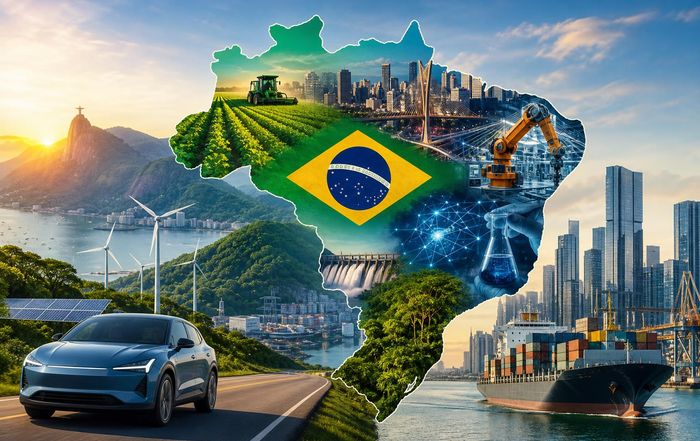
Brazil's Market Potential Beyond Commodities: A New Business Playbook!
Brazil at an Inflection Point
So Brazil sits at a decisive crossroads in its economic history. Long perceived primarily as a supplier of iron ore, soy, oil, and agricultural products, Latin America's largest economy is steadily repositioning itself as a diversified, innovation-capable market with growing influence across global value chains. For the daily business community, which is focused on business, finance, economics, employment, founders, investment, markets, world trade, and the future of technology, Brazil's evolution beyond commodities is no longer a theoretical narrative; it is a live investment thesis and a strategic question for boards and executives in the United States, Europe, Asia, and beyond.
The macroeconomic context is complex but increasingly supportive. According to the World Bank's Brazil overview, structural reforms, cautious monetary policy, and improved fiscal discipline have helped stabilize inflation and restore a measure of investor confidence after a turbulent decade. At the same time, the demographic profile, with a large working-age population and growing middle class, underpins long-term consumption growth. For international companies and investors who have historically treated Brazil as a cyclical, commodity-linked bet, the country now presents a more nuanced picture: a diversified market where digital services, manufacturing, renewable energy, and innovation ecosystems are gaining traction.
For dailybusinesss.com, which regularly analyzes global business dynamics and cross-border capital flows, Brazil's transition is a critical case study in how emerging markets can move up the value chain, attract sophisticated investment, and create high-quality employment while still leveraging their natural resource endowment.
From Commodity Giant to Diversified Economy
Brazil's commodity strength is undeniable. It remains one of the world's largest producers of iron ore, soybeans, coffee, sugar, beef, and crude oil, with Vale, Petrobras, and agribusiness conglomerates playing central roles. Yet the country's long-term growth prospects can no longer rely solely on the commodity supercycle. As the International Monetary Fund has highlighted, productivity growth, digitalization, and diversification are essential if Brazil is to escape the middle-income trap and improve its per-capita income relative to advanced economies such as the United States, Germany, and Japan.
The policy debate in Brasília has gradually shifted from short-term price volatility in iron ore and soy to structural competitiveness. Reforms in labor markets, pensions, and taxation, while politically contentious, have aimed to reduce distortions and improve the business environment. At the same time, Brazil's integration into global supply chains-especially in manufacturing, services, and technology-has become a strategic objective, aligning with broader trends in world trade and investment.
For executives reading dailybusinesss.com, the key takeaway is that Brazilian growth is becoming less correlated with commodity cycles and more driven by domestic consumption, services, and innovation. This shift opens opportunities in finance, technology, manufacturing, logistics, and green industries that were previously overshadowed by resource exports.
The Rise of Brazil's Innovation and Tech Ecosystem
One of the most visible indicators of Brazil's diversification is the rapid expansion of its technology and startup ecosystem. Over the past decade, the country has produced a growing number of unicorns in fintech, e-commerce, mobility, and software-as-a-service, with companies like Nubank, PagBank, StoneCo, and Wildlife Studios capturing global attention. While valuations have moderated in line with global tech repricing, the underlying digital adoption in Brazil's 215-million-strong population remains robust.
Brazil's fintech revolution is particularly noteworthy. With a historically under-banked population and high spreads in traditional banking, digital challengers have capitalized on regulatory support from the Central Bank of Brazil, which encouraged competition and open banking. To understand the broader context of digital financial inclusion, business leaders often reference resources such as the Bank for International Settlements and global fintech policy analysis. Brazil's experience is now cited as a template for other emerging markets seeking to modernize their financial sectors.
The country's broader innovation landscape also benefits from a young, tech-savvy workforce and expanding venture capital presence from North America, Europe, and Asia. For readers tracking technology and AI trends on dailybusinesss.com, Brazil offers a compelling example of how digital platforms, cloud adoption, and data-driven services can scale even in a context of infrastructure gaps and regulatory complexity.
AI, Deep Tech, and the Next Wave of Brazilian Innovation
Beyond consumer fintech and e-commerce, Brazil is beginning to cultivate capabilities in artificial intelligence, data analytics, and deep tech applications relevant to industry, agriculture, and public services. Universities such as Universidade de São Paulo (USP) and Universidade Estadual de Campinas (UNICAMP), together with research institutes and corporate labs, are developing applied AI solutions in healthcare diagnostics, smart manufacturing, logistics optimization, and climate modeling.
Initiatives aligned with the OECD's AI policy framework and ethical guidelines from organizations like the UNESCO AI program are influencing how Brazilian policymakers and enterprises design responsible AI strategies. This is particularly important for sectors where data privacy, algorithmic bias, and social impact are critical, including credit scoring, public security, and employment platforms.
For multinational technology companies and investors following global tech and AI developments, Brazil's AI ecosystem offers both a market and a talent pool. The country's developers and data scientists are increasingly integrated into global teams, while Brazilian startups are exploring AI-driven solutions tailored to local challenges such as urban mobility, deforestation monitoring, and financial inclusion. This positions Brazil as more than a consumer of imported technologies; it is emerging as a co-creator of digital solutions with export potential to Africa, South Asia, and other emerging regions facing similar structural issues.
Financial Markets, Capital Flows, and Investment Opportunities
Brazil's financial markets have historically been characterized by high interest rates, currency volatility, and periods of boom-and-bust capital flows. However, the evolution of the domestic capital market, including the deepening of the B3 stock exchange and the expansion of local fixed-income and equity instruments, has created more sophisticated avenues for both domestic and international investors.
According to Banco Central do Brasil, the ongoing modernization of payment systems, including the widely adopted PIX instant payments platform, has also catalyzed financial innovation and improved transactional efficiency. For institutional investors and corporate treasurers who regularly consult global market intelligence, Brazil's evolving financial infrastructure reduces friction and opens new channels for cross-border investment, particularly in private credit, infrastructure financing, and venture capital.
The country's sovereign risk profile remains a central consideration, with agencies such as S&P Global Ratings, Moody's, and Fitch Ratings closely watched by global funds. At the same time, Brazil's inclusion in major emerging market indices, tracked by providers like MSCI, ensures that it remains a core allocation for asset managers specializing in Emerging Markets, Latin America, and Global equity and debt portfolios. For readers of dailybusinesss.com focused on investment strategy and portfolio diversification, Brazil offers a mix of cyclical and structural themes that require careful risk management but also present significant upside.
Manufacturing, Industrial Upgrading, and Nearshoring
While Brazil's manufacturing sector has faced competitiveness challenges due to complex taxation, infrastructure bottlenecks, and regulatory burdens, there are signs of a gradual repositioning. The global reconfiguration of supply chains, driven by geopolitical tensions, resilience concerns, and the push for nearshoring and friend-shoring, has opened a window for Brazil to attract new industrial investment, particularly in automotive, aerospace, pharmaceuticals, and advanced materials.
Brazil already hosts major operations of Volkswagen, General Motors, Stellantis, Embraer, and Siemens, among others. The country's large domestic market, combined with access to Mercosur partners and trade links with Europe and Asia, provides a platform for regional production hubs. As companies reassess their exposure to single-country manufacturing dependencies, Brazil's potential as a diversified production base has gained renewed attention in boardrooms from New York to Frankfurt and Tokyo.
Analysts and policymakers are increasingly referring to research from institutions like the World Economic Forum and McKinsey Global Institute to understand how Industry 4.0, automation, and digital twins can help Brazilian factories leapfrog legacy inefficiencies. For business leaders following often cited global trade and industrial trends on dailybusinesss.com, the core question is how fast Brazil can reduce structural costs and align its industrial policy with global best practices in innovation, logistics, and workforce development.
Green Energy, Sustainability, and Brazil's Climate Advantage
Sustainability is one of Brazil's most significant strategic assets beyond commodities. The country already has one of the cleanest power matrices among large economies, with a high share of hydroelectricity complemented by expanding wind and solar generation. According to the International Energy Agency, Brazil is poised to become a global leader in biofuels, green hydrogen, and low-carbon industrial processes, particularly in steel and chemicals.
At the same time, Brazil's stewardship of the Amazon rainforest remains a central concern for investors, consumers, and regulators worldwide. Commitments made at COP26 and subsequent climate summits, monitored by organizations such as the UNFCCC, have increased pressure on both the public and private sectors to reduce deforestation and align business practices with global climate goals. This has direct implications for access to capital, as ESG-oriented investors and institutions such as the Principles for Responsible Investment scrutinize corporate and national performance on environmental metrics.
For the dailybusinesss.com audience interested in sustainable business and finance, Brazil represents both a risk and an opportunity. Companies that can demonstrate traceable, low-carbon supply chains and credible net-zero strategies are likely to attract premium valuations and long-term partnerships, while those associated with environmental degradation may face exclusion from major portfolios and trade sanctions in markets like the European Union.
Human Capital, Employment, and the Future of Work
Brazil's long-term growth trajectory will ultimately depend on the quality of its human capital and the inclusiveness of its labor market. With a population exceeding 215 million and a median age of around 33, the country has a demographic advantage compared with aging societies in Europe, Japan, and parts of China. However, educational outcomes, skill mismatches, and informal employment remain persistent challenges.
Organizations such as the OECD and World Economic Forum Future of Jobs initiative have highlighted the need for Brazil to invest in STEM education, vocational training, and lifelong learning to prepare its workforce for automation, AI, and green industry transitions. For employers and HR leaders following employment trends on dailybusinesss.com, this translates into a dual imperative: leveraging Brazil's large talent pool while actively contributing to upskilling and inclusion initiatives.
Remote and hybrid work models, which accelerated during the pandemic, have also created new opportunities for Brazilian professionals to integrate into global digital labor markets. This trend is particularly relevant for sectors such as software development, design, customer support, and data analytics, where Brazilian workers can serve clients in North America, Europe, and Asia without relocating. The challenge for policymakers is to ensure that this integration does not exacerbate inequality but instead broadens access to quality jobs and entrepreneurship.
The Entrepreneurial and Founder Ecosystem
Brazil's founder community has matured significantly over the past decade. What was once a small circle of tech entrepreneurs in São Paulo and Rio de Janeiro has expanded into a nationwide ecosystem that includes Belo Horizonte, Florianópolis, Recife, and Curitiba, among others. Accelerators, corporate venture arms, and international funds now co-invest in early-stage and growth-stage companies across fintech, healthtech, edtech, logistics, and agritech.
The experience of high-profile founders at companies like Nubank, 99, and iFood has generated a new generation of angel investors and mentors, creating a virtuous cycle of capital and know-how. Resources such as the Global Entrepreneurship Monitor and Endeavor's market studies often highlight Brazil as one of the most dynamic entrepreneurial ecosystems in the Global South. For readers of dailybusinesss.com who follow entrepreneurial founder stories and startup strategies, Brazil offers rich case studies in scaling under macroeconomic volatility, regulatory complexity, and infrastructure gaps.
Government programs supporting innovation, including tax incentives for R&D and public funding for technology parks, have played a role, although bureaucratic hurdles remain. The key differentiator in 2026 is the increasing sophistication of Brazilian founders, who are now building companies with regional and global ambitions rather than purely domestic focus. This shift positions Brazil as a source of innovation for Latin America, Africa, and Southeast Asia, particularly in sectors like payments, logistics, and digital public infrastructure.
Digital Finance, Crypto, and the Tokenized Future
Brazil has emerged as one of the most dynamic markets for digital finance and crypto-assets in the Americas. The combination of high traditional banking fees, inflationary history, and a tech-savvy population has created fertile ground for experimentation with digital wallets, stablecoins, and tokenized assets. Regulatory authorities have taken a relatively proactive stance, seeking to balance innovation with consumer protection and financial stability.
The Central Bank of Brazil has advanced work on a central bank digital currency (CBDC), commonly referred to as the digital real, aligning with global explorations documented by the Bank for International Settlements Innovation Hub. Meanwhile, local and international exchanges, custodians, and fintechs are integrating crypto-related services into broader financial offerings. For the dailybusinesss.com audience tracking new crypto and digital asset trends, Brazil's regulatory and market developments provide insight into how large emerging economies may mainstream tokenization in payments, credit, and capital markets.
Tokenization of real-world assets, including receivables, real estate, and agribusiness contracts, is particularly relevant in a country where access to credit has traditionally been constrained and expensive. By enabling fractional ownership and more efficient collateralization, tokenization can unlock capital for small and medium-sized enterprises (SMEs) and rural producers, thereby supporting inclusive growth and reinforcing Brazil's diversification beyond raw commodity exports.
Tourism, Travel, and the Experience Economy
Although not as central as finance or technology, Brazil's travel and tourism sector forms an important component of its broader market potential beyond commodities. The country's natural beauty, cultural diversity, and urban attractions in cities like Rio de Janeiro, São Paulo, Salvador, and Florianópolis draw visitors from North America, Europe, and Asia, contributing to employment and foreign exchange earnings.
As global travel gradually normalizes and sustainability becomes a core criterion for both tourists and investors, Brazil has an opportunity to position itself as a leader in eco-tourism, cultural tourism, and digital nomad destinations. Organizations such as the World Travel & Tourism Council provide frameworks for sustainable tourism development that align with Brazil's environmental and social priorities. For readers exploring travel and business mobility on dailybusinesss.com, Brazil represents a market where hospitality, real estate, and digital services intersect with broader economic diversification.
The challenge lies in improving infrastructure, safety, and connectivity, while ensuring that tourism development does not undermine environmental conservation or local communities. Successful models in Costa Rica, New Zealand, and Portugal are often cited as references for how Brazil could capture higher-value segments of the global travel market while aligning with ESG principles.
Strategic Implications for Global Businesses and Investors
For multinational corporations, institutional investors, and founders reading dailybusinesss.com, Brazil's market potential beyond commodities carries several strategic implications. First, the country can no longer be approached solely as a resource supplier or volatile emerging market; it must be understood as a complex, multi-sector economy where digital, green, and service-oriented opportunities are increasingly important. This requires deeper on-the-ground intelligence, long-term partnerships with local firms, and alignment with Brazil's regulatory and social priorities.
Second, sector selection and timing matter. Opportunities in fintech, AI-driven services, renewable energy, manufacturing upgrading, and tokenized finance are expanding, but they are also subject to regulatory shifts, competitive dynamics, and macroeconomic cycles. Leveraging specialized research from organizations such as the Brookings Institution or Chatham House can help decision-makers contextualize Brazil within broader global trends in geopolitics, trade, and technology.
Third, ESG and stakeholder engagement are non-negotiable. Brazil's environmental and social challenges, particularly in relation to deforestation, inequality, and infrastructure, mean that investors and corporations must adopt robust sustainability and governance frameworks. For readers who regularly consult recent finance and economic analysis and macroeconomic insights, integrating ESG risk into Brazil strategies is now a core component of fiduciary duty and brand management.
Finally, local partnerships and talent are decisive. Brazil's regulatory complexity, cultural nuances, and regional diversity across states and cities necessitate collaboration with local entrepreneurs, universities, and institutions. Companies that invest in Brazilian talent, support innovation ecosystems, and engage with policymakers constructively are more likely to capture sustainable value than those that pursue purely extractive or short-term strategies.
Conclusion: Brazil's Next Decade and the Role of DailyBusinesss
As of 2026, Brazil's journey beyond commodities is still unfolding, but the direction of travel is clear. The country is leveraging its scale, human capital, and natural assets to build a more diversified, innovation-driven economy integrated into global value chains in finance, technology, manufacturing, and sustainable industries. The outcome is not predetermined; macroeconomic volatility, political cycles, and global shocks will continue to test resilience. Yet for globally minded executives, investors, and founders, ignoring Brazil's evolving market potential is no longer an option.
For dailybusinesss.com, which serves readers across North America, Europe, Asia, Africa, and South America, Brazil will remain a central focus in hundred percent fresh and original coverage of business strategy, world markets, technology and AI, and the future of sustainable growth. By tracking policy shifts, corporate case studies, founder journeys, and capital flows, the platform aims to provide the nuanced, data-driven insight necessary for decision-makers to navigate Brazil's opportunities and risks with confidence.
In the decade ahead, Brazil's success in moving beyond commodities will offer lessons not only for emerging markets but also for advanced economies seeking to reconcile growth, inclusion, and sustainability. For the readership of dailybusinesss.com, understanding this transformation is an essential component of any serious global business and investment strategy.
