
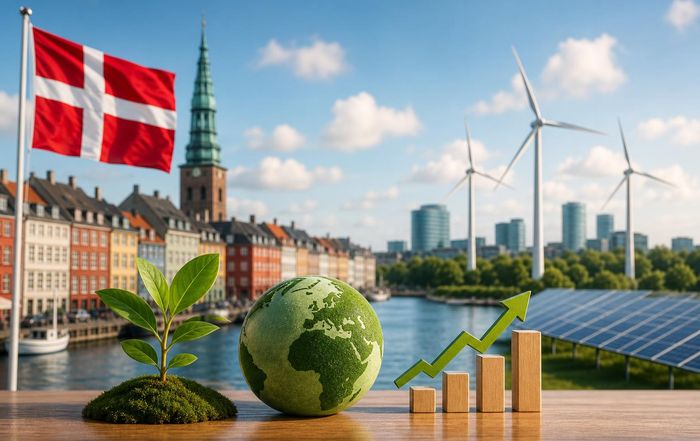
Denmark's Appeal for Sustainable Business Investment in 2026
Denmark at the Intersection of Sustainability and Competitiveness
In 2026, Denmark stands out as one of the few countries that has managed to combine high living standards, strong social cohesion, and robust economic performance with an ambitious sustainability agenda, positioning itself as a compelling destination for responsible capital. For the global readership of dailybusinesss.com, which increasingly evaluates markets through the lens of environmental, social, and governance performance, Denmark offers a living case study in how a small, open economy can leverage green innovation, stable institutions, and disciplined policy frameworks to attract long-term, high-quality investment rather than purely speculative flows. While the country's population and domestic market are modest in size, its influence in sectors such as renewable energy, green maritime solutions, sustainable urban development, and digital innovation is disproportionately large, giving international investors exposure not only to the Danish market but to global value chains and export-driven revenue streams that extend across Europe, North America, and Asia.
For business leaders tracking developments in global business and strategy, Denmark's trajectory since the early 2000s illustrates how consistent policy signals, public-private collaboration, and a culture of trust can generate investable opportunities in areas such as clean energy infrastructure, circular manufacturing, climate-resilient food systems, and green finance. At the same time, the Danish model raises important strategic questions for executives in the United States, the United Kingdom, Germany, Singapore, and beyond, who are navigating the twin challenges of decarbonization and digitalization: how to manage transition risk, how to ensure competitiveness while tightening environmental standards, and how to design corporate strategies that align with increasingly stringent climate disclosure and sustainability reporting requirements.
A Stable, Rules-Based Platform for Global Capital
One of Denmark's most powerful attractions for international investors is the country's institutional and macroeconomic stability, which provides a predictable framework for long-term capital deployment. The country consistently ranks among the top performers in global indices of transparency and governance, with Transparency International regularly placing Denmark at or near the top of its Corruption Perceptions Index, and the World Bank highlighting the reliability of its regulatory environment and contract enforcement in its governance indicators. This rules-based framework matters greatly for institutional investors, sovereign wealth funds, and pension funds in markets such as Canada, Australia, and the Netherlands that are under pressure from beneficiaries and regulators to allocate capital in line with environmental and social objectives without compromising fiduciary duty.
From a macroeconomic standpoint, Denmark combines a flexible, export-oriented economy with prudent fiscal management and a credible monetary framework anchored through its long-standing exchange rate policy. Analysts following global economic developments note that Danish public debt levels remain moderate by advanced-economy standards, while its current account has historically been in surplus, supported by strong exports of pharmaceuticals, renewable energy technologies, and high-value manufacturing. This macro stability reduces the risk premium demanded by global investors, lowering the cost of capital for Danish corporates and infrastructure projects, and, in turn, making large-scale sustainable investments in areas such as offshore wind and green hydrogen more financially viable.
Denmark's Green Leadership and Climate Ambition
The core of Denmark's appeal for sustainable business investment lies in its climate ambition and track record of delivery, which together provide both a policy anchor and a pipeline of commercial opportunities. The Danish Parliament has enshrined in law some of the world's most stringent climate targets, including a legally binding commitment to reduce greenhouse gas emissions by 70 percent by 2030 compared with 1990 levels and to achieve climate neutrality by 2050. These targets are not merely aspirational statements but are tied to detailed sectoral roadmaps, carbon pricing instruments, and technology-specific support mechanisms, which investors can analyze and integrate into their long-term planning.
International observers such as the International Energy Agency have pointed to Denmark's early and sustained investment in wind power as a blueprint for other countries seeking to decarbonize their power sectors while maintaining security of supply. Those seeking to understand the broader implications for energy markets can explore IEA analysis on clean energy transitions. Denmark's pioneering role in offshore wind has created a cluster of globally competitive firms and engineering capabilities, exemplified by companies such as Ørsted and Vestas, which have evolved from domestic champions into multinational leaders in renewable energy development and turbine manufacturing. For investors, this means that projects initiated in Danish waters or on Danish soil often serve as reference cases for similar investments in the United Kingdom, Germany, the United States, and Asia, multiplying the potential impact of capital deployed in Denmark itself.
At the policy level, Denmark's climate agenda is closely aligned with the European Union's Green Deal and the Fit for 55 package, which aim to transform the European economy and financial system around net-zero objectives. The European Commission provides extensive detail on how these frameworks are reshaping industrial policy, carbon markets, and state aid rules, and investors considering Denmark can review EU Green Deal initiatives to understand how Danish projects benefit from, and contribute to, broader European decarbonization. This alignment reduces regulatory uncertainty, as Danish climate policy is not an isolated national experiment but part of a coordinated regional transition with significant political and financial backing.
Sectors Where Sustainability and Profitability Converge
Denmark's sustainable business landscape is not confined to energy; it spans multiple sectors where environmental performance, technological innovation, and commercial viability intersect. In life sciences and biotech, for example, Novo Nordisk and Novozymes (now part of Novonesis) have demonstrated how advanced research and development capabilities can be applied to health, food systems, and industrial biotechnology in ways that reduce resource intensity and emissions while delivering strong returns. In agriculture and food, Danish firms are investing in precision agriculture, alternative proteins, and climate-smart practices that respond to consumer demand in markets such as the United States, Germany, and Japan for more sustainable diets and transparent supply chains.
For readers of dailybusinesss.com tracking investment opportunities in green infrastructure and sustainable manufacturing, Denmark offers a particularly interesting case in the maritime and logistics sectors. The country is home to A.P. Moller - Maersk, a global leader in container shipping that has committed to net-zero emissions and is investing heavily in green methanol-powered vessels and alternative fuels. The broader Danish maritime cluster, including ports, shipyards, and technology providers, is experimenting with low-carbon shipping corridors and digital solutions that could set new global standards for sustainable trade. Those wishing to understand how decarbonization is reshaping global trade patterns can examine analysis from the World Trade Organization, which highlights the implications for shipping, logistics, and customs regimes.
Another area where sustainability and profitability converge is in Denmark's built environment and urban development. Danish cities such as Copenhagen are internationally recognized for integrating climate resilience, energy efficiency, and livability into their planning frameworks, attracting interest from urban planners and infrastructure investors from Canada, Singapore, and the Middle East. Organizations like C40 Cities have documented how Copenhagen's district heating systems, cycling infrastructure, and stormwater management solutions can be replicated elsewhere, and investors can learn more about climate-resilient cities to assess opportunities in green real estate and infrastructure funds that draw on Danish expertise.
Financing the Transition: Green Capital and Financial Innovation
The Danish financial ecosystem has evolved rapidly to support sustainable investment, aligning with the broader acceleration of green finance in Europe and globally. Danish pension funds, among the largest in the world relative to GDP, have been at the forefront of integrating climate risk into their portfolios and allocating substantial capital to renewable energy, sustainable infrastructure, and green bonds. For those tracking developments in global finance, Denmark provides a concrete example of how long-term institutional investors can shift allocations towards climate-aligned assets while maintaining risk-adjusted returns.
The European Investment Bank and the Nordic Investment Bank have also played a significant role in co-financing Danish projects, helping to de-risk innovative technologies and first-of-a-kind infrastructure. Interested readers can explore EIB climate action initiatives to understand how multilateral finance interacts with national policies and private capital in Denmark and across Europe. At the capital markets level, Danish corporates and municipalities have increasingly tapped the green bond market, issuing instruments aligned with the International Capital Market Association's Green Bond Principles, which provide a widely accepted framework for use of proceeds, project evaluation, and reporting. Investors seeking to learn more about sustainable bond standards can better assess the credibility of such issuances and the robustness of their environmental impact.
Denmark's regulatory authorities have been proactive in implementing the EU Sustainable Finance Disclosure Regulation (SFDR) and the EU Taxonomy for sustainable activities, which together aim to reduce greenwashing and provide clearer signals to investors. The European Securities and Markets Authority offers further detail on sustainable finance regulation, which is directly relevant for asset managers and financial institutions operating in or allocating to Denmark. This regulatory clarity enhances Denmark's appeal as a jurisdiction where sustainable financial products are subject to rigorous standards, supporting the credibility of investment vehicles marketed to clients in the United States, the United Kingdom, Switzerland, and Asia.
Talent, Innovation, and the Digital-Green Nexus
Sustainable investment is ultimately underpinned by human capital and innovation ecosystems, and Denmark has built a strong foundation in both. The country's education system, research institutions, and vocational training programs emphasize not only technical skills but also collaboration, problem-solving, and digital literacy, creating a workforce that is adaptable to the demands of green and digital transitions. Universities such as the Technical University of Denmark (DTU) and Aarhus University collaborate closely with industry on applied research in areas such as wind energy, power-to-X technologies, and sustainable materials, often supported by funding from the Innovation Fund Denmark and European programs like Horizon Europe. Those interested in the research dimension of the transition can review Horizon Europe's climate and energy priorities to see how Danish institutions are embedded in cross-border innovation networks.
The intersection of artificial intelligence, data analytics, and sustainability is becoming particularly important, and Denmark is positioning itself as a hub for digital solutions that enable more efficient energy systems, predictive maintenance for offshore wind farms, and smart mobility. For readers following AI-driven transformation on dailybusinesss.com's AI and technology coverage, Denmark illustrates how digital tools can be harnessed to optimize renewable generation, balance grids with high shares of variable energy, and manage complex logistics chains in shipping and manufacturing. The OECD has highlighted Denmark's strengths in digital government and data governance, and those seeking to learn more about digital policy frameworks can see how these strengths contribute to a favorable environment for technology-enabled sustainable business models.
Moreover, Denmark's startup ecosystem, though smaller than those in the United States or Germany, is increasingly focused on climate and sustainability-oriented ventures, from carbon accounting platforms and circular economy marketplaces to advanced battery technologies and climate risk analytics. This ecosystem benefits from a dense network of incubators, accelerators, and corporate venture arms, as well as from the country's cultural emphasis on trust and collaboration, which facilitates partnerships between established corporates and emerging innovators. Readers interested in entrepreneurial stories and founder-led innovation can explore dailybusinesss.com's founders section for broader context on how such ecosystems are reshaping global business models.
Employment, Skills, and the Just Transition
For many investors and executives, a central concern in the sustainability transition is the labor market dimension: whether green investments will create quality jobs, how skills will need to evolve, and how to manage disruptions in carbon-intensive sectors. Denmark's experience with "flexicurity" - a model that combines flexible labor markets with strong social protection and active labor market policies - offers valuable lessons for other countries grappling with similar challenges. The International Labour Organization has documented how Denmark's approach supports both competitiveness and worker security, and those interested can learn more about just transition strategies that align with climate objectives.
In the Danish context, the transition to a low-carbon economy has been framed not only as an environmental imperative but as an employment and industrial strategy, with a focus on creating high-skill jobs in engineering, construction, services, and digital fields. This is evident in the offshore wind sector, where large-scale projects generate demand for a wide range of skills, from marine engineering and electrical installation to data science and environmental monitoring. As global energy majors and infrastructure funds invest in Danish projects, they contribute to local employment while also building capabilities that can be exported to markets in the United Kingdom, the United States, Asia, and Africa. For readers tracking employment trends and skills transformation, Denmark underscores the importance of aligning education and training systems with the demands of green industries, ensuring that the benefits of sustainable investment are broadly shared.
Denmark in the Global Context: Trade, Markets, and Geopolitics
Denmark's appeal for sustainable business investment cannot be understood in isolation from its position in global trade networks and capital markets. As a member of the European Union and a key node in Northern European logistics and energy systems, Denmark provides investors with access to a large, integrated market governed by common standards on product safety, competition, and sustainability. The country's ports, shipping lines, and logistics infrastructure connect Europe with North America, Asia, and emerging markets in Africa and South America, making it a strategic location for businesses seeking to optimize their supply chains in a world of shifting trade patterns and geopolitical tensions.
For readers of dailybusinesss.com following global markets and macro trends, Denmark offers a case study in how small open economies can navigate trade disruptions, energy security concerns, and evolving regulatory regimes by doubling down on innovation and sustainability rather than retreating into protectionism. The World Economic Forum has emphasized the importance of resilient and sustainable value chains, and those wishing to explore global competitiveness insights can see how Denmark consistently ranks highly on indicators related to infrastructure, institutions, and innovation capability.
Denmark's role in global climate diplomacy also reinforces its attractiveness to investors who view policy credibility as a key determinant of long-term value. The country has been active in international climate negotiations under the United Nations Framework Convention on Climate Change, advocating for higher ambition and supporting initiatives on climate finance and technology transfer. Investors can review UNFCCC climate commitments to understand how national policies like Denmark's feed into global efforts and how this, in turn, shapes the direction of capital flows into low-carbon assets.
Risk Considerations and Strategic Challenges
Despite its many strengths, Denmark is not without risks and strategic challenges, which sophisticated investors must weigh carefully. The country's high cost structure, driven by strong wages and extensive welfare provisions, requires that businesses operating in Denmark compete primarily on innovation, quality, and sustainability rather than on price alone. This model works well in sectors such as pharmaceuticals, advanced manufacturing, and renewable energy, but it can be more challenging for lower-margin industries, particularly in a global environment where cost competition from Asia, Latin America, and parts of Eastern Europe remains intense.
Regulatory and political risks, while lower than in many other jurisdictions, are not absent. The pace and design of climate and energy policies can affect the profitability of specific technologies, and investors must monitor developments not only in Copenhagen but also in Brussels, where EU-level decisions on carbon pricing, state aid, and taxonomy criteria can alter the investment landscape. Additionally, as Denmark continues to expand its offshore wind and power-to-X capacity, questions around grid integration, permitting, and public acceptance may pose bottlenecks that require careful management and stakeholder engagement.
From a financial perspective, the growing popularity of Danish green assets among global investors can lead to valuation pressures, with some analysts warning of potential over-concentration in certain sectors or instruments. Prudent investors will therefore diversify across technologies, geographies, and asset classes, and will complement exposure to Danish opportunities with a broader portfolio of sustainable investments in other regions. For those tracking world and regional developments, Denmark's experience can serve as a benchmark against which to compare emerging green hubs in Asia, North America, and other parts of Europe.
Strategic Implications for Global Business and Investors
For the international business and finance audience of dailybusinesss.com, Denmark's appeal for sustainable business investment in 2026 carries several strategic implications. First, it demonstrates that sustainability can be a source of competitive advantage rather than a compliance burden, provided that policy frameworks are stable, innovation ecosystems are vibrant, and capital is aligned with long-term objectives. Companies and investors in markets such as the United States, the United Kingdom, Germany, Canada, and Singapore can draw lessons from Denmark's integrated approach to climate policy, industrial strategy, and labor market design as they craft their own transition plans.
Second, Denmark underscores the importance of credible data, transparency, and trust in attracting sustainable investment. Robust reporting standards, independent verification, and clear taxonomies help reduce information asymmetries and greenwashing risks, enabling investors to allocate capital with greater confidence. This is particularly relevant for those following sustainable finance and ESG integration, where dailybusinesss.com's coverage of finance and economics provides ongoing analysis of how regulatory frameworks and market practices are evolving.
Third, Denmark illustrates how small countries can punch above their weight in shaping global norms and technologies, especially in areas such as offshore wind, green shipping, and sustainable urban development. For multinational companies and institutional investors, partnering with Danish firms, research institutions, and public authorities can provide early exposure to cutting-edge solutions that will likely be replicated in other markets, from the North Sea and the Baltic to Asia-Pacific and North America. Those interested in broader technology and innovation trends can consult dailybusinesss.com's technology coverage and tech insights to situate Denmark's experience within the global digital and industrial transformation.
Finally, Denmark's story highlights the growing convergence between sustainability, trade, and geopolitics. As countries compete to attract green industries, secure critical supply chains, and meet their climate commitments, investors must navigate a landscape where policy, technology, and market dynamics are increasingly intertwined. Denmark offers a relatively low-risk, high-credibility environment from which to engage with this transition, but it also serves as a reminder that the race to net zero is global, and that opportunities and risks will emerge across multiple regions and asset classes.
For decision-makers seeking to position their organizations for the next decade, understanding Denmark's appeal for sustainable business investment is less about viewing the country as a niche European market and more about recognizing it as a strategic laboratory for the future of business, finance, and economic policy. As dailybusinesss.com continues to track developments in sustainable business models, global trade and markets, and the intersection of technology, climate, and capital, Denmark will remain a critical reference point in the evolving narrative of how economies can grow while respecting planetary boundaries and societal expectations.
