
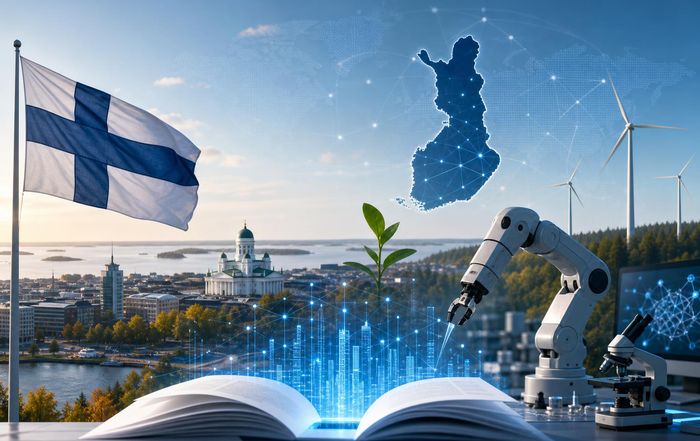
Finland's Growth Potential in Knowledge-Based Industries
Finland at an Inflection Point
Finland sits at a strategic crossroads where decades of investment in education, digital infrastructure, and institutional trust are converging into a renewed opportunity to lead in knowledge-based industries. For an international business readership and the community around daily business news, Finland's trajectory offers a compelling case study in how a small, open economy can leverage intellectual capital, technology, and governance quality to compete in a global marketplace increasingly defined by intangibles rather than natural resources or low-cost labor.
Finland's economic narrative has often been framed through the rise and restructuring of Nokia, the evolution of its forest and paper industries, and its resilience after the global financial crisis and the eurozone turmoil. Yet the more consequential story for the coming decade lies in how Finland is quietly building a diversified ecosystem of high-value sectors-spanning advanced digital services, clean technologies, health innovation, and creative industries-that together constitute a robust knowledge-based economy. International investors and business leaders seeking to understand where the next wave of sustainable growth may emerge in Europe are increasingly looking north, not only to the Nordic region in general but to Finland in particular, as a testbed for innovation and a reliable partner in an era of geopolitical and technological uncertainty.
Readers exploring broader trends in innovation-driven growth on DailyBusinesss.com can place Finland's case within the wider context of global business transformations, where the shift from industrial to digital and knowledge-intensive models is accelerating competition for talent, capital, and intellectual property.
Foundations: Education, Digital Infrastructure, and Institutional Trust
Finland's growth potential in knowledge-based industries is rooted in a combination of structural strengths that have been cultivated consistently over several decades. The country's education system, often highlighted in international assessments such as the OECD's Programme for International Student Assessment, has focused on equity, teacher autonomy, and strong foundational skills, creating a broad base of human capital rather than a narrow elite. This has enabled a workforce that is adaptable, digitally literate, and capable of engaging in lifelong learning-traits that are indispensable in sectors where technologies and business models evolve rapidly.
Parallel to its education policy, Finland has invested heavily in digital infrastructure and connectivity. According to data from the World Bank on digital development, Finland consistently ranks among the global leaders in broadband penetration, mobile connectivity, and e-government readiness. This digital backbone underpins the rapid diffusion of new technologies and supports the emergence of data-intensive services, from cloud-based enterprise solutions to advanced analytics in manufacturing and logistics.
Equally important, Finland benefits from exceptionally high levels of institutional trust and governance quality. Transparency metrics from organizations such as Transparency International highlight Finland as one of the least corrupt countries in the world, while the World Economic Forum's Global Competitiveness reports have repeatedly emphasized the country's strong institutions and regulatory environment. For knowledge-based industries that depend on stable intellectual property regimes, predictable regulation, and efficient public services, this combination of trust and competence reduces transaction costs and enhances the attractiveness of Finland as a base for operations, research, and regional headquarters.
For business readers tracking macroeconomic conditions, the structural underpinnings of the Finnish model can be viewed in relation to broader economic trends and policy debates that shape competitiveness in a knowledge-driven world.
Innovation Ecosystem and R&D Investment
Finland's innovation ecosystem is anchored by a dense network of universities, research institutes, and public-private partnerships that collectively provide the intellectual and technological foundation for knowledge-based industries. Institutions such as Aalto University, the University of Helsinki, and VTT Technical Research Centre of Finland have built strong reputations in fields ranging from engineering and computer science to life sciences and materials research. These organizations collaborate closely with industry, often through joint research programs, incubators, and innovation platforms that accelerate the commercialization of scientific discoveries.
R&D expenditure in Finland, measured as a share of GDP, has traditionally been among the highest in the European Union, a trend documented by Eurostat in its research and development statistics. While overall levels fluctuated during periods of corporate restructuring, particularly after the downsizing of Nokia's handset business, recent years have seen a renewed commitment to innovation investment, with both public and private actors recognizing that long-term competitiveness hinges on sustained knowledge creation. The Finnish government's innovation agency, Business Finland, plays a central role by providing funding, advisory services, and internationalization support to startups and established firms seeking to scale research-driven business models.
The density of research-intensive firms and the availability of public co-financing have also helped Finland position itself as a testbed for emerging technologies. Regulatory sandboxes in areas such as autonomous mobility, digital health, and energy systems provide a controlled environment where companies can experiment with new solutions in partnership with municipalities and national agencies. This approach aligns with global best practices promoted by organizations like the OECD in their work on innovation policy, reinforcing Finland's image as a pragmatic and forward-looking innovation hub.
For investors following R&D-driven sectors and technology-intensive markets, the interplay between public policy and corporate strategy in Finland offers a concrete illustration of how innovation ecosystems can be structured to support scalable, export-oriented growth, a theme frequently discussed in DailyBusinesss.com coverage of technology and digital transformation.
Digitalization, AI, and Data-Driven Business Models
Among knowledge-based industries, digital and data-intensive sectors are particularly central to Finland's growth prospects. The country's early adoption of mobile technologies and its legacy in telecommunications have evolved into a broader competence base in software development, cloud services, and platform-based business models. Finnish firms, from large multinationals to agile startups, are increasingly building solutions that integrate artificial intelligence, machine learning, and advanced analytics into products and services across industries.
Finland has developed national strategies around artificial intelligence, positioning itself as a responsible and human-centric AI leader within Europe. Initiatives coordinated by the Ministry of Economic Affairs and Employment and other public bodies emphasize ethical frameworks, data governance, and skills development, reflecting broader discussions at the European Commission on trustworthy AI and digital regulation. This regulatory and strategic clarity provides businesses with a stable environment in which to design AI-enabled solutions that comply with evolving European norms while remaining globally competitive.
The combination of high-quality data infrastructures, robust cybersecurity capabilities, and a culture of collaboration between public and private actors has allowed Finland to pilot advanced digital services in sectors such as healthcare, energy, and transport. For example, the use of anonymized health data for research and innovation, governed by strict ethical and legal safeguards, has attracted the attention of global pharmaceutical and medtech companies seeking reliable environments for data-driven clinical and real-world evidence studies. Similarly, Finnish companies are active in industrial IoT, predictive maintenance, and smart logistics, leveraging AI to optimize production and supply chains.
Readers of DailyBusinesss.com following developments in artificial intelligence and automation will recognize that Finland's approach-combining strong digital infrastructure, clear regulation, and ethical frameworks-offers a replicable model for other mid-sized economies aiming to harness AI for competitive advantage while maintaining public trust.
Clean Technologies and Sustainable Innovation
Sustainability is not an adjunct to Finland's knowledge-based growth strategy; it is a core pillar. The country's long history in forestry, combined with its environmental consciousness and regulatory rigor, has created fertile ground for innovation in bioeconomy, circular economy, and clean technologies. Finnish firms are pioneers in areas such as advanced biomaterials, sustainable packaging, energy-efficient industrial processes, and low-carbon energy systems.
Finland's commitment to achieving carbon neutrality by 2035, one of the most ambitious targets among developed economies, is driving both public investment and private sector innovation. Policy frameworks aligned with United Nations sustainable development goals and EU Green Deal objectives create a predictable demand signal for solutions that reduce emissions, enhance resource efficiency, and support climate adaptation. This has stimulated growth in sectors such as renewable energy, smart grids, and environmental services, where knowledge intensity and technological sophistication are high.
The Finnish circular economy roadmap, developed in cooperation with organizations like Sitra, has gained international recognition as a blueprint for integrating circular principles into national economic strategy. Companies are experimenting with new business models based on product-as-a-service, sharing platforms, and advanced recycling technologies, often in collaboration with municipalities and international partners. The expertise generated in these domains is increasingly exported to markets in Europe, Asia, and beyond, positioning Finland as a niche leader in sustainable industrial solutions.
For business leaders and investors seeking to align profitability with environmental responsibility, Finland's experience offers practical insights into how sustainability can be embedded into core business models rather than treated as a compliance obligation. Those exploring this intersection can find complementary perspectives in DailyBusinesss.com's coverage of sustainable business and green finance, where similar themes of innovation-led decarbonization and circular value creation are examined across global markets.
Startup Culture, Founders, and International Investment
Finland's reputation as a startup nation has grown steadily, supported by a vibrant entrepreneurial culture, well-developed support structures, and high-profile events such as Slush, which has become one of Europe's leading technology and startup conferences. The country's founders are increasingly building globally oriented companies from day one, drawing on Finland's strengths in gaming, software, deep tech, and clean technologies to address international markets in Europe, North America, and Asia.
The presence of successful scale-ups and exits, particularly in the gaming and software sectors, has created a virtuous cycle of capital, expertise, and mentorship. Alumni from firms such as Supercell and Rovio have gone on to found or invest in new ventures, contributing to a maturing ecosystem where entrepreneurial experience is recycled and amplified. This dynamic is reinforced by the availability of public funding instruments, angel networks, and venture capital funds that are increasingly connected to global capital markets. International investors, from Silicon Valley funds to Asian corporate venture arms, are now regular participants in Finnish funding rounds, attracted by the combination of technical depth, capital efficiency, and strong governance that characterizes many Finnish startups.
The role of foreign direct investment and cross-border partnerships is crucial for scaling knowledge-based businesses beyond Finland's relatively small domestic market. Agencies such as Invest in Finland, part of Business Finland, actively promote the country as a location for R&D centers, regional headquarters, and innovation collaborations, highlighting factors such as talent quality, IP protection, and integration into the European Single Market. For investors and corporate partners evaluating opportunities across Europe and the Nordics, Finland offers a stable, innovation-rich environment with strong connectivity to both Western and Eastern markets.
Readers of DailyBusinesss.com interested in entrepreneurial journeys and capital allocation can situate Finland's startup scene within broader discussions on founders, venture capital, and investment strategies, as well as deeper dives into investment trends and portfolio diversification in technology and sustainability-driven sectors.
Talent, Employment, and the Future of Work
The growth of knowledge-based industries in Finland is reshaping its labor market, creating new opportunities while posing challenges in terms of skills, inclusion, and regional balance. Knowledge-intensive sectors tend to demand highly specialized competencies in areas such as software engineering, data science, advanced manufacturing, and life sciences. While Finland's education system provides a strong foundation, the pace of technological change requires continuous upskilling and reskilling, both within companies and through public training programs.
To address talent shortages in certain critical fields, Finland has increasingly turned to international recruitment, positioning itself as an attractive destination for highly skilled professionals seeking a safe, stable, and innovation-oriented environment. Initiatives to streamline immigration for experts, improve recognition of foreign qualifications, and enhance English-language services in public administration and education are part of a broader strategy to internationalize the workforce. Reports from organizations such as the International Labour Organization on future-of-work trends underscore the importance of such policies in ensuring that advanced economies can sustain growth in knowledge-based sectors.
At the same time, the rise of remote and hybrid work models, accelerated by global shifts since 2020, has allowed Finnish companies to tap into global talent pools while enabling international firms to establish virtual teams in Finland without large physical footprints. This flexibility, supported by strong digital infrastructure and a culture of trust, has implications for regional development within Finland, offering opportunities to distribute high-value employment beyond the Helsinki metropolitan area.
For business leaders monitoring labor market dynamics, the Finnish example illustrates both the opportunities and the policy imperatives associated with knowledge-driven growth. Coverage on DailyBusinesss.com related to employment, skills, and workforce transformation provides additional context for understanding how similar dynamics are playing out in other advanced economies and emerging markets.
Financial Markets, Capital Access, and Risk Management
Robust financial and capital markets are essential for translating intellectual assets into scalable businesses, and Finland's integration into European and global markets provides a solid platform for financing knowledge-based growth. Finnish companies access capital through domestic banks, the Nasdaq Helsinki stock exchange, and increasingly through cross-border equity and debt markets. The country's stable macroeconomic environment, underpinned by membership in the eurozone and adherence to European Central Bank frameworks, supports relatively low risk premiums and predictable financing conditions, which are particularly important for long-horizon R&D investments.
Finland's financial sector operates within the broader regulatory architecture of the European Union, including frameworks such as the Capital Markets Union and evolving regulations on sustainable finance, digital assets, and fintech innovation. Reports from institutions like the International Monetary Fund on global financial stability highlight the importance of sound regulation and risk management, areas where Finnish authorities have generally maintained high standards. This regulatory reliability enhances investor confidence and supports the development of specialized financing instruments for innovation, such as growth funds, venture debt, and green bonds.
For companies in knowledge-based industries, access to patient capital and sophisticated risk-sharing mechanisms is critical, given the inherent uncertainty and upfront costs associated with R&D-intensive business models. Finnish policymakers and financial institutions have therefore paid increasing attention to bridging the gap between early-stage funding and later-stage growth capital, often in collaboration with European initiatives such as the European Investment Bank's innovation financing programs.
Business readers tracking finance and capital market developments can see in Finland a microcosm of the broader evolution of financial ecosystems toward greater support for intangible-rich, innovation-driven firms, while also grappling with issues of valuation, risk concentration, and regulatory adaptation.
Global Positioning, Trade, and Geopolitical Context
Finland's growth in knowledge-based industries does not occur in isolation; it is deeply embedded in global trade networks, regional alliances, and shifting geopolitical dynamics. As a member of the European Union and, since 2023, of NATO, Finland occupies a strategic position at the intersection of Western institutions and the northern gateway to Eurasia. This positioning influences trade patterns, supply chain strategies, and investment decisions, particularly in technology-intensive and security-sensitive sectors.
The reconfiguration of global supply chains, driven by geopolitical tensions, technological decoupling, and resilience concerns, has led many multinational companies to reassess their production and R&D footprints. Finland's reputation for reliability, legal predictability, and cybersecurity competence makes it an attractive location for high-value activities that require trust and data integrity, such as cloud infrastructure, critical software development, and secure communications. Organizations such as the World Trade Organization provide ongoing analysis of trade policy and global value chains, offering context for understanding how countries like Finland can position themselves in an era of selective deglobalization and regionalization.
At the same time, Finland's export-driven economy depends on maintaining open markets and constructive relations with major trading partners in Europe, North America, and Asia. Knowledge-based exports, including digital services, engineering solutions, and environmental technologies, are less sensitive to traditional trade barriers than physical goods but are increasingly affected by regulatory divergence in areas such as data protection, AI ethics, and digital taxation. Navigating these complexities requires diplomatic agility and active engagement in international standard-setting bodies.
Readers online or from email newsletters or RSS feeds interested in world affairs and trade patterns can interpret Finland's experience as indicative of how small, advanced economies seek to balance openness with strategic autonomy in a world where technology, security, and trade are increasingly intertwined. For more focused analysis of trade flows and policy shifts, the platform's dedicated trade and markets coverage provides additional insights into how these dynamics shape corporate strategy and investment decisions.
Strategic Outlook: Opportunities and Constraints to 2030
Looking toward 2030, Finland's growth potential in knowledge-based industries will depend on its ability to deepen and scale the advantages it has built while addressing several structural constraints. On the opportunity side, the convergence of digitalization, sustainability, and demographic change plays to Finland's strengths in technology, governance, and social cohesion. The global demand for clean technologies, secure digital services, and health innovations is expected to grow substantially, offering Finnish companies expanding markets in Europe, North America, and fast-growing regions in Asia and Africa.
However, Finland also faces challenges that could limit its ability to fully exploit these opportunities. Demographic trends, including an aging population and relatively low birth rates, put pressure on the labor force and public finances, necessitating higher productivity growth and greater international talent attraction. The small domestic market constrains the ability of firms to scale locally, making internationalization not just an option but a necessity from an early stage, which in turn demands strong global networks and marketing capabilities.
Moreover, the intensifying global competition for knowledge-intensive activities means that other countries are also investing heavily in education, R&D, and innovation ecosystems. To remain competitive, Finland must continue to refine its policy mix, ensuring that regulation supports experimentation, that public funding crowds in private investment rather than substituting for it, and that the benefits of knowledge-based growth are broadly shared across regions and social groups. International benchmarks and policy dialogues, such as those facilitated by the OECD and World Bank, can help Finnish decision-makers calibrate their strategies in light of global best practices and emerging risks.
For the loyal readership of DailyBusinesss, which spans interests from markets and macroeconomics to technology, AI, and future trends, Finland's experience offers a nuanced illustration of how a country can transition from traditional industrial strengths to a diversified, knowledge-intensive economy. The Finnish case underscores that success in knowledge-based industries is not the result of a single policy or sectoral bet, but of a long-term, coherent strategy that integrates education, innovation, finance, governance, and international engagement.
As global business leaders, investors, and policymakers assess where to allocate resources and build partnerships in the second half of the 2020s, Finland's trajectory will continue to merit close attention. Its ability to combine technological sophistication with social trust, environmental responsibility with economic dynamism, and national resilience with international openness positions it as a distinctive and instructive player in the evolving landscape of the global knowledge economy.
