
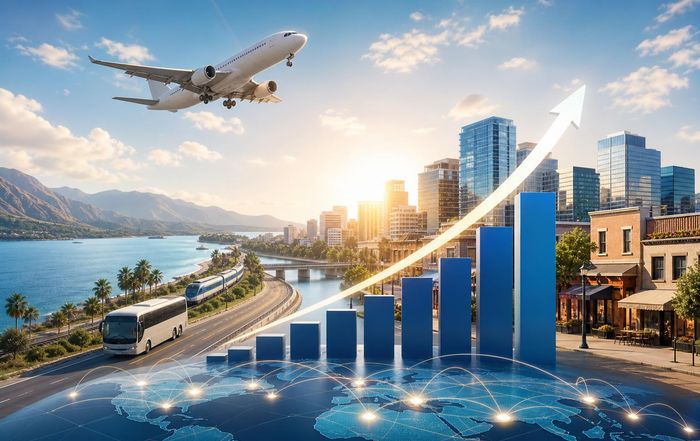
How Travel Demand Influences Regional Business Growth
The New Geography of Travel-Driven Growth
Surely everyone has noticed that global travel has fully re-established itself as a primary engine of regional business expansion, but the nature of that engine has changed profoundly. Travel demand is no longer just a matter of tourist arrivals and hotel occupancy; it has become an intricate web of business mobility, digital nomadism, supply-chain reconfiguration, sustainability expectations, and geopolitical risk management. For professional and entrepreneur minded folks coming to dailybusinesss.com, with interests in business, finance, economics, employment, founders, investment, markets, world affairs, trade, technology, and the future of work, the interplay between travel demand and regional growth is now a strategic question rather than a cyclical one.
Executives in the United Kingdom, Germany, Canada, Australia, France, and across Asia, Europe, Africa, and the Americas are discovering that travel flows are increasingly predictive of where capital, talent, and innovation will concentrate next. As business readers on dailybusinesss.com evaluate new markets, allocate investment capital, or design workforce strategies, understanding how travel demand shapes local ecosystems is becoming as critical as traditional financial and macroeconomic indicators.
Travel Demand as a Leading Indicator of Business Activity
Economists have long observed that air traffic volumes, hotel bookings, and corporate travel budgets tend to move ahead of broader economic cycles, and now this relationship has become even more pronounced. Data from organizations such as the World Travel & Tourism Council and the World Bank show that rising travel demand often precedes upticks in regional GDP, employment, and corporate investment, especially in emerging hubs where tourism, business travel, and trade flows are converging. Executives who monitor travel metrics through sources like the International Air Transport Association or Eurostat can now use these indicators as an early signal of where business conditions are improving or deteriorating.
For business decision-makers, this means that travel demand has evolved from a passive outcome of growth into an active planning input. When corporate strategists examine macro trends on dailybusinesss.com/economics.html or assess sector performance on dailybusinesss.com/markets.html, they are increasingly pairing those insights with regional travel data to decide where to open new offices, where to host flagship events, and which cities are likely to emerge as the next tier of innovation and financial centers.
Tourism, Hospitality, and the Local Multiplier Effect
Traditional leisure tourism remains a central pillar of regional development, but its economic multiplier has expanded as local ecosystems become more sophisticated. In destinations such as Spain, Italy, Thailand, and South Africa, rising travel demand is not only boosting hotels and airlines, but also enabling the growth of local professional services, creative industries, logistics, and fintech, as travelers demand more personalized, digital-first, and sustainable offerings. Studies from the OECD and UN World Tourism Organization show that each dollar spent by tourists can generate multiple dollars of local economic activity, particularly when local supply chains are well developed and digital payment infrastructure is robust.
For the readership of dailybusinesss.com, the key insight is that tourism-led regions are no longer purely seasonal or low-margin markets. Entrepreneurs and founders who follow dailybusinesss.com/founders.html are building scalable hospitality-tech platforms, AI-powered travel planning services, and data analytics firms that monetize insights from visitor behavior. Investors tracking opportunities on dailybusinesss.com/investment.html see that high-growth tourist regions can be fertile ground for private equity, venture capital, and infrastructure funds, especially when paired with supportive government policy and stable regulatory frameworks.
Business Travel, Corporate Strategy, and Regional Hubs
While leisure travel often dominates headlines, business travel remains a decisive factor in shaping regional business growth. In 2026, corporate travel has not returned to pre-2020 patterns in a simple way; instead, it has become more purposeful, more strategic, and more closely tied to high-value interactions that cannot be replicated virtually. Multinational companies in North America, Europe, and Asia are increasingly concentrating their in-person engagements in a smaller number of regional hubs that offer strong connectivity, political stability, favorable tax regimes, and a rich ecosystem of partners and talent.
Cities such as Singapore, London, Dubai, Frankfurt, New York, and Seoul are benefiting from this shift, as increased business travel feeds into demand for premium office space, professional services, conference infrastructure, and advanced digital connectivity. Corporate strategists studying global expansion on dailybusinesss.com/business.html are using travel data to identify which hubs will remain central in global value chains and which may lose ground as companies consolidate their physical footprints. Resources such as the World Economic Forum's competitiveness reports and the IMF's regional outlooks help contextualize how travel-driven business activity interacts with broader structural factors like productivity, demographics, and regulatory quality.
Employment, Skills, and the Travel-Driven Labor Market
The influence of travel demand on regional employment extends far beyond hotels, airlines, and tour operators. In 2026, travel-intensive regions are experiencing a complex labor dynamic that touches everything from service roles to high-skilled digital occupations. As business readers of dailybusinesss.com/employment.html know, labor shortages in hospitality and aviation across Canada, Australia, Germany, and Japan have forced employers to rethink wage structures, training programs, and immigration policies. At the same time, rising travel demand is creating new roles in data science, revenue management, digital marketing, cybersecurity, and sustainability consulting.
The emergence of hybrid work and "work-from-anywhere" models has also blurred the line between travel and relocation. Countries such as Portugal, Spain, Greece, Thailand, and Malaysia have introduced digital nomad visas and tax incentives to attract remote professionals, effectively turning travel demand into a long-term human capital strategy. Data from organizations like the International Labour Organization and OECD indicate that regions that successfully convert transient visitors into longer-stay residents often see gains in innovation, entrepreneurship, and local consumption. For HR leaders and founders who follow dailybusinesss.com/ai.html and dailybusinesss.com/technology.html, this creates opportunities to tap into global talent pools while leveraging travel-friendly locations as a recruitment advantage.
Founders, Startups, and the Travel-Enabled Innovation Ecosystem
For founders and early-stage investors, travel demand is increasingly viewed as a catalyst for innovation ecosystems rather than just a sector to serve. In Singapore, Berlin, Barcelona, Toronto, Sydney, and São Paulo, strong travel flows have contributed to the emergence of startup clusters in mobility, fintech, proptech, and AI-driven personalization, as entrepreneurs identify pain points in the traveler journey and build scalable solutions. Platforms such as Airbnb, Booking Holdings, Trip.com Group, and Uber have demonstrated how travel-related demand can generate powerful network effects, inspire data-rich business models, and accelerate cross-border expansion.
Readers of dailybusinesss.com/founders.html are also aware that travel-intensive regions often become natural testbeds for new technologies. Airports and major hotels are piloting biometric identification, autonomous vehicles, and AI-driven customer service, often in collaboration with global technology leaders such as Microsoft, Google, Amazon Web Services, and IBM. Entrepreneurs can observe these pilots, partner with established players, and adapt proven concepts to adjacent markets. By following global technology developments through sources like MIT Technology Review or the World Economic Forum's innovation insights, founders can better understand how travel demand patterns shape the adoption curve for emerging technologies across different regions.
Investment, Capital Flows, and Infrastructure Development
Travel demand has always influenced infrastructure investment, but by 2026 the linkage between travel patterns and capital flows has become more sophisticated and data-driven. Institutional investors, sovereign wealth funds, and infrastructure funds are using advanced analytics to forecast passenger volumes, hotel demand, and ancillary revenue opportunities before committing billions of dollars to airports, rail networks, ports, and mixed-use developments. As investors and finance professionals on dailybusinesss.com/finance.html and dailybusinesss.com/investment.html evaluate these opportunities, they are increasingly integrating climate risk, regulatory trends, and digital infrastructure requirements into their models.
Organizations such as the World Bank, Asian Development Bank, and European Investment Bank continue to finance major transport and tourism-related projects in Africa, South Asia, Southeast Asia, and Latin America, recognizing that improved connectivity can unlock trade, employment, and private-sector investment. At the same time, private equity and real estate investors are targeting high-growth corridors around airports, high-speed rail stations, and cruise terminals, betting that sustained travel demand will support long-term rental income and capital appreciation. By monitoring global capital flows through resources like the Bank for International Settlements or UNCTAD, business leaders can better understand how travel-driven infrastructure investment reshapes the competitive landscape for regional hubs.
Markets, Trade, and the Physical Dimension of Globalization
While digitalization has transformed many aspects of business, the physical movement of people remains essential for forging trust, negotiating complex deals, and managing cross-border supply chains. In 2026, travel demand is closely intertwined with patterns of trade and investment, particularly as companies reconfigure supply chains in response to geopolitical tensions, climate risks, and the lessons of recent disruptions. Executives who follow dailybusinesss.com/markets.html and dailybusinesss.com/trade.html can observe how new trade agreements, such as those promoted by the World Trade Organization, and regional compacts in Asia-Pacific, Europe, and Africa, are altering travel flows for business delegations, trade missions, and sector-specific conferences.
Regions that position themselves as neutral, well-connected platforms for international dialogue and commerce are capturing a disproportionate share of high-value business travel. Singapore, Geneva, Brussels, and Doha host an increasing number of global forums, arbitration centers, and regulatory summits, attracting legal, financial, and consulting firms that benefit from proximity to these events. Resources such as the World Economic Forum, OECD, and International Chamber of Commerce provide additional context on how travel-enabled convening power can reinforce a city's or country's influence in global markets, which in turn shapes where multinational corporations choose to locate their regional headquarters and key operational hubs.
Technology, AI, and Data as Force Multipliers
By 2026, advances in artificial intelligence, data analytics, and automation have fundamentally altered how travel demand is generated, measured, and monetized. Online platforms, airlines, and hospitality groups are using machine learning to forecast demand, optimize pricing, and personalize offerings at scale, while governments and city planners rely on anonymized mobility data to design transportation networks and manage congestion. Readers of dailybusinesss.com/tech.html and dailybusinesss.com/ai.html are well aware that AI-driven recommendation engines on platforms like Google Travel, Booking.com, and Tripadvisor can shift demand between destinations, influencing which regions experience growth spurts and which fall behind.
For regional businesses, this means that digital visibility and data sophistication are now strategic imperatives. Companies that integrate with global distribution systems, maintain accurate and rich content across multiple platforms, and leverage AI-powered marketing tools are more likely to capture incremental travel demand. At the same time, concerns around data privacy, cybersecurity, and algorithmic bias are prompting regulators in Europe, North America, and Asia to tighten rules on data usage and cross-border transfers, with direct implications for travel-tech companies and the broader ecosystem. Resources like the European Commission's digital policy pages and the OECD's work on AI governance help business leaders understand the regulatory trajectory and associated compliance requirements.
Sustainability, Climate, and the Future of Travel-Led Growth
One of the most consequential shifts in 2026 is the growing tension between rising travel demand and the imperative to decarbonize. Aviation, cruising, and large-scale tourism are under increasing scrutiny from regulators, investors, and consumers concerned about climate change and environmental degradation. For business readers engaged with dailybusinesss.com/sustainable.html, the central question is how regions can continue to benefit from travel-driven growth while aligning with global climate goals and emerging standards such as those promoted by the International Energy Agency, UN Environment Programme, and Task Force on Climate-related Financial Disclosures.
Forward-looking regions in Scandinavia, Germany, Netherlands, Japan, and New Zealand are investing heavily in sustainable aviation fuels, electrified ground transport, green buildings, and nature-based tourism, positioning themselves as leaders in low-carbon travel. Businesses that adopt verifiable sustainability practices are increasingly rewarded with preferential financing, stronger brand loyalty, and inclusion in ESG-focused investment portfolios. For investors and corporate strategists on dailybusinesss.com/investment.html, the implication is clear: travel-driven growth that fails to internalize environmental costs is likely to face regulatory headwinds, reputational risk, and stranded assets, whereas regions that embrace sustainable travel can attract high-quality capital and long-term partnerships.
Regional Perspectives: Differentiated Impacts Across the Globe
Although travel demand is global, its impact on regional business growth is highly differentiated. In North America, strong domestic travel within the United States and Canada is bolstering secondary cities that offer a mix of livability, affordability, and connectivity, such as Austin, Denver, Vancouver, and Montreal, leading to new clusters of technology, creative industries, and advanced services. In Europe, rail connectivity, cross-border tourism, and EU internal mobility continue to support integrated regional economies, while cities like Berlin, Amsterdam, Lisbon, and Copenhagen leverage their appeal to digital nomads and tech workers.
In Asia, where rising middle classes in China, India, Indonesia, Thailand, Malaysia, and Vietnam are driving a surge in intra-regional travel, the economic impact is especially pronounced. Regional hubs such as Singapore, Bangkok, and Seoul are capturing both leisure and business demand, reinforcing their roles as financial and innovation centers. In Africa and South America, countries like South Africa, Kenya, Rwanda, Brazil, and Colombia are using tourism and business travel as levers to diversify their economies, develop services sectors, and attract foreign direct investment, often with support from organizations like the World Bank and African Development Bank.
For readers of dailybusinesss.com/world.html and dailybusinesss.com/news.html, these regional nuances underscore the importance of localized strategies. A one-size-fits-all approach to leveraging travel demand will fail to capture the unique regulatory environments, cultural expectations, and infrastructure constraints that define each market. Business leaders need to pair global insights from sources such as the IMF, OECD, and World Economic Forum with on-the-ground intelligence and partnerships to design effective regional strategies.
Strategic Implications for Business Leaders and Investors
For the professional audience of dailybusinesss.com, the relationship between travel demand and regional business growth in 2026 carries several strategic implications. Corporate leaders should treat travel metrics as a core component of market selection and expansion planning, integrating data from airlines, online travel agencies, and mobility platforms into their scenario analysis. Finance and investment professionals should view travel-driven infrastructure, hospitality, and technology assets through the lens of long-term structural trends, including sustainability, demographic shifts, and digital adoption, rather than relying solely on short-term occupancy or passenger metrics.
Founders and innovators can use travel demand patterns to identify underserved segments, whether in business travel management, cross-border payments, identity verification, or sustainable tourism experiences, and then build scalable solutions that can be replicated across regions. Policymakers and regional development agencies should align visa policies, transport infrastructure, digital connectivity, and environmental regulations to ensure that rising travel demand translates into inclusive, sustainable growth rather than congestion, inequality, or environmental strain. By regularly engaging with analytical resources on dailybusinesss.com/business.html, dailybusinesss.com/economics.html, and dailybusinesss.com/trade.html, leaders can maintain a holistic view of how travel intersects with broader economic and geopolitical developments.
Plannig Ahead: Travel Demand as a Strategic Lens for 2030 and Beyond
So it is increasingly evident that travel demand functions as both a mirror and a motor of regional business growth. It reflects underlying economic strength, political stability, and lifestyle appeal, while simultaneously driving investment, employment, innovation, and trade. For the global, financially literate growing community of dailybusinesss.com, the task is to move beyond seeing travel as a cyclical industry and instead adopt it as a strategic lens for understanding where value creation will occur over the next decade.
By 2030, regions that successfully harness travel demand-through smart infrastructure, digital excellence, sustainable practices, and talent-friendly policies-are likely to emerge as dominant nodes in the global economic network. Those that ignore shifting travel patterns, fail to modernize their regulatory frameworks, or neglect environmental constraints may find themselves bypassed by capital, talent, and innovation. In this context, ongoing analysis of travel trends, combined with robust insights into business, finance, economics, employment, and technology, will remain central to the always unique and helpful content mission of dailybusinesss.com and to the strategic decisions of its followers across North America, Europe, Asia, Africa, and South America.
